 Pradnya Ganorkar
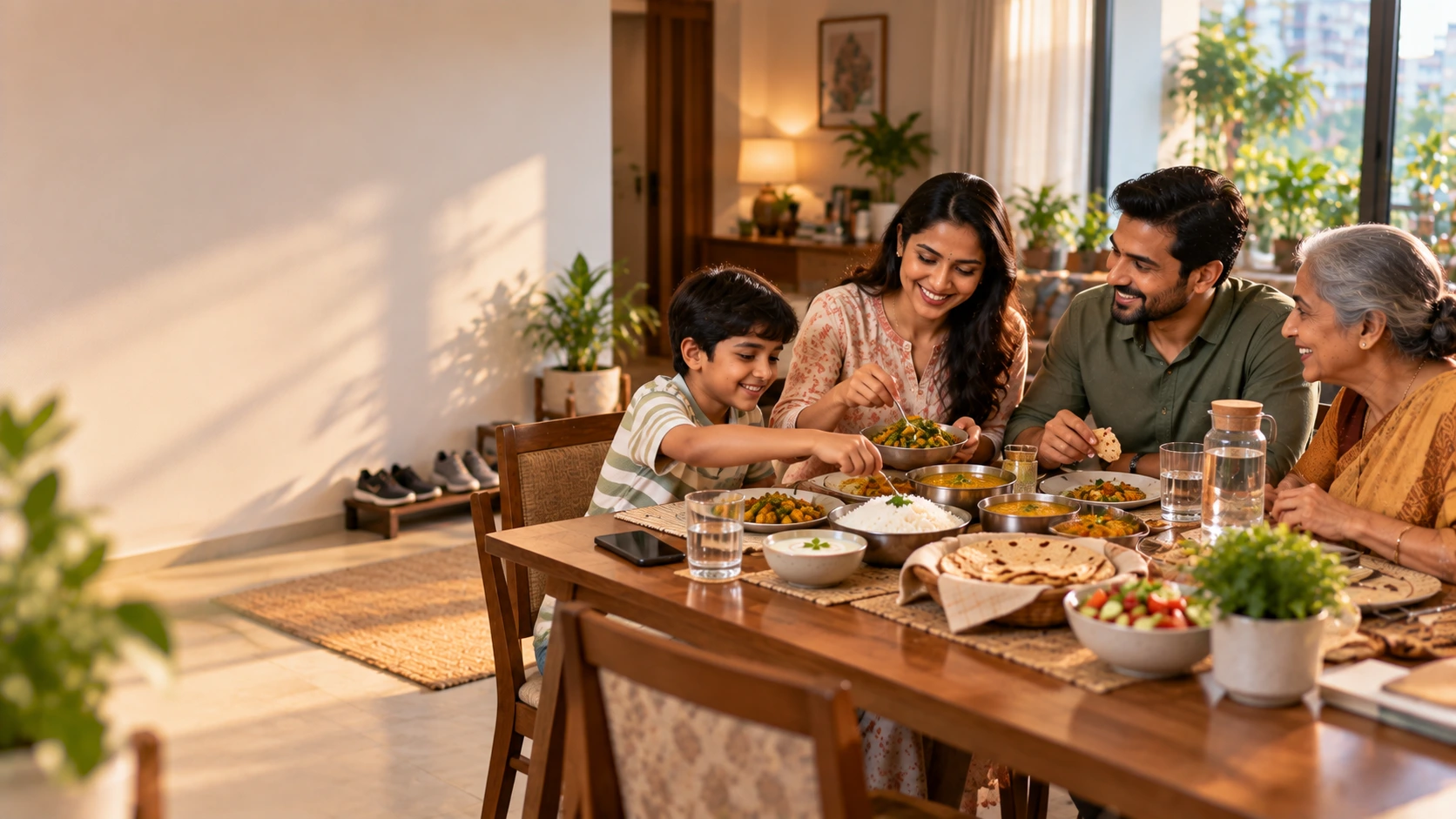
Many Indian families start the week with good intentions: home-cooked meals, morning walks, better sleep and fewer packaged snacks. But office deadlines, school schedules, travel, festivals and household responsibilities often push these plans aside.
Building sustainable health habits is not about following a perfect routine every day. It is about creating simple habits that a family can return to, even when life becomes unpredictable.
For lasting family health, consistency matters because everyday choices accumulate over time. A balanced dinner, a regular bedtime and a family walk may appear small individually, but together they can create a practical foundation for a healthy lifestyle without making wellness another source of stress.
Why Indian Families Start Healthy and Stop Quickly
The problem is often not a lack of motivation. It is trying to change too much at once.
A family might suddenly eliminate sweets, start a strict diet, commit to daily gym sessions and introduce a complicated meal plan. The routine works for a few days, but then a wedding, school examination, business trip or busy workweek disrupts everything.
Three common mistakes make this cycle more likely.
1. Changing too many habits simultaneously
Preparing different meals for every family member, exercising daily and tracking every calorie can become difficult to maintain. When several habits depend on extra time and effort, one disruption can affect the entire routine.
2. Choosing approaches that ignore Indian food culture
A plan that requires replacing familiar meals with expensive or unfamiliar foods may not fit the household. Traditional meals containing roti, rice, dal, vegetables, curd and suitable protein sources can be adapted without abandoning family favourites.
3. Treating interruptions as failure
Missing a few walks or eating differently during Diwali does not erase previous progress. The problem begins when a temporary break becomes a reason to abandon the routine entirely.
For sustainable family wellness, the better approach is to start with a few realistic habits that work within existing schedules, budgets and food preferences.
The Consistency Problem vs The Knowledge Problem
Most families can identify several things that support good health: eating a balanced diet, staying active, sleeping adequately and managing stress. Knowing these principles, however, does not automatically make them part of everyday life.
The real challenge is turning knowledge into repeatable behaviour.
Consider a working couple in Pune. Both understand the importance of nutritious meals, but late office hours often lead to takeaway dinners. A strict meal plan may not solve their problem because the underlying constraint is time.
A more practical solution might be to prepare dal or another pulse in advance, keep vegetables ready and use familiar ingredients to assemble dinner quickly.
This is the difference between knowing what to do and designing a routine that makes it easier to do.
The World Health Organization identifies dietary variety, balance, moderation and diversity as core principles of a healthy diet. These principles can be applied through familiar foods and realistic household routines rather than one rigid meal plan. Source: WHO, Healthy Diet.
A useful question for every family is: What is the smallest healthy action we can repeat even on a difficult day?
That question shifts attention from motivation to practicality.
What Consistent Family Health Habits Look Like in Real Life
Consistency does not require every family member to follow identical routines. It means establishing a few shared foundations while allowing flexibility for different ages, schedules and health needs.
Start with three anchors.
1. A dependable home-cooked dinner
Aim to make dinner at home a regular routine when circumstances allow. Include vegetables and suitable protein sources such as dal, beans, paneer, curd, eggs or other foods that fit the family’s preferences.
The meal does not need to be elaborate. Roti, sabzi and dal can be a practical everyday option, with portions and ingredients adapted to individual needs.
2. A reasonably consistent sleep schedule
Work, school and screen time can push bedtimes later, particularly in busy households. A regular wind-down routine, reduced late-night screen use and predictable sleeping hours can help make adequate sleep easier to achieve.
Children, adults and older family members have different sleep needs, so the objective is a suitable routine for each person rather than a single bedtime for everyone.
3. A weekly family activity
Choose an activity that is accessible and enjoyable: an evening walk, cycling, playing in a nearby park or walking together after dinner.
The World Health Organization recognises walking, household activities and other everyday movement as forms of physical activity. Families do not need to begin with demanding workouts to become more active. Source: WHO, Physical Activity.
These anchors support long term family health because they can fit into ordinary life. They also allow progress without demanding a complete lifestyle overhaul.
The Role of Systems Over Willpower in Family Health
Willpower depends on how people feel and what demands their attention. A system makes a desired behaviour easier to repeat even when motivation is low.
Think of healthy routines like financial savings. Making one large deposit occasionally may feel satisfying, but regular contributions create a more dependable pattern. Similarly, an occasional intensive workout cannot replace regular movement, and one perfectly balanced meal cannot compensate for a routine that is difficult to maintain.
Families can build systems around existing habits.
- Connect habits: Take a short walk after dinner rather than finding a separate time for exercise.
- Reduce friction: Keep fruit visible, prepare basic ingredients ahead of busy weekdays and make water easily accessible.
- Share responsibilities: Rotate meal preparation, grocery shopping and activity planning rather than leaving all wellness tasks to one person.
- Set a minimum standard: On busy days, choose a simpler balanced meal instead of abandoning the routine completely.
- Review together: Spend a few minutes each week discussing what worked and what needs adjustment.
These changes can support consistent health habits india without requiring expensive memberships, specialised foods or complicated schedules.
For households managing children’s routines or supporting ageing parents, shared systems can also make preventive family health more manageable. The objective is to distribute responsibility, not make one family member responsible for everyone’s health.
How to Recover From Consistency Breaks Without Losing Progress
Illness, travel, festivals, exams and demanding work periods are normal parts of life. A useful health routine should account for these interruptions instead of assuming they will never happen.
The best recovery strategy is to restart with one familiar anchor.
If the family stopped walking during the monsoon, resume with a short walk when conditions permit. If meal preparation became difficult during a busy week, return to one dependable home-cooked dinner. If sleep schedules shifted during holidays, gradually return to a suitable routine.
Avoid compensating for a disruption with extreme restrictions or excessive exercise. Such responses can create another difficult cycle of effort, fatigue and abandonment.
A simple recovery framework is:
- Identify the disruption: Was the problem time, illness, travel, motivation or an unrealistic expectation?
- Choose one anchor: Select the easiest useful habit to restart.
- Make it achievable: Reduce the duration or complexity if necessary.
- Rebuild gradually: Add other habits after the first one becomes manageable again.
For example, a family returning from a week of travel does not need to restart a complete fitness and nutrition programme on Monday. It can begin with regular meals, suitable sleep timing and a short walk.
This approach supports stress free living by removing the expectation that progress must always be uninterrupted.
Small Habits That Compound Into Major Family Health Improvements
Small actions matter because they are easier to repeat. Their value comes from becoming part of a broader pattern, not from promising dramatic results on their own.
Consider a family that gradually improves three routines over several months.
Meal balance: Add a suitable protein source to more meals and include vegetables more regularly.
Everyday movement: Replace some sedentary time with walking, active play or other enjoyable movement.
Sleep routine: Reduce avoidable late-night disruptions and establish a more predictable wind-down period.
Each change is modest, but together they can support a more consistent healthy lifestyle.
The same principle applies to parent nutrition india and children nutrition india. Parents can model balanced eating, offer a variety of familiar foods and involve children in simple choices, such as selecting vegetables or helping prepare meals. The goal is to build positive experiences around food rather than create anxiety or rigid rules.
Families should also recognise that health needs vary. A person managing diabetes, recovering from illness or following a clinician-recommended diet may need specific guidance. General family routines can support care, but they should not replace individual medical advice.
The Consistency Toolkit for Indian Families
A practical toolkit should be simple enough to use during an ordinary week. Start with a short family review rather than a demanding tracking system.
Choose three weekly priorities
Select one meal habit, one movement habit and one sleep habit. For example:
- Include a suitable protein source in the main family meal.
- Walk together on three evenings, adjusting to everyone’s abilities.
- Keep a reasonably consistent bedtime on school and work nights.
Make responsibilities visible
Decide who will buy groceries, prepare basic ingredients, plan the family walk or help an older relative maintain an agreed routine. Shared responsibility reduces the burden on one person.
Track what helps, not what creates guilt
A simple checklist or shared calendar can show whether routines are happening. Focus on patterns rather than demanding a perfect record.
Nutrimate can support this process by making everyday meal awareness easier through Indian-first, WhatsApp-based logging. Its India’s #1 whatsapp meal logging feature and Unique Caregiver feature align with the broader idea of making meal awareness and family support more convenient. The useful outcome is visibility into routines, not pressure to judge every meal.
Review and adjust every week
Ask three questions:
- Which habit felt easiest to maintain?
- What disrupted the routine?
- What small adjustment would make next week easier?
Keep the habits that fit and simplify those that do not. A family health tracking app or other tracking method can be useful when it makes progress easier to understand, but it should remain optional and practical.
The strongest family routine is not the most ambitious one. It is the one the household can maintain, adapt and restart without guilt.
FAQs
Inconsistency is driven by attempting too many changes simultaneously, choosing approaches that conflict with Indian food culture, and relying on motivation rather than systems.
A daily home-cooked dinner with adequate protein and vegetables, consistent sleep timing, and a weekly family activity habit are the minimum sustainable foundation for family health.
Return to one anchor habit immediately: the daily family walk, the morning protein, or the evening dinner. Anchors are easier to restart than full programmes and pull other habits back into place.
Consistently. Tracking creates visibility, and visibility creates accountability even without external enforcement. Families who track together show higher consistency rates than those relying on individual motivation.