 Pradnya Ganorkar
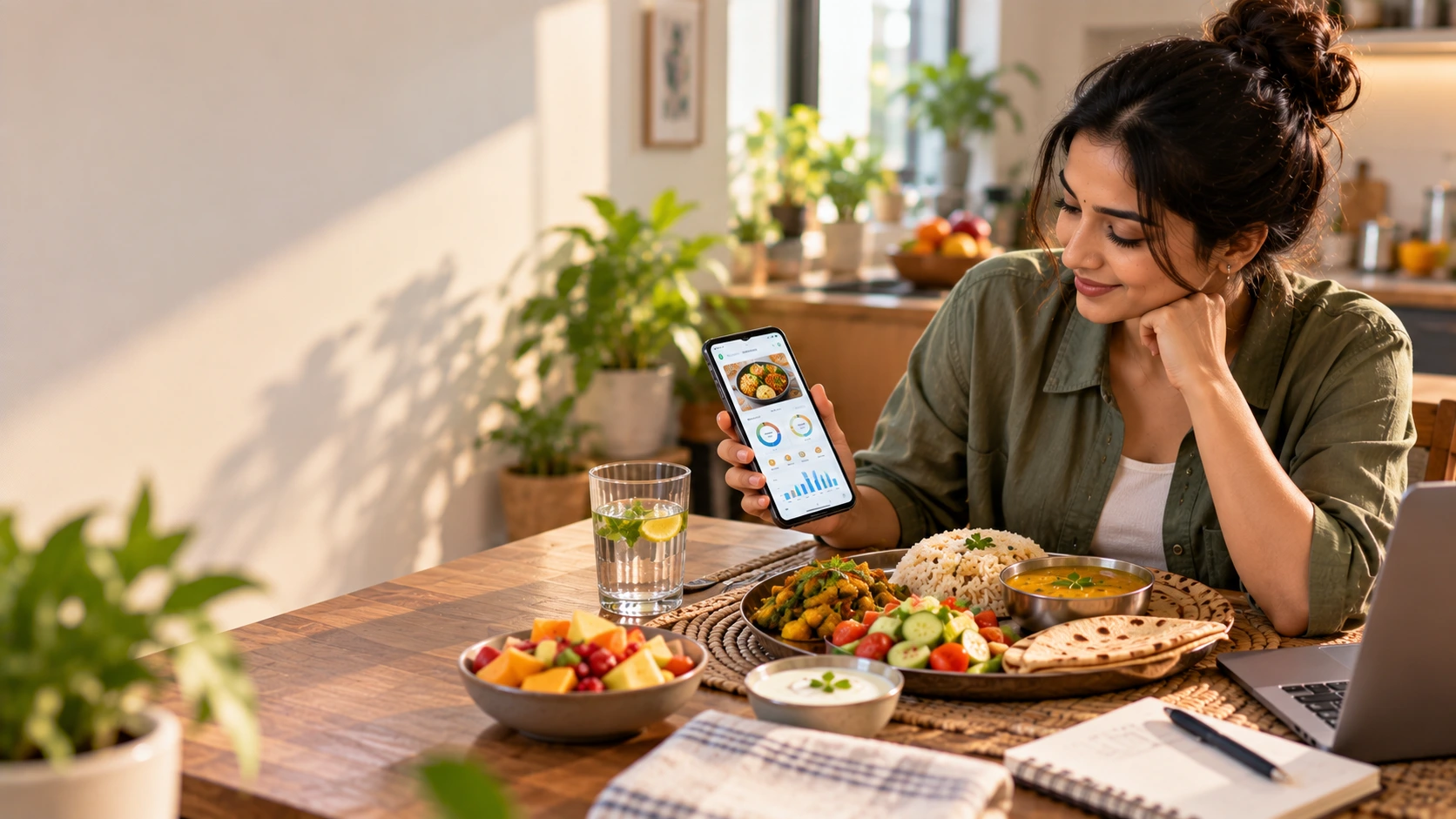
For years, a nutrition app india user looking to improve their diet often had one main task: count calories. But recording every roti, bowl of dal, cup of chai and evening snack can quickly become tiring, particularly when food databases do not accurately reflect regional Indian meals.
The next generation of nutrition technology is moving beyond numbers towards useful health awareness. An effective nutrition tracking app should help people understand their eating patterns, recognise gaps in their diets and make realistic improvements without adding another complicated task to their day.
For Indian consumers, gym members, families and healthcare professionals, the opportunity is to make nutrition information more relevant, accessible and actionable.
How Nutrition Apps in India Have Evolved in the Last Decade
Early nutrition apps largely focused on calorie counting, weight goals and food diaries. Users searched for foods, selected database entries and manually recorded portions. Although this approach introduced people to nutritional awareness, it also created friction.
A homemade vegetable poha, restaurant dosa and family-style dal preparation can differ significantly in ingredients and portion sizes. If the closest available database entry does not match the actual meal, the resulting estimate may be misleading.
India also has substantial regional food diversity. A useful indian calorie counter app needs to account for familiar dishes, ingredients, preparation methods and realistic serving sizes rather than treating every meal as a standard packaged product.
The Indian Food Composition Tables 2017, developed by the National Institute of Nutrition under ICMR, provide an important scientific reference for the nutrient composition of Indian foods. However, translating ingredient-level data into accurate estimates for mixed dishes still requires appropriate recipe and portion information. Source: Press Information Bureau, Government of India.
The evolution is therefore not simply about adding more features. It is about reducing the gap between what people actually eat and what their tracking tools help them understand.
From Counting Calories to Understanding Eating Patterns
Calories remain relevant, but a single daily calorie total cannot explain the full quality of someone’s diet.
Consider a working professional who eats poha for breakfast, a rice-based lunch, evening namkeen and a light dinner. A calorie total may provide one useful measurement, but it does not automatically explain whether the person gets enough protein, eats a variety of vegetables or follows a consistent meal routine.
A more useful approach examines patterns across several dimensions:
- Meal balance: Are meals providing a reasonable combination of carbohydrates, protein, fats and other nutrients?
- Dietary variety: Does the person regularly eat pulses, vegetables, fruits and other nutrient-rich foods?
- Protein intake: Is protein distributed across meals rather than concentrated in just one?
- Routine: Are long gaps between meals contributing to unplanned snacking?
- Consistency: Are everyday habits supporting the person’s goals over time?
For example, someone asking about protein in average indian meal needs more than a generic number. The answer depends on the portion sizes and ingredients in the actual meal.
Similarly, someone searching for calories in namkeen may benefit from understanding both the portion consumed and how frequently the snack appears in their routine.
This is where food tracking without calorie counting can be useful for people who find detailed numerical tracking overwhelming. The aim is to make better decisions, not to make every meal feel like a test.
The Role of AI in Next-Generation Indian Nutrition Apps
AI can make nutrition tracking more convenient by helping identify foods, interpret meal photographs, organise dietary information and highlight recurring patterns.
For example, a user might photograph a plate containing roti, paneer sabzi and curd. A capable AI nutrition app could help identify the foods and estimate their nutritional contribution, subject to the quality of food recognition, recipe information and portion estimates.
The most useful applications of AI in nutrition include:
- Meal recognition: Reducing the need to search for every individual ingredient.
- Pattern identification: Highlighting recurring habits, such as low protein intake or frequent skipped meals.
- Personalised guidance: Connecting observations to a user’s goals, preferences and routine.
- Progress awareness: Helping users understand whether their habits are becoming more consistent.
However, AI estimates are not automatically accurate. A photograph may not reveal the amount of oil used, the exact ingredients in a curry or the weight of food hidden beneath another item.
A reliable best food tracking app should communicate uncertainty where necessary and allow users to correct mistakes. It should also distinguish general wellness suggestions from advice that requires a qualified healthcare professional.
The future of digital nutrition india will depend less on impressive demonstrations and more on whether the technology produces useful, understandable guidance in everyday situations.
WhatsApp as a Health Platform: Why It Works in India
One reason people abandon health apps is the additional effort required to maintain them. Opening a separate application, searching a database, entering portions and updating a diary can become difficult to sustain alongside work, family responsibilities and travel.
A familiar messaging interface offers another approach. WhatsApp is already part of everyday communication for many Indian users, and Meta has expanded AI capabilities across its messaging and social platforms in India. This illustrates how digital services can bring new capabilities into interfaces people already recognise. Source: Meta, Meta AI arrives in India.
For nutrition tracking, the practical benefit is reducing the number of steps between eating a meal and recording it.
A user could share a meal photograph through a supported WhatsApp-based service, review the estimated food details and build a more consistent record without repeatedly navigating a separate interface.
Nutrimate follows this WhatsApp-first approach to make everyday meal awareness simpler. Its positioning includes India’s #1 whatsapp meal logging feature and Unique Caregiver feature, connecting convenient meal logging with a broader family wellness use case.
The principle is straightforward: technology should adapt to existing habits wherever possible, rather than requiring users to reorganise their lives around another app.
Convenience alone, however, does not guarantee better health outcomes. Useful guidance, appropriate privacy practices, reliable estimates and sustained user engagement remain essential.
Personalisation at Scale: What the Future Looks Like
Generic advice often fails because people have different goals, routines, food preferences and health requirements.
A college student trying to improve eating habits, a gym member working towards muscle gain, a parent managing family meals and an older adult following a clinician-recommended diet should not necessarily receive identical guidance.
Personalisation can make a nutrition tracking app more useful by considering factors such as:
- Individual goals: General wellness, fitness performance or a specific nutrition objective.
- Food preferences: Vegetarian meals, regional dishes and familiar ingredients.
- Daily routines: Work schedules, meal timings, exercise and travel.
- Observed behaviour: Repeated skipped meals, inconsistent logging or changing eating patterns.
- Relevant health needs: Additional dietary considerations identified with appropriate professional guidance.
For instance, a vegetarian gym member may need practical ideas for distributing protein across breakfast, lunch, snacks and dinner. A busy parent may benefit more from improving the balance of existing family meals than from following a completely new diet plan.
This is where the best food tracking app should support achievable changes rather than overwhelm users with targets they cannot realistically maintain.
Personalisation also needs boundaries. An app should not assume that every user needs weight loss or treat limited tracking data as a complete picture of someone’s health.
The Integration of Clinical and Consumer Nutrition Technology
Nutrition technology is expanding beyond individual food diaries into settings where health information can support coaching, care coordination and workplace wellness.
For clinical practice managers, patient nutrition tracking may help structure conversations about dietary routines. For corporate wellness teams, a corporate health dashboard can help organise appropriate programme-level information. For fitness professionals, meal records and progress reports can make coaching discussions more specific.
Each setting requires a different approach.
Consumer wellness: Individuals need simple explanations, manageable habits and a clear understanding of their progress.
Fitness businesses: Gym owners, trainers and dietitians need ways to connect nutrition awareness with exercise plans, member engagement and coaching workflows.
Clinical settings: Nutrition tracking must respect professional judgement, appropriate data access and the dietary requirements associated with specific conditions.
Corporate wellness: Reporting should prioritise relevant, privacy-conscious information rather than exposing individual employees’ personal health details without appropriate consent and safeguards.
FitVia, Nutrimate Wellness’s B2B fitness platform, addresses the fitness-business use case through a white-label member app, trainer dashboards, WhatsApp nutrition tracking, a Health Score, meal planning, progress reports and gym management features. Its Indian food database and workout library are designed to support trainers, gym owners, fitness influencers and dietitians.
This is a complementary direction for the wider nutrition technology ecosystem: individual users need convenient tools, while professionals and organisations need ways to translate information into meaningful support.
The same principle applies to diabetes diet tracking india and other health-specific use cases. Technology can help organise information, but clinical decisions and individual treatment plans must remain guided by qualified professionals.
What Indian Users Will Expect From Nutrition Apps in 2030
By 2030, expectations are likely to be shaped by the quality of everyday experiences rather than the number of features an app offers.
Users will increasingly look for tools that reduce manual effort, recognise familiar foods and provide useful guidance without demanding constant attention. The direction is plausible, but the pace of adoption will depend on accuracy, affordability, trust, privacy and ease of use.
Several expectations are likely to matter.
1. Less manual entry
Users will expect meal photographs, voice inputs and familiar interfaces to reduce the time needed to record food. They will still need the ability to correct incorrect food or portion estimates.
2. Better understanding of Indian meals
A stronger indian calorie counter app should recognise regional dishes and account for ingredients, cooking methods and portion differences. An extensive food list is useful only when its entries are relevant and understandable.
3. Guidance that fits real life
People will look for suggestions that work with office schedules, household cooking, budgets and cultural food preferences. Sustainable improvement should not require an entirely separate lifestyle.
4. Clearer health awareness
A health score may help summarise selected indicators, but users should understand what it measures, what it excludes and why it changes. One score should not be presented as a complete medical assessment.
5. Better support for professionals
Fitness coaches, nutritionists and corporate wellness teams will need tools that make relevant information easier to review and act upon, with appropriate permissions and safeguards.
6. Familiar, low-friction experiences
Services that fit into established routines may reduce the burden of adoption. The challenge is to make tracking easier without sacrificing accuracy, transparency or user control.
For consumers, the most valuable nutrition app india experience will not necessarily be the one with the most charts or reminders. It will be the one that helps them understand their habits and make better decisions consistently.
For fitness and wellness businesses, the opportunity is to connect nutrition, activity and coaching into a coherent service. For individuals and families, it is to make health awareness practical enough to sustain beyond the first few weeks.
FAQs
Early apps focused on calorie counting with generic databases. Modern platforms use AI, WhatsApp integration, and validated Indian food databases to deliver health awareness rather than number obsession.
WhatsApp has over 500 million users in India. Nutrition tools working within this existing platform see dramatically higher adoption than standalone apps requiring new behaviour patterns.
AI will enable real-time meal recognition for Indian dishes, automatic pattern identification in dietary behaviour, and proactive personalised recommendations without requiring user input beyond a meal photograph.
Complete health visibility across nutrition, activity, sleep, and preventive health markers, delivered through familiar interfaces, with clinical-grade accuracy and zero complexity on the user side.