 Pradnya Ganorkar
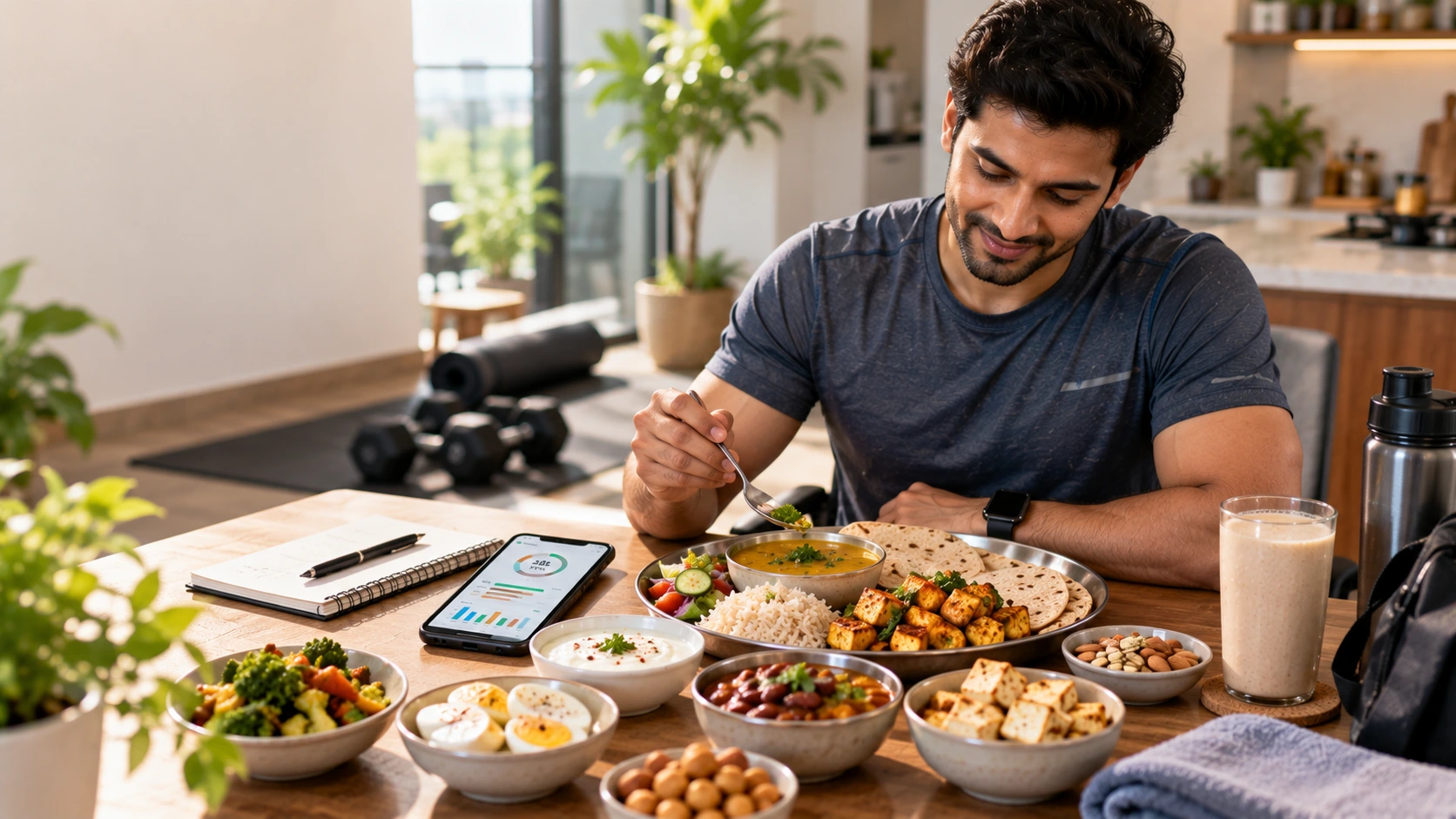
Building muscle on an Indian diet is absolutely possible, but many gym-goers struggle with one specific issue: they train consistently while eating too little protein. A well-planned muscle gain diet needs enough total energy, adequate protein, resistance training, and consistency.
For Indians, the challenge is often not finding food. It is knowing how to combine familiar foods such as dal, paneer, curd, eggs, soy, rajma, chana and roti so that daily protein intake actually reaches the required level.
For example, a 65 kg vegetarian targeting protein for muscle gain india may aim for roughly 104 to 143 g of protein daily based on the framework provided here. Sports nutrition literature commonly places protein intake for exercising individuals around 1.4 to 2.0 g/kg/day.
The key is to distribute protein across the day rather than trying to consume most of it at dinner.
Why Most Indian Gym-Goers Are Under-Eating Protein
A typical Indian meal can look nutritious while still being relatively low in protein.
Breakfast may be poha or upma, lunch may be roti, rice and sabzi, and dinner may again centre around roti or rice. These foods can form part of a balanced diet, but the meal needs a deliberate protein source if the objective is muscle gain.
Common reasons include:
- Protein is treated as an optional addition rather than a meal component.
- Vegetarian meals rely heavily on cereals and vegetables without enough concentrated protein.
- People underestimate how much protein they actually need.
- Gym-goers focus on supplements before fixing their everyday meals.
- Busy schedules lead to skipped meals or convenient, carbohydrate-heavy options.
The practical solution is simple: build every main meal around a meaningful protein source.
For a 65 kg person, the provided target of 104 to 143 g daily means approximately 25 to 35 g across four eating occasions can create a much more manageable structure.
The Weekly Protein Target for Muscle Gain
Protein requirements depend on bodyweight, training status, total energy intake and individual circumstances.
The framework provided for this article uses 1.6 to 2.2 g/kg of protein for muscle gain india. For a 65 kg vegetarian, that equals approximately 104 to 143 g per day.
A practical weekly structure does not require eating the same foods every day.
| Meal | Practical protein focus |
| Breakfast | Eggs, besan, paneer, curd or sattu |
| Lunch | Dal, rajma, chana, paneer, soy or curd |
| Snack | Roasted chana, eggs, curd or nuts |
| Dinner | Dal, paneer, soy, eggs or another concentrated source |
The purpose is not to make every meal perfect. It is to make protein intake predictable.
The ICMR-National Institute of Nutrition’s Indian Food Composition Tables provide nutrient data for 528 key foods and cover multiple food groups relevant to Indian diets.
High-Protein Indian Breakfast Options That Actually Work
Breakfast is one of the easiest places to improve daily protein intake because a small change can substantially alter the nutritional profile of the meal.
Good options include:
- Eggs with paratha
- Besan cheela with curd
- Paneer paratha
- Greek yoghurt with nuts
- A high-protein sattu drink
The objective is not to eliminate traditional breakfast foods. It is to pair them intelligently.
For example, instead of eating plain paratha, adding eggs or curd creates a more protein-focused breakfast. Similarly, besan cheela becomes more substantial when paired with curd.
For protein for indian vegetarians, combinations matter. Dal with rice, roti with paneer, or chana with curd can make everyday Indian meals more useful for a muscle-building diet.
Lunch and Dinner Combinations That Hit Your Protein Target
Lunch and dinner are where many Indian gym-goers unintentionally fall short.
A plate dominated by rice, roti and vegetables can provide energy and micronutrients, but the protein component needs to be intentional.
A practical lunch combination is:
Rajma + 2 rotis + one katori curd
This provides approximately 28 to 32 g of protein according to the framework provided.
For dinner:
Paneer sabzi + 2 rotis + dal
This combination provides approximately 30 to 35 g of protein.
The important principle is not the exact dish. It is the meal architecture:
Carbohydrate base + vegetables + concentrated protein source.
This makes the muscle building indian diet easier to follow because it works with familiar Indian meals rather than requiring an entirely different diet.
Vegetarian Protein Sources That Scale to Muscle-Building Quantities
Vegetarian diets can support muscle development, but protein needs to be planned rather than assumed.
Useful Indian sources include:
- Paneer
- Curd and Greek yoghurt
- Dal
- Rajma
- Chana
- Soy-based foods
- Besan
- Sattu
- Milk
- Nuts and seeds
One common mistake is relying heavily on foods such as nuts for protein. Nuts can contribute useful nutrients and protein, but they are also energy-dense. For someone trying to increase protein without unnecessarily increasing calories, foods such as paneer, curd, legumes and soy can be easier to build meals around.
Another important point is variety. Different protein sources provide different amino-acid profiles and nutritional characteristics, so a varied Indian food pattern is more practical than depending on one food every day.
Snacks That Contribute to Daily Protein Goals
Snacks should not be treated as nutritionally irrelevant.
A planned snack can help close the gap between what you consume through three meals and your daily protein target.
Practical choices include:
- Roasted chana
- Boiled eggs
- Curd
- Mixed nuts
- Sattu
- Paneer-based snacks
For example, the provided framework estimates approximately 20 g of protein from a 60 g handful of roasted chana and around 11 g from 200 g of curd.
This is particularly useful for people following busy lifestyles in india, because these foods require little preparation.
The goal is to replace random snacking with intentional choices that contribute to your overall nutrition.
How to Track Protein Intake Without Obsessing Over Numbers
You do not need to calculate every meal manually forever.
The first step is simply understanding your usual intake. For a week, record breakfast, lunch, dinner and snacks and look for patterns.
A meal tracker app can make this easier by showing how much protein you are actually getting from Indian meals rather than relying on memory.
For example, you might discover that breakfast consistently contains only 8 to 10 g of protein while dinner contains 35 g. That insight allows you to make a targeted adjustment rather than redesigning your entire diet.
Nutrimate uses Indian food intelligence to make this type of meal tracking more practical, particularly when everyday meals do not resemble standard Western food entries.
The principle should be consistency over perfection. Your goal is to understand your eating pattern well enough to make better decisions repeatedly.
For gym owners, trainers and dietitians managing multiple clients, the same principle can operate at a larger scale. FitVia, Nutrimate Wellness’s B2B fitness platform, combines trainer dashboards, WhatsApp nutrition tracking, an Indian food database, meal planning and progress analytics to help fitness professionals monitor client nutrition and engagement more efficiently.
A good meal tracker app should therefore reduce the friction of tracking, not turn nutrition into another time-consuming task.
FAQs
1.6 to 2.2g of protein for muscle gain india per kg of bodyweight is the evidence-based target. For a 65kg vegetarian, that is 104 to 143g daily, requiring deliberate inclusion of paneer, curd, legumes, soy, and other high-protein Indian foods at most meals.
Eggs with paratha, besan cheela with curd, paneer paratha, Greek yoghurt with nuts, or a high-protein sattu drink are all practical Indian breakfasts contributing 20 to 30g of protein.
Yes, with careful planning. The key is ensuring at least one concentrated protein source at every meal and tracking total daily intake to verify targets are being met.
Whole food protein from Indian sources can meet muscle-building targets for most individuals. Supplements are useful when dietary protein becomes logistically difficult to achieve from food alone.