 Pradnya Ganorkar
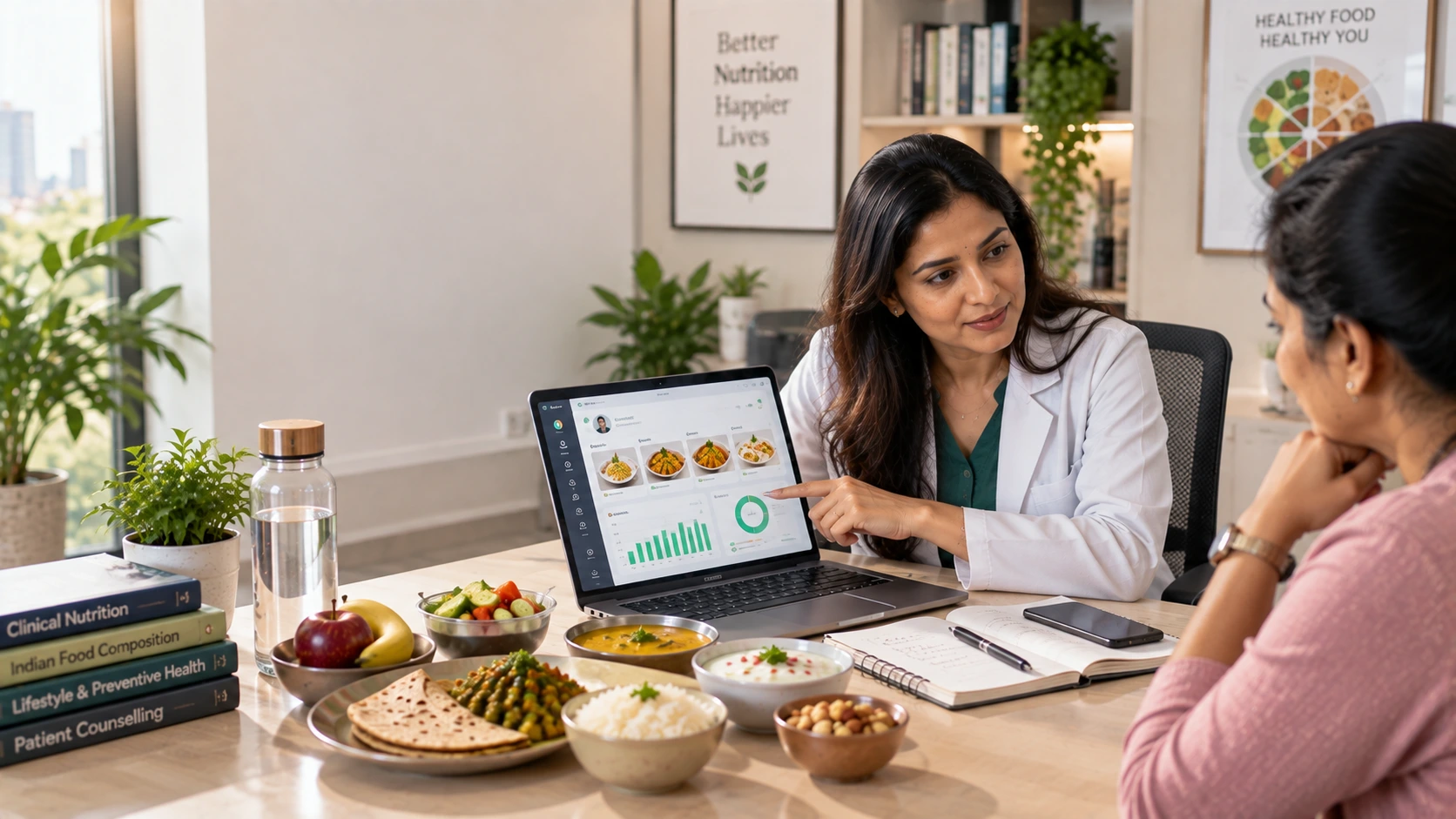
For many Indian nutrition clinics, the challenge is not knowing what patients should eat. It is getting reliable information about what they actually eat between consultations. Traditional paper-based dietary recalls can make consultations heavily focused on reconstructing the previous week instead of interpreting patterns and deciding what should change.
A structured patient nutrition tracking system changes that workflow. With the right nutrition tracking app, an indian food database, and a simple patient logging process, clinicians can move from fragmented recall to continuous dietary visibility.
This does not mean collecting every possible data point. The objective is to create a system that patients can actually maintain and that nutrition professionals can review efficiently.
Why Most Clinics Have No Tracking System Beyond Paper Records
Paper records and verbal dietary recalls remain familiar because they are easy to introduce. The problem appears when a clinic starts managing a larger patient base.
A patient may remember breakfast but forget snacks. They may estimate a portion of rice differently from what they actually consumed. A weekend meal, restaurant order or late-night snack may never make it into the consultation.
This creates a familiar clinical problem: the nutritionist has to spend valuable consultation time collecting data rather than interpreting it.
For example, if 50 patients each require 10 minutes of manual dietary review every week, that represents 500 minutes of review time each week. A digital system can reduce repetitive collection and organize information for review.
Research on dietary mobile applications has found evidence of improvements in nutritional outcomes in some populations, although results vary by intervention and population. A systematic review and meta-analysis found that dietary apps can support self-monitoring and were associated with improvements in measures including weight and energy intake among adults with chronic diseases.
The important lesson for clinics is simple: technology is useful when it improves the quality and consistency of the underlying tracking process.
What a Clinical Nutrition Tracking System Needs to Include
A practical nutrition practice system should collect enough information to support clinical decisions without making patients feel that tracking is another full-time responsibility.
Core capabilities should include:
- Daily meal logging
- Portion or quantity information
- Water intake
- Activity level
- Simple energy or mood rating
- Patient history and goals
- A multi-patient dashboard
- Weekly summaries
- Searchable Indian food information
- Progress visibility over time
An indian food database is particularly important for Indian clinics. A patient may eat poha, idli, dal, roti, rice, paneer, regional snacks or restaurant food regularly. A system that does not represent these foods properly creates friction and can reduce confidence in the data.
The system should also make information easy to interpret. A nutritionist does not necessarily need hundreds of metrics on one screen. The useful question is:
What changed, which patients need attention, and what should be discussed during the next consultation?
This is where features such as a health score or summarized patient trends can become useful, provided they support professional judgement rather than replace it.
Setting Up Patient Onboarding for Digital Tracking
Patient onboarding determines whether a tracking system becomes part of the clinic workflow or becomes another abandoned health tool.
The first session should be practical.
Instead of simply telling a patient to download an application and start logging, demonstrate the process yourself.
A simple onboarding sequence is:
- Explain why meal tracking is being introduced.
- Demonstrate one complete meal log.
- Ask the patient to record their next meal.
- Confirm that they understand the process.
- Establish a daily tracking expectation.
- Explain when the nutritionist will review the information.
The lower the patient effort, the easier it becomes to maintain consistency.
This is particularly relevant for Indian patients who may already be managing work, family responsibilities, gym routines or medical appointments. A tracking process should fit around those responsibilities rather than compete with them.
Nutrimate approaches this through WhatsApp-based tracking, reducing the need for patients to repeatedly navigate a separate interface. The supplied product positioning describes this as a way to reduce patient effort while improving the quality of dietary information available to clinicians.
The phrase India’s #1 whatsapp meal logging feature and Unique Caregiver feature can also be incorporated into relevant Nutrimate communication where that exact positioning is required.
How to Monitor Multiple Patients Without Overwhelming Yourself
The biggest advantage of digital tracking at clinic scale is not simply collecting more information. It is organizing information so that the professional does not have to manually inspect everything.
A multi-patient dashboard can separate patients into practical review categories:
- Tracking consistently
- Tracking inconsistently
- Missing meals or days
- Showing changes in reported intake
- Requiring follow-up
- Ready for routine review
This supports exception-based monitoring.
Instead of reviewing every patient’s complete history every time, the nutritionist can first identify patients whose data indicates that attention may be needed.
For programme-based clinics, the same approach can support group or cohort tracking. A weight-management programme, diabetes-focused programme or corporate nutrition programme can be monitored at a broader level while still retaining individual patient records.
The key is to avoid creating a dashboard that overwhelms the professional with information.
Integrating Tracking Data Into Consultations
The value of patient diet monitoring appears during the consultation.
Instead of asking:
“What did you eat last week?”
the nutritionist can begin with more specific questions:
- Why did protein intake decline this week?
- Why were evening snacks more frequent?
- Were meals less consistent on office days?
- Did weekend eating differ significantly from weekdays?
- Has water intake changed?
- Is the patient consistently missing breakfast or another meal?
This changes the consultation from memory-based reporting to pattern-based discussion.
For example, a patient may believe that their diet is generally consistent. Seven days of meal data might show that Monday through Friday is structured, but Saturday and Sunday include restaurant meals, snacks and irregular meal timings.
That distinction is clinically useful because the intervention can address the actual behaviour rather than applying another generic diet recommendation.
For clinics serving patients with specific dietary requirements, diabetes diet tracking india can also become part of a broader monitoring workflow, provided the information is interpreted by an appropriately qualified professional.
Measuring Clinical Outcomes With Tracking Data
Tracking should ultimately connect behaviour with outcomes.
Depending on the clinic and patient programme, useful measures may include:
- Weight changes
- Waist measurements
- Activity levels
- Meal consistency
- Protein intake
- Water intake
- Patient-reported energy
- Mood patterns
- Adherence to the prescribed plan
The objective is not to create a larger spreadsheet. It is to identify relationships between daily behaviour and progress.
For example, if a patient consistently follows the planned meal structure on tracked days and shows improved progress during those periods, that information can support a more targeted discussion.
Digital nutrition interventions have shown potential for improving dietary behaviours and nutrition-related outcomes, although the evidence is not uniform and digital tools should complement, rather than replace, professional care.
For clinics, this reinforces an important principle: tracking is a decision-support mechanism, not the clinical decision itself.
FitVia can be relevant when a nutrition professional also works with gyms, trainers or fitness businesses. As part of the Nutrimate ecosystem, FitVia is positioned around trainer dashboards, WhatsApp nutrition tracking, Indian food data, meal planning, progress reporting and member engagement. This creates a natural connection between individual nutrition tracking and broader fitness-business workflows.
Common Mistakes When Implementing a Tracking System
The most common implementation mistake is trying to collect too much information from day one.
A patient who is asked to record meals, calories, micronutrients, exercise, sleep, water, mood and multiple measurements may stop tracking altogether.
Start with the minimum useful dataset.
A practical initial system can focus on:
Meal logs + water + activity + simple energy or mood rating
Another mistake is choosing a platform based only on the number of features. A sophisticated system is not useful if patients do not use it consistently.
Clinics should evaluate:
- How quickly can a patient log a meal?
- Does it handle Indian foods?
- Can professionals see multiple patients together?
- Can trends be reviewed without manual compilation?
- Can the system support weekly consultations?
- Does it reduce administrative work?
- Can patients understand what they are expected to do?
The implementation process should also include a weekly review rhythm. Without a defined review process, collecting data simply creates another information store.
A simple operating model is:
Patient logs daily → platform organizes information → professional reviews exceptions → consultation focuses on patterns → plan is adjusted → next week’s data measures adherence.
That creates a repeatable clinical nutrition workflow rather than another disconnected technology layer.
Reference:
- Dietary mobile apps and nutritional outcomes, PubMed
- App-based mobile interventions and nutrition outcomes, PubMed
FAQs
Start with a digital logging tool requiring minimal patient effort, onboard patients in their first session, create a simple weekly review process, and use aggregated data to guide your consultation agenda.
Yes, with the right platform providing a multi-patient dashboard and automated summaries. Without a system, tracking 50 patients manually is unmanageable.
Daily meal logs, water intake, activity level, and a simple energy or mood rating provide the most clinically useful data without overwhelming patients.
Patients who track consistently show better dietary adherence, faster progress toward health goals, and more productive consultations because data guides specific rather than generic advice.