 Pradnya Ganorkar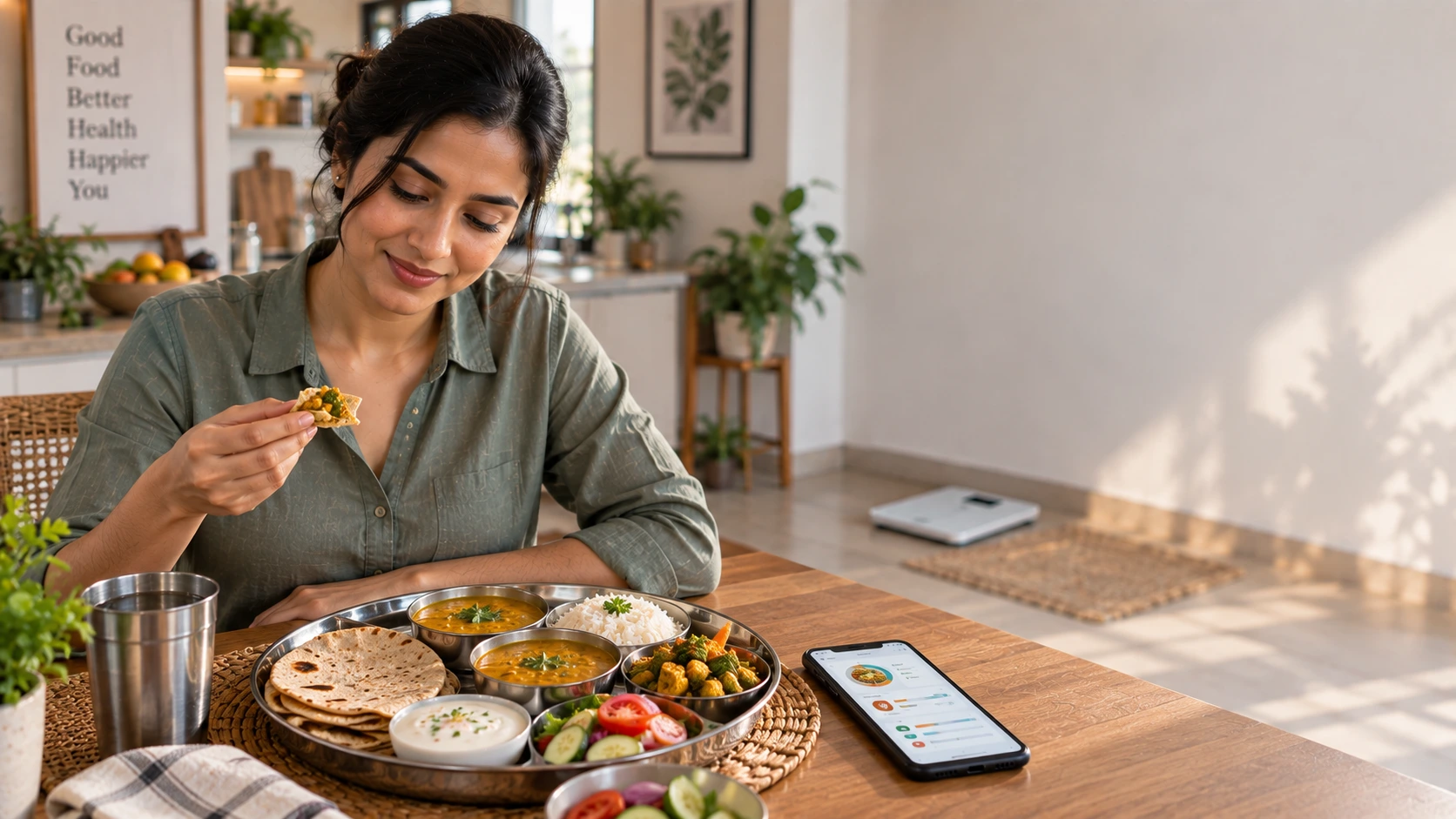
The roti rice weight gain myth has made many Indians unnecessarily afraid of two of the most common foods in the Indian diet. Roti and rice are often removed first when people begin weight loss, even though the bigger picture involves total calorie intake, portion sizes, protein, physical activity, sleep, and overall food quality.
For many people, the question is not whether Indian food is healthy, but whether everyday portions and meal combinations match their energy needs. Understanding this distinction can make fat loss and long-term healthy eating considerably more practical.
Why Indians Have Been Told Roti and Rice Are the Problem
For years, weight-loss advice in India has often reduced carbohydrates to a simple rule: stop eating roti and rice.
This approach is appealing because these foods are visible and easy to remove. However, it can overlook what else is happening around the meal. A plate of rice with dal and vegetables is nutritionally different from a large serving of rice accompanied by fried foods, sugary drinks, and calorie-dense snacks.
The World Health Organization states that healthy diets can include staple foods such as wheat and rice alongside legumes, vegetables, fruit, and other nutrient-rich foods. It also emphasizes balancing energy intake with energy expenditure.
The more useful question is therefore:
How much are you eating, what are you eating with it, and does your overall intake match your needs?
What the Research Actually Says About Carbohydrates and Weight
Carbohydrates are an important source of energy. They are not automatically responsible for weight gain.
The WHO’s current healthy-diet guidance recommends that carbohydrates can form a significant part of daily energy intake, with an emphasis on sources such as whole grains, vegetables, fruits, and pulses.
Weight gain generally occurs when energy intake consistently exceeds energy expenditure. The International Agency for Research on Cancer describes excess energy intake relative to expenditure as the main driver of weight gain, while also highlighting diet quality and physical activity as important factors.
This means that removing one food does not automatically solve the underlying problem.
For someone trying to improve their healthy lifestyle, a more sustainable approach is to look at:
- Total daily food intake
- Portion sizes
- Protein intake
- Fibre and vegetable intake
- Cooking methods
- Snacks and beverages
- Daily physical activity
- Sleep and recovery
The Real Calories in Roti and Rice: Specific Numbers
The calories in Indian staples are easier to understand when portions are defined.
A single medium roti contains approximately 70 to 80 calories. One katori of cooked rice contains approximately 130 to 150 calories.
These numbers are useful because they replace assumptions with practical information.
For example, two medium rotis are approximately 140 to 160 calories before considering oil, ghee, accompanying vegetables, dal, paneer, or other foods.
Similarly, one katori of cooked rice is not nutritionally equivalent to an unlimited serving of rice. Portion size remains relevant.
The goal is not to fear these foods, but to understand their contribution to the meal.
This is especially important for people following weight loss india approaches or trying to achieve fat loss for indians without abandoning familiar foods.
Why Portion Size and Total Intake Matter More Than Food Type
A common mistake is to classify foods as either “good” or “bad” without considering quantity.
A person may eliminate rice at lunch but consume several servings of namkeen, biscuits, sweetened beverages, or restaurant food later in the day. The total intake can still exceed their requirements.
Research on energy balance supports this broader view. Weight management depends on the relationship between energy consumed and energy used, rather than one individual food being uniquely responsible for weight gain.
A practical Indian meal framework can therefore look like:
Staple + protein + vegetables + appropriate portion
For example:
- Roti + dal + sabzi + curd
- Rice + rajma + vegetables
- Roti + paneer sabzi + salad
- Rice + sambar + vegetables + curd
This approach supports healthy eating without requiring unnecessary food restrictions.
How Indian Staples Fit Into a Healthy Eating Pattern
Roti and rice can both fit into a balanced eating pattern.
The bigger opportunity is improving the quality of the entire plate. Whole grains, pulses, vegetables, fruits, and other minimally processed foods provide nutrients that are difficult to obtain from highly processed snacks and convenience foods.
For someone who regularly eats wheat roti, switching some meals to jowar or bajra roti can increase dietary variety and provide more fibre and micronutrients. However, this does not mean conventional roti must be eliminated.
The same principle applies to rice. Portion-controlled rice combined with dal, vegetables, curd, eggs, paneer, or other protein sources can form a practical Indian meal.
This is why asking is indian food healthy is less useful than asking whether the overall meal pattern provides appropriate amounts of energy, protein, fibre, and micronutrients.
What Actually Causes Weight Gain in Indian Diets
The problem is often the combination surrounding staple foods rather than the staple itself.
Common contributors include:
- Oversized portions
- Oil-rich preparations
- Frequent high-calorie snacks
- Sugary beverages
- Large restaurant meals
- Late-night eating
- Low daily physical activity
- Insufficient protein
- Poor sleep
- Eating without awareness of portions
For people following busy lifestyles in india, these patterns can develop gradually. A rushed breakfast, skipped lunch, evening snack, restaurant dinner, and late-night food can create a substantial calorie surplus without any single meal appearing excessive.
This is also why why diets fail long term is an important question. Highly restrictive plans can remove familiar foods but do not necessarily teach people how to manage everyday Indian meals.
A sustainable approach focuses on sustainable health habits rather than eliminating entire food groups.
Eating Roti and Rice Mindfully: A Practical Framework
The simplest approach is to stop treating roti and rice as the enemy and start looking at the complete meal.
1. Define the portion
Know approximately how much rice or how many rotis you are eating rather than relying on vague estimates.
2. Add a protein source
Include dal, curd, paneer, eggs, legumes, or another suitable protein source with the meal.
3. Add vegetables
Vegetables can improve meal volume, fibre, and micronutrient intake without making the meal unnecessarily complicated.
4. Watch the hidden calories
Oil, ghee, fried accompaniments, sweets, sauces, and frequent snacks can contribute substantially to daily intake.
5. Look at the full day
One roti or one serving of rice rarely determines the outcome. Your overall eating pattern matters more.
6. Track instead of guessing
Simple meal tracking can reveal patterns that memory misses. Nutrimate is designed around Indian food and simple logging, helping users understand the nutritional impact of familiar meals instead of automatically labelling foods as good or bad.
Its approach also reflects the broader Nutrimate ecosystem, including India’s #1 whatsapp meal logging feature and Unique Caregiver feature, where convenience is intended to support consistency rather than create another complicated health task.
A meal tracker app can be particularly useful when the goal is understanding patterns over several days rather than reacting emotionally to a single meal.
The practical goal is not to stop eating roti or rice. It is to build an eating pattern where portions, protein, vegetables, activity, and overall intake work together.
FAQs
Roti does not cause weight gain independently. A single medium roti contains approximately 70 to 80 calories. Weight gain occurs when total daily caloric intake consistently exceeds expenditure, not because of any single food.
Rice is not inherently bad for weight loss. One katori of cooked rice contains approximately 130 to 150 calories. Including rice as part of a calorie-controlled diet that meets protein targets is entirely compatible with weight loss.
Carbohydrates alone do not cause obesity. The combination of total caloric excess, insufficient protein, sedentary lifestyle, and poor sleep are the primary drivers of weight gain in urban India.
Only if the replacement creates a meaningful nutritional improvement. Switching from refined wheat roti to jowar or bajra roti improves fibre and micronutrient content, which is beneficial. But eliminating roti entirely is rarely necessary or sustainable.