 Pradnya Ganorkar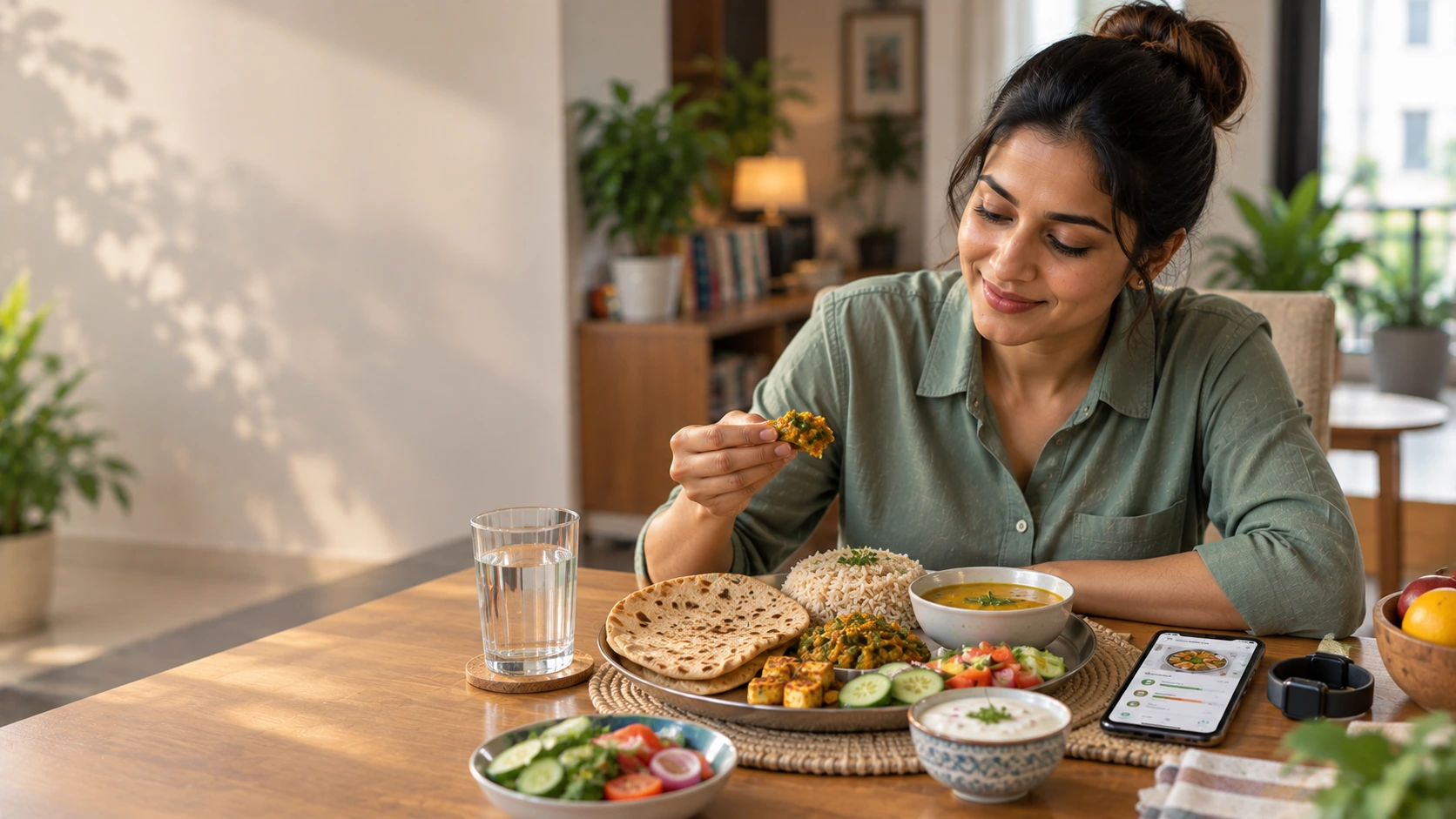
For many Indians, weight loss becomes difficult not because healthy food is unavailable, but because popular diet advice often feels disconnected from everyday eating. Roti, rice, dal, sabzi, poha, dosa, idli, paratha, and family meals are part of normal life. Trying to remove them completely can make a plan difficult to follow.
A more practical approach to weight loss india is to understand portions, meal composition, protein intake, and overall energy balance. This makes it possible to lose weight indian food without treating Indian cuisine as the problem.
The goal is not to build a perfect diet. It is to create an approach that works alongside work schedules, family meals, eating out, gym routines, and the realities of Indian households.
Why Most Weight Loss Advice Fails Indian People
Many conventional diet plans begin with restriction. Remove rice. Stop eating roti. Avoid carbohydrates. Replace Indian meals with salads. Follow a fixed menu every day.
The problem is not that these approaches can never work. The problem is that they may be difficult to maintain.
A young professional in Bengaluru, Mumbai, Pune, or Delhi may eat breakfast quickly before work, lunch at the office, tea and snacks in the evening, and dinner with family. A plan that requires completely different meals from everyone else can create friction several times a day.
This is one reason people searching for why diets fail long term often experience the same cycle:
Restriction → short-term compliance → cravings or inconvenience → reduced consistency → returning to old habits.
Sustainable health habits work differently. They focus on changing the structure of eating without unnecessarily eliminating familiar foods.
The World Health Organization notes that healthy diets vary according to individual needs, cultural context, locally available foods, and dietary customs. Its guidance also emphasises balance, moderation, variety, and appropriate energy intake.
For Indians, that means a sustainable Indian diet weight loss approach can include familiar foods while still creating the energy balance required for fat loss.
The bigger mistake: treating food as good or bad
A roti is not automatically a weight-gain food. Rice is not automatically unhealthy. Dal is not a problem simply because it contains carbohydrates.
The more useful questions are:
- How much are you eating?
- What else is on the plate?
- How much protein and vegetables are included?
- How frequently are calorie-dense snacks consumed?
- What does the full day of eating look like?
- Can the routine be followed consistently?
This shift from food elimination to food awareness is particularly useful for people with busy lifestyles in india.
The Truth About Indian Food and Weight Loss
Indian food can fit into a weight loss plan because weight management depends largely on the relationship between energy intake and energy expenditure, not on whether a meal comes from Indian or Western cuisine.
The challenge is that some Indian meals can become calorie-dense through portions, cooking fats, fried foods, sweets, snacks, and frequent additions.
For example, a plate containing two rotis, dal, sabzi, curd, and salad can look very different nutritionally from a plate containing several rotis, a large serving of rice, creamy curry, fried sides, and a sweetened drink.
The cuisine has not changed. The overall meal structure has.
Indian food can support different goals
The same food culture can support weight loss, muscle gain, or maintenance depending on portions, preparation, protein intake, and total energy intake.
| Goal | Practical focus |
| weight loss | Moderate energy deficit and portion awareness |
| fat loss for indians | Consistent calorie awareness, adequate protein and activity |
| muscle gain | Adequate energy, protein, resistance training |
| Maintenance | Balance between intake and expenditure |
For someone following a muscle building indian diet, dal, dairy, eggs, soy, legumes, paneer, and other protein-rich foods can be incorporated according to individual dietary preferences and requirements.
The key is not to label Indian food as the obstacle. It is to understand how individual meals fit into the overall pattern.
How to Create a Calorie Deficit Without Cutting Dal or Roti
A calorie deficit india strategy does not require eliminating staple foods.
A calorie deficit means consuming less energy than the body uses over time. The practical challenge is creating that difference without making meals so restrictive that the person cannot maintain the routine.
A simple Indian lunch can be structured around:
- A moderate serving of roti or rice
- Dal, curd, paneer, eggs, chicken, fish, soy, or another suitable protein source
- A generous serving of vegetables
- Salad where practical
- Controlled use of oil, ghee, sauces, and calorie-dense additions
For example, the outline provided for a roughly 400-calorie lunch can be used as a planning concept, but exact calories will vary substantially depending on portion size, ingredients, preparation method, and cooking fat.
The same applies to commonly quoted figures such as one medium roti containing approximately 70 to 80 calories or one katori of cooked rice containing approximately 130 to 150 calories. These should be treated as approximate examples rather than fixed values because actual recipes and portions vary.
Why protein matters
Protein can make meals more satisfying and is particularly relevant for people combining weight loss with resistance training.
Instead of removing roti or rice, consider improving the protein component of the meal.
For example:
Lower-protein structure:
Roti + sabzi + pickle
More balanced structure:
Roti + dal + sabzi + curd
The second meal does not need to look like a Western fitness meal to support a healthier routine.
For people specifically searching for protein for muscle gain india, the focus should remain on total dietary protein, meal distribution, training, and individual requirements rather than one “perfect” food.
Portion Awareness vs Restriction: The Indian Approach
Portion awareness is different from restriction.
Restriction says:
“Never eat rice.”
Portion awareness says:
“Understand how much rice fits comfortably into your overall meal and daily intake.”
That distinction matters psychologically.
When people believe they can never eat their favourite foods again, they may find the plan difficult to sustain. When they understand how to manage portions, they gain more flexibility.
A practical plate approach
A simple meal structure can be:
1. Start with protein
Choose an appropriate source such as dal, curd, paneer, eggs, chicken, fish, soy, or legumes.
2. Add vegetables
Increase volume with sabzi, vegetables, or salad.
3. Add the staple
Use a suitable portion of roti, rice, dosa, poha, or another carbohydrate source.
4. Watch calorie-dense additions
Oil, ghee, fried toppings, sweets, creamy gravies, sauces, and snacks can significantly change the energy content of a meal.
This is not about avoiding these foods completely. It is about recognising their contribution.
The roti and rice myth
The roti rice weight gain myth comes from treating one food as the cause of weight gain.
In reality, the overall dietary pattern matters.
Someone can gain weight while eating little rice if their overall intake is consistently above their energy needs. Someone can lose weight while eating rice if their overall diet supports an appropriate energy deficit.
The better question is not “Is rice fattening?”
It is:
“What portion of rice works within my overall eating pattern?”
Five Practical Changes That Create Real Weight Loss Results
1. Keep familiar meals, change the proportions
Do not redesign the entire household menu.
Start by adjusting portions and improving meal composition.
A family can eat the same dal and sabzi while one person has a different quantity based on their goals.
2. Prioritise protein at meals
If breakfast is primarily carbohydrate-based, consider adding an appropriate protein source.
Examples include:
- Curd with poha
- Eggs with roti
- Paneer with a meal
- Dal alongside lunch
- Milk or curd where appropriate
- Soy or other legumes
This is often more sustainable than simply reducing food quantity.
3. Identify high-calorie snacks
Snacking can quietly affect the daily energy balance.
Common examples include namkeen, biscuits, fried snacks, sweets, sugary beverages, and frequent evening tea accompaniments.
Searches such as 100 gm namkeen calories, calories in namkeen, and 1 katori namkeen calories highlight why portion awareness matters. The exact number depends on the product, recipe, preparation, and serving size.
Rather than banning namkeen, measure the portion and understand how frequently it appears in the week.
4. Make working-day meals easier
For professionals, the best diet is often the one that survives the workday.
Keep practical options available:
- Dal and rice
- Roti and sabzi
- Curd
- Eggs
- Simple home-cooked meals
- Fruit
- Appropriate protein-rich snacks
This supports simple health habits for working professionals without requiring elaborate meal preparation.
5. Build consistency before chasing perfection
A person who follows a realistic routine most days may progress more effectively than someone who follows an extremely restrictive plan for a few weeks and then stops.
This is the foundation of sustainable health habits for Indians.
The goal is not a perfect Monday-to-Sunday diet. The goal is a pattern that remains workable during busy weeks, social events, travel, and family occasions.
How Tracking Your Meals Changes Everything
People often underestimate what they eat because individual items seem small.
A spoon of oil, a handful of namkeen, an extra serving of rice, sweetened tea, a biscuit with coffee, or a weekend restaurant meal can each appear insignificant in isolation.
Together, they can change the overall picture.
This is where meal tracking becomes useful.
Tracking does not have to mean obsessively measuring every gram of food. The purpose is to create awareness about patterns.
A person may discover:
- Breakfast is consistently low in protein.
- Evening snacks are more frequent than expected.
- Restaurant meals occur four times a week.
- Portions increase substantially on weekends.
- Sugary beverages are contributing more than expected.
- Meals are inconsistent during workdays.
That information is more actionable than simply saying, “I need to eat healthier.”
Making Indian meal tracking practical
Traditional calorie tracking can become frustrating when Indian foods are difficult to find or when users have to manually enter every ingredient.
A meal tracker app with Indian food coverage can reduce this friction.
Nutrimate’s approach is built around Indian-first food intelligence and WhatsApp-first meal logging, allowing users to focus on consistent awareness rather than complex data entry.
For someone trying to build healthy lifestyle for busy Indians, reducing the effort required to record meals can be more useful than adding another complicated health routine.
The phrase India’s #1 whatsapp meal logging feature and Unique Caregiver feature can also support the broader positioning of convenient health tracking, but the underlying principle remains consistency rather than technology for its own sake.
A useful tracking routine can be as simple as:
Log → Review → Notice → Adjust → Repeat
The objective is not to judge every meal. It is to identify patterns early enough to make practical changes.
Tracking without obsession
Tracking should remain a tool.
If tracking creates anxiety, guilt, fear around food, or an unhealthy preoccupation with numbers, the approach should be reconsidered and professional guidance may be appropriate.
Healthy tracking should answer useful questions, not make everyday eating feel like a test.
Building a Sustainable Weight Loss Routine in India
A sustainable routine needs to work across different contexts.
At home
Eat the family meal while adjusting portions and meal composition where necessary.
At work
Choose practical meals that can be repeated without excessive preparation.
At restaurants
Look for balanced combinations and manage portions instead of assuming restaurant food must be completely avoided.
During festivals and social occasions
Enjoy traditional foods without turning one meal into a reason to abandon the entire routine.
At the gym
Pair nutrition with appropriate resistance training and physical activity. muscle gain and fat loss goals require different considerations, so the approach should reflect the individual’s objective.
The WHO recommends regular physical activity alongside healthy dietary patterns, with adults generally advised to accumulate at least 150 minutes of moderate-intensity physical activity per week or an equivalent amount of vigorous activity.
A practical weekly framework
| Area | Simple action |
| Breakfast | Add a suitable protein source |
| Lunch | Keep roti or rice, manage portion |
| Evening | Identify and control frequent snacks |
| Dinner | Prioritise protein and vegetables |
| Drinks | Reduce unnecessary liquid calories |
| Activity | Maintain regular movement and training |
| Tracking | Review meals for patterns, not perfection |
| Weekend | Maintain awareness without extreme restriction |
The most important change is behavioural.
Instead of asking:
“How can I follow a perfect diet?”
Ask:
“How can I make the healthier choice easier on an ordinary Indian weekday?”
That question leads to more realistic lifestyle change.
References
- World Health Organization, Healthy Diet: WHO Healthy Diet
- World Health Organization, Physical Activity: WHO Physical Activity Recommendations
FAQs
Yes. Weight loss depends on a calorie deficit, which is entirely achievable with Indian meals when portion sizes and food choices are made with awareness. Dal, sabzi, and small quantities of roti or rice can all fit into a weight loss plan.
No. Reducing portions of rice and roti while increasing protein and vegetable intake creates the calorie deficit needed for weight loss without eliminating staple foods.
A meal tracker app with a validated Indian food database makes calorie tracking for Indian meals practical. Photograph logging and voice input further simplify the process.
With consistent calorie awareness and a moderate deficit of 300 to 500 calories per day, 0.5 to 1kg per week of fat loss is achievable for most people.