 Pradnya Ganorkar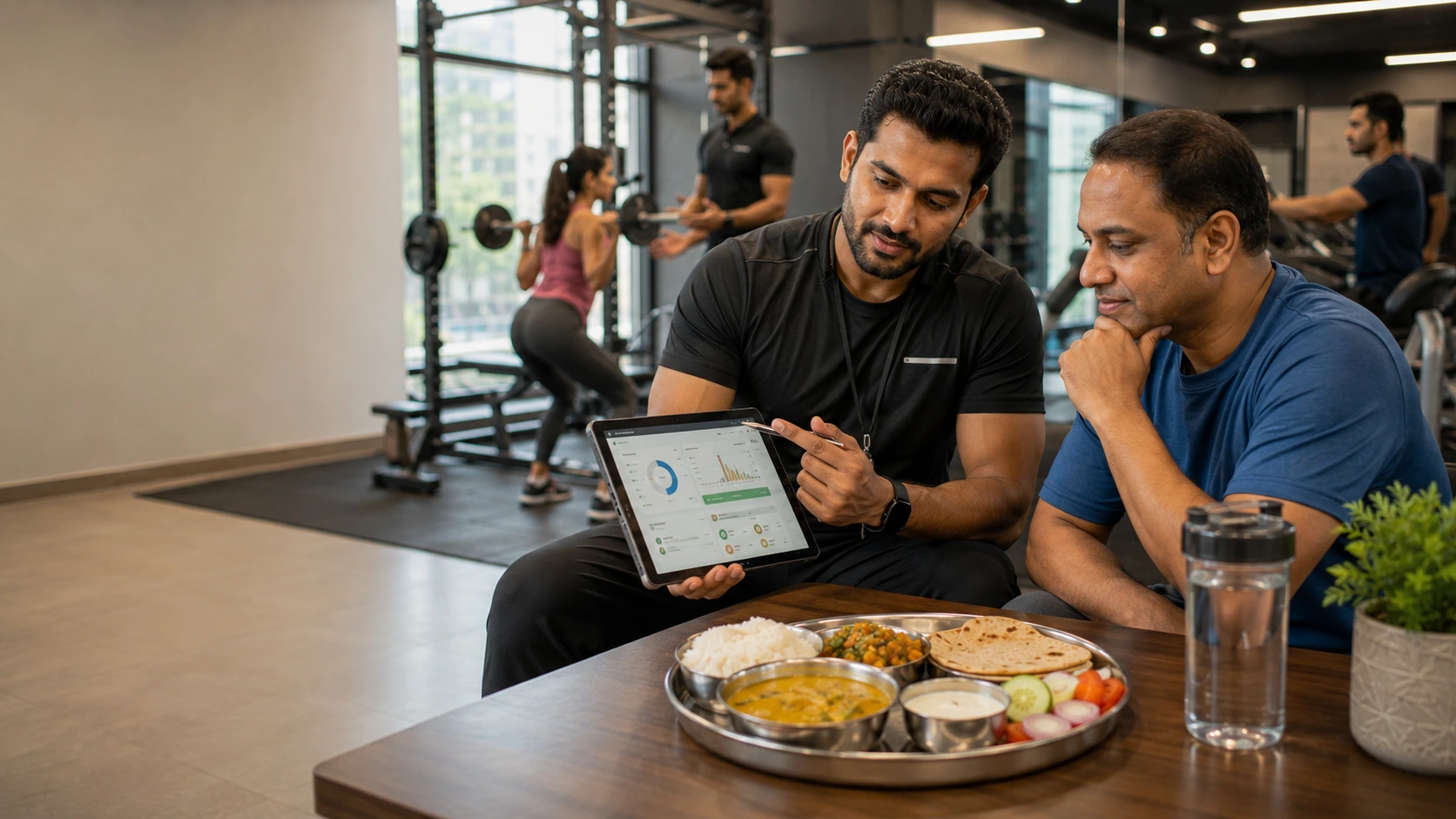
Fitness professionals increasingly work with clients who have diabetes, prediabetes, hypertension, obesity or other lifestyle disease clients. This makes the coaching relationship more nuanced than simply prescribing workouts.
For these clients, food, physical activity and health information can intersect. A trainer may notice that a client regularly skips meals, changes their eating pattern around workouts or struggles to maintain consistency. However, noticing a pattern is very different from treating a medical condition.
That distinction is central to responsible diabetes diet tracking india.
A trainer’s role is to support adherence, observe relevant patterns and communicate appropriately with the client’s qualified healthcare team. A patient diet tracking tool or diet tracking tool for fitness coaches can make that information easier to organise, but it should not turn a trainer into a medical practitioner.
Why More Fitness Clients Today Have Underlying Health Conditions
A gym is no longer used only by people pursuing bodybuilding or athletic performance.
Many members join because they want to improve everyday health, manage weight, become more active or build sustainable routines. Some may already be living with a diagnosed condition, while others may have health concerns being managed by a doctor.
This changes what good coaching looks like.
A trainer working with a client who has diabetes may need to understand:
- What the client has been advised by their healthcare professional
- What activities the client is cleared to perform
- Whether the client has particular exercise-related precautions
- How consistently the client is following their agreed routine
- Whether the client is reporting unusual symptoms or difficulties
Exercise can affect blood glucose, and the response can vary depending on activity, duration, intensity, medication and other factors. The American Diabetes Association recommends that people with diabetes understand how their blood glucose responds to exercise and coordinate with their diabetes care team where necessary.
This means trainers should avoid assuming that the same workout or nutrition approach works for every client.
What Trainers Can (and Shouldn’t) Do for Clients With Diabetes
The most useful way to understand the trainer scope of practice is to separate coaching support from medical management.
Trainers can support:
- Exercise consistency
- Workout technique
- General healthy lifestyle habits
- Meal logging and awareness, where appropriate
- Progress tracking
- Communication and accountability
- Following an existing plan provided by a qualified professional
- Identifying patterns that should be discussed with the healthcare team
Trainers should not independently:
- Change diabetes medication
- Recommend insulin adjustments
- Diagnose diabetes or complications
- Prescribe a therapeutic diet
- Set medical blood glucose targets
- Interpret medical results as a substitute for a clinician
- Tell a client to ignore medical advice
This boundary protects both the client and the trainer.
For example, if a client says, “My blood sugar was unusually low after yesterday’s workout,” the appropriate response is not to prescribe a new meal or medication routine. The trainer can document the relevant context and encourage the client to discuss it with their healthcare team.
Why Diet Tracking Matters More for These Clients
For general fitness clients, food tracking can help identify patterns in eating and consistency.
For clients managing health conditions, accurate records may also help the relevant professionals understand what is happening around meals and activity.
This does not mean a trainer needs to monitor every bite.
The objective is useful visibility.
Consider a client who repeatedly reports low energy during evening training. Their coach may notice that they frequently arrive after a long workday without having eaten. That observation can be useful to discuss with the client and, where relevant, their healthcare professional.
Similarly, a client may consistently skip breakfast, eat very differently on weekends or struggle with meal consistency during business travel.
A simple trainer nutrition tracking dashboard can make these patterns easier to identify than scattered WhatsApp messages or handwritten notes.
Importantly, meal information should not be presented as a medical diagnosis.
A meal log tells you what was recorded. It does not independently tell you how a particular food affected someone’s blood glucose or whether their treatment needs changing.
The American Diabetes Association notes that keeping records of glucose levels alongside meals, physical activity and relevant medication information can help healthcare teams understand patterns and make appropriate clinical decisions.
Working Alongside a Doctor or Dietitian, Not Instead Of
The strongest coaching model is collaborative.
Think of the roles this way:
| Professional | Primary role |
| Doctor | Medical assessment and treatment |
| Dietitian | Individualised nutrition guidance |
| Fitness trainer | Exercise coaching and behavioural support |
| Client | Daily participation and self-management |
| Tracking system | Organising relevant information |
A trainer does not need to know everything about diabetes to provide valuable support.
They need to know where their responsibility starts and ends.
For example, a dietitian may create a nutrition plan. The trainer can then help the client follow the agreed routine around their training schedule, record meals if the client chooses, and discuss adherence challenges.
If the client repeatedly struggles, the trainer can share relevant observations with the appropriate professional rather than attempting to redesign the nutrition plan.
This approach is especially valuable when managing patient nutrition tracking or clients who have several health considerations.
Simple Ways to Support Without Overstepping
1. Make tracking observational, not judgmental
Instead of:
“You didn’t follow your diet again.”
Try:
“I noticed your meal logging was inconsistent this week. Was there something that made it difficult?”
The second approach creates a coaching conversation rather than blame.
2. Track meals alongside workouts
Looking at food and exercise separately can hide useful context.
A simple record can show:
Meal → Workout → Client-reported experience
This can help identify questions worth discussing with the appropriate healthcare professional.
3. Keep the process lightweight
A client who already struggles with consistency is unlikely to maintain a complicated tracking system.
Simple photo-based meal logging or quick entries can reduce friction.
For an Indian client, this is particularly relevant because meals can include combinations such as roti, rice, dal, sabzi, curd, snacks and regional dishes that are not always easy to enter manually.
4. Share information appropriately
If a client works with both a trainer and dietitian, shared meal records can reduce the need for the client to repeatedly explain the same information.
FitVia, Nutrimate’s B2B platform for gym owners, fitness trainers, influencers and dietitians, includes trainer dashboards, WhatsApp nutrition tracking, meal planning, progress reporting and an Indian food database. In an appropriate coaching setup, this type of system can help keep nutrition information organised without positioning the platform as a medical device.
The principle is simple: better information flow can improve coordination, but clinical decisions remain with qualified healthcare professionals.
5. Know when to pause
If a client reports concerning symptoms, unusual blood glucose experiences or other health issues, the trainer should avoid improvising a solution.
The correct next step may be to stop or modify the session according to established safety guidance and direct the client to their healthcare team.
A Checklist for Coaching Clients With Lifestyle Conditions
Before coaching a client with diabetes or another medical condition, trainers can use this checklist:
- Has the client disclosed relevant health conditions voluntarily?
- Does the client have appropriate medical guidance?
- Is the planned exercise appropriate for the client’s current situation?
- Does the trainer understand their trainer scope of practice?
- Is meal tracking being used for awareness rather than diagnosis?
- Is the client’s nutrition plan coming from an appropriately qualified professional when medical nutrition guidance is required?
- Are relevant observations being documented consistently?
- Does the client know what information can be shared with their healthcare team?
- Are concerning symptoms escalated appropriately?
- Is the coaching relationship supportive rather than judgmental?
- Is the tracking process simple enough for the client to maintain?
The value of better diabetes diet tracking india is therefore not about giving trainers more medical responsibility.
It is about giving coaches better visibility into everyday behaviour while keeping professional boundaries clear.
For a trainer, that may mean fewer assumptions, better conversations and more consistent coaching. For a client, it can mean feeling supported without feeling medically managed by someone whose role is fitness coaching.
FAQs
Yes, trainers can support clients with exercise, consistency, general healthy habits and adherence to guidance provided by qualified healthcare professionals. They should not independently diagnose, treat diabetes or change medication or therapeutic nutrition plans.
Blood glucose tracking should follow the client’s healthcare team’s guidance. Trainers can support appropriate record-keeping when requested, but should not interpret readings as a substitute for medical care. Meal and activity tracking can provide useful context for discussions with qualified healthcare professionals.
Trainers should establish clear professional boundaries, understand the client’s healthcare guidance, adapt exercise within their scope and communicate relevant observations to the client and appropriate healthcare professionals. Tracking should support coordination and accountability, not replace clinical care.
Read Nutrimate Wellness first on Google