 Pradnya Ganorkar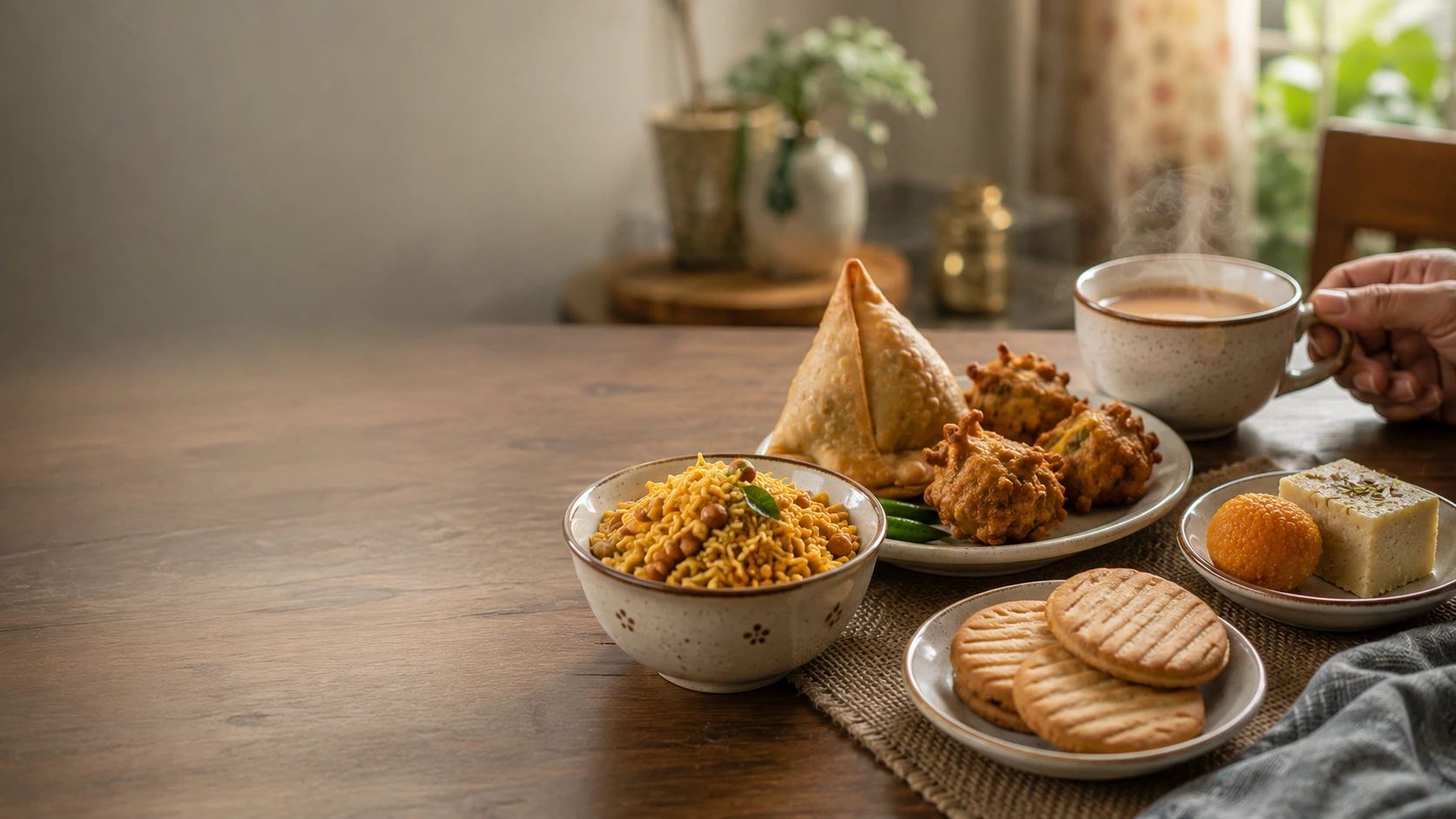
Snacking is deeply woven into everyday Indian life. A samosa with colleagues, biscuits with evening chai, a handful of namkeen while watching television, or mithai during a family celebration can all feel like small additions.
The challenge is that these small portions can accumulate across a day. Understanding calories in namkeen and other familiar snacks is therefore less about avoiding them and more about becoming aware of what you actually eat.
The ICMR-NIN Dietary Guidelines for Indians emphasise paying attention to the quality and extent of food processing, including foods higher in fat, sugar and salt.
Why Snacks Add Up Faster Than Meals
A regular Indian meal is usually visible and intentional. You sit down for breakfast, lunch or dinner and can see the roti, rice, dal, sabzi and curd on your plate.
Snacks are different.
They often happen between activities:
- A few biscuits during a meeting
- Namkeen from an open container
- A samosa at the office
- Chai with sugar twice or three times a day
- A small piece of mithai after lunch
This is why hidden calories Indian snacks can be difficult to notice.
A snack may not feel substantial because it is small in volume. But fried foods, mixtures and sweets can contain considerable energy because of their concentration of fat, sugar or both.
The issue is not that every snack is “bad”. The more useful question is:
How often am I eating it, how much am I eating, and what else is already part of my day?
That approach supports healthy Indian eating habits without turning everyday food into a list of forbidden items.
Calorie Ranges for Common Indian Snacks
Exact values vary according to recipe, size, preparation method and portion. The following ranges are practical estimates rather than laboratory measurements.
| Indian snack | Approximate calories |
| 1 medium samosa | 200 to 300 kcal |
| 1 medium pakora | 60 to 100 kcal |
| 4 plain biscuits | 180 to 220 kcal |
| 1 cup chai with sugar and milk | 80 to 120 kcal |
| 1 small piece of mithai | 100 to 180 kcal |
| 1 small handful of namkeen | 120 to 180 kcal |
| 1 small katori of namkeen | 150 to 250 kcal |
The wide ranges matter. A homemade pakora and a large restaurant pakora are not nutritionally identical.
The same applies to 100 gm namkeen calories. Depending on the mixture, ingredients and preparation, 100 grams can provide several hundred calories. A product label is the better source when you are eating packaged namkeen.
Similarly, 1 katori namkeen calories can vary considerably depending on the size of the bowl and how tightly it is filled.
This is why using household portions can sometimes be more meaningful than thinking only in terms of 100 grams.
The Snacks That Surprise People Most
Some foods are surprising because they do not look like typical “high-calorie” foods.
Biscuits
Four or five biscuits can become an automatic part of tea time. The calories may seem insignificant individually, but repeated servings can add up.
Samosa and pakora
Fried snacks combine a relatively compact portion with oil absorbed during preparation. Adding chutney, another snack or a sugary drink can increase the overall intake further.
Namkeen
Namkeen is particularly easy to underestimate because it is eaten directly from a packet or container.
A person intending to eat “just a little” may continue reaching for another handful without noticing the total portion.
Understanding calories in namkeen therefore starts with portion awareness rather than eliminating namkeen completely.
Mithai
Indian sweets are often associated with festivals, celebrations and hospitality. That context matters.
Eating one piece during Diwali is very different from routinely eating multiple pieces after everyday meals.
The goal of Indian snack nutrition is not to remove cultural foods. It is to understand their place within the overall pattern.
Chai, Sugar and the ‘Small Things’ That Add Up
Chai is one of the clearest examples of how repeated small additions can become significant.
Suppose someone has three cups of sweetened chai every day. Even if each cup contributes only a modest amount of energy, the daily total is higher than having one cup.
The same principle applies to:
- Sugar added to coffee
- Biscuits accompanying tea
- Extra chutney or sauces
- A handful of namkeen
- A small dessert after dinner
None of these automatically makes a diet unhealthy.
The important distinction is between an occasional food and a repeated habit.
For someone trying to improve healthy eating, replacing every snack with a restrictive alternative may not be sustainable. A better starting point can be identifying which snack habits happen automatically.
Building Awareness Without Cutting Out Snacks Entirely
A sustainable approach does not require removing samosas, namkeen or mithai from your life.
Instead, try the 3-question snack check:
1. Am I actually hungry?
If yes, choose a portion that fits the rest of your day.
If not, ask whether the snack is being triggered by boredom, stress, habit or social situations.
2. How much am I eating?
Move a snack from the packet into a bowl rather than eating directly from the packet.
This makes the portion visible.
3. What else have I eaten today?
A samosa after a light lunch is different from a samosa after a heavy meal followed by sweets and another evening snack.
This broader view is more useful than judging one food in isolation.
For people with busy lifestyles in India, simple awareness can be more practical than complicated meal rules.
Meal logging can also help. Instead of recording only breakfast, lunch and dinner, include the snacks that happen between them. A few days of honest meal tracking can reveal patterns that are easy to miss mentally.
Tools that recognise Indian foods can make this easier. Nutrimate, for example, is designed around Indian food and simple tracking, allowing users to build awareness without manually calculating every ingredient.
A photo-based approach can also make it easier to estimate a bowl of namkeen or another everyday snack without turning every eating occasion into a calculation exercise.
The goal is consistency, not perfection.
A Snack Awareness Checklist
Use this checklist for a more realistic view of your daily snacking:
- I know which snacks I eat most frequently.
- I notice portions rather than eating directly from packets.
- I count drinks such as sweetened chai when reviewing my day.
- I distinguish occasional treats from everyday habits.
- I check packaged-food labels when available.
- I notice how often fried snacks appear during the week.
- I include snacks when reviewing my overall Indian diet.
- I avoid assuming that a small-looking portion has very few calories.
- I do not compensate for one snack by unnecessarily restricting the next meal.
- I focus on patterns over several days rather than one “perfect” day.
For packaged snacks, checking the nutrition panel and ingredient list can provide useful context. FSSAI requires relevant packaged-food information such as ingredients and nutritional information to appear on labels, making the label an important starting point for informed choices.
The bigger lesson is simple: snacks do not need to disappear from an Indian diet. But they should become visible.
A samosa at a family gathering, namkeen with evening tea or mithai during a festival can all fit into a balanced eating pattern. The practical difference comes from frequency, portion size and awareness.
FAQs
Fried snacks such as samosa and pakora, namkeen mixtures, and many Indian sweets can be relatively calorie-dense. Actual values depend on portion size, ingredients and preparation method.
Yes, particularly when sweetened chai is consumed several times a day. Milk and sugar both contribute calories, so repeated cups can meaningfully increase daily intake.
Focus on portion awareness, frequency and your overall eating pattern. You do not necessarily need to eliminate snacks. Smaller portions, less frequent indulgent snacks and greater awareness of what you eat across the day can support better energy balance.
Read Nutrimate Wellness first on Google