 Pradnya Ganorkar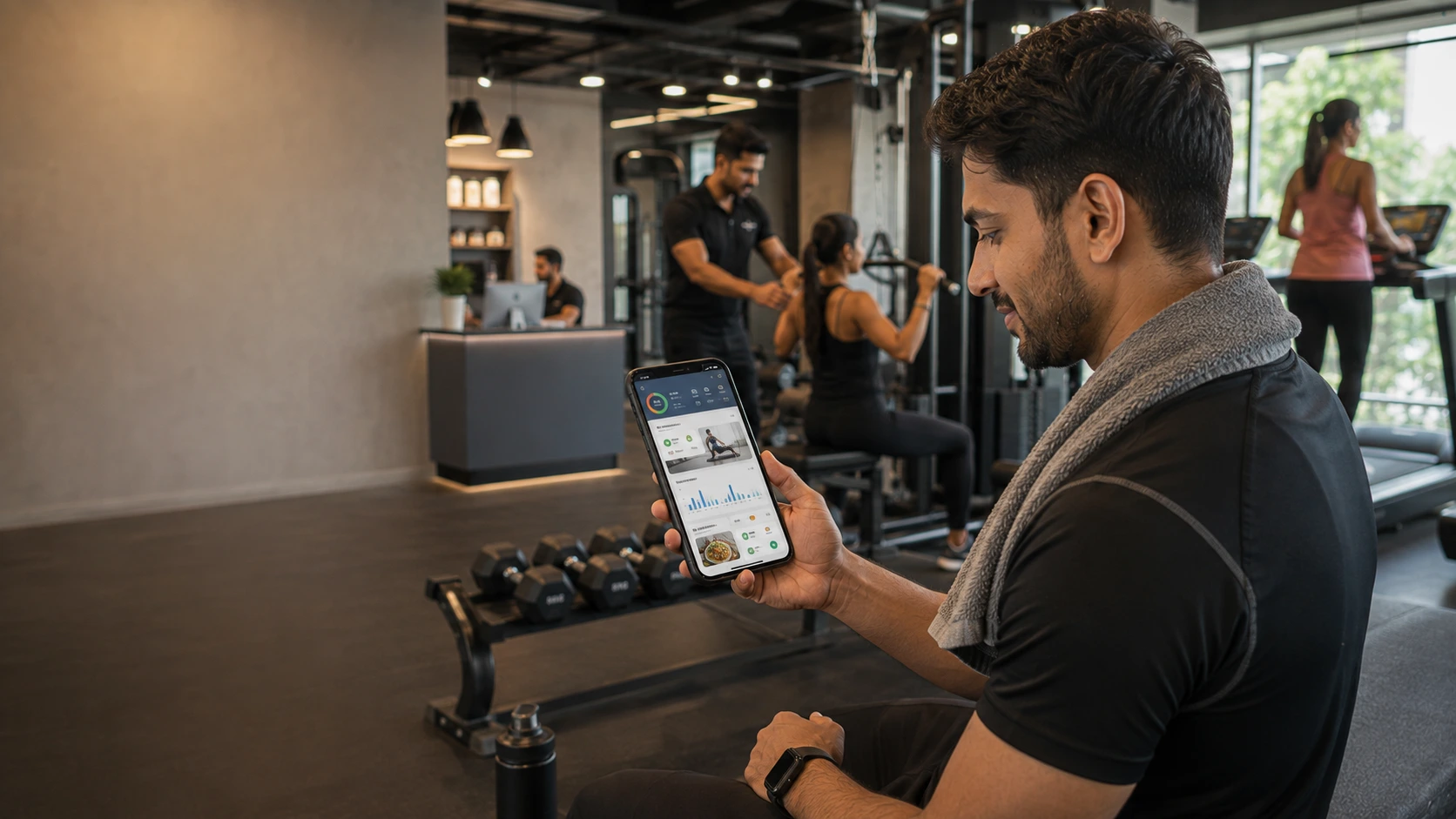
A gym can have excellent equipment, experienced trainers and a strong local reputation, yet still lose members because the experience between visits feels disconnected.
This is where a my own branded fitness app can become valuable. It gives members a digital connection to the gym beyond attendance and payments, while creating a more consistent experience around workouts, progress and communication.
The distinction matters because gym management software india and a member-facing branded app solve different problems. One primarily helps the business operate. The other helps the customer stay engaged.
India’s fitness ecosystem is becoming increasingly digital, with fitness apps supporting workout tracking, progress monitoring and habit formation alongside traditional gym services.
The Difference Between a Management System and a Branded Member Experience
A management system is primarily an operational tool.
It may help a gym owner manage:
- Member records
- Attendance
- Payments
- Renewals
- Staff information
- Bookings
- Reports
These functions are important. But most of them happen behind the scenes.
A branded member app works differently. It puts the gym’s relationship with the member directly into the member’s hands.
Think about the difference between using a bank’s own mobile app and receiving occasional SMS updates from the bank. The app creates an ongoing relationship, not just a transaction.
For a gym, this could mean giving members access to:
- Workout plans
- Progress tracking
- Trainer communication
- Meal and nutrition tracking
- Challenges
- Personal goals
- Reports
- Membership information
That is why an app for gym membership should not be evaluated only as a digital replacement for a membership card.
The bigger question is:
Does it make the member’s fitness journey easier to continue?
A gym management system answers, “How do we run the gym?”
A branded member experience answers, “How do we keep the member connected to the gym?”
Both can be useful, but they serve different purposes.
Why Members Trust Gyms With Their Own App More Than Generic Ones
A branded experience creates continuity.
When a member opens an app carrying the gym’s name, logo and visual identity, the relationship feels connected to the business they already know. The gym becomes more than a physical location they visit three times a week.
This can be particularly valuable for Indian gyms competing in crowded neighbourhood markets.
A member may have several options within a few kilometres. Equipment is often similar. Trainers can be comparable. Pricing can also become difficult to differentiate.
Member experience becomes a more meaningful competitive lever.
A fitness engagement platform can help the gym maintain that relationship outside the workout floor through reminders, progress visibility, challenges and useful content.
For example, instead of the relationship being:
Member joins → Member attends → Membership expires
it can become:
Member joins → Member receives a plan → Member tracks progress → Trainer follows up → Member sees improvement → Member stays engaged
That does not mean an app automatically improves retention. The value depends on whether the gym actually uses the digital experience to support members.
A poorly used app can become just another icon on someone’s phone.
A useful app becomes part of the member’s routine.
What a Branded App Should Include Beyond Bookings
A branded app should not simply reproduce the front desk.
The strongest use cases are connected to the member’s actual fitness journey.
1. Workout access
Members should be able to see assigned workouts, exercise instructions and training progress without repeatedly asking the trainer for information.
2. Progress visibility
Progress reports can make improvements easier to understand.
Instead of relying only on body weight, gyms can use multiple indicators relevant to the member’s goals.
A health score, where appropriately designed, can also provide a simple way to communicate broader progress rather than focusing on one number.
3. Nutrition awareness
For many members, workouts are only part of the equation.
A gym can provide nutrition tracking for gym members or simple meal awareness without turning every trainer into a clinical nutrition professional.
The goal can be visibility into patterns rather than unnecessary complexity.
4. Communication
A member should not have to search through multiple gym whatsapp groups to find an important update.
A structured digital channel can help organise communication around workouts, challenges, schedules and member updates.
5. Engagement
Challenges, milestones, reminders and progress updates can give members reasons to return to the platform.
This matters because fitness is ultimately a consistency problem.
6. Brand experience
The app should reflect the gym’s identity rather than making the member feel like they have joined a generic third-party platform.
That is the core value of my own branded fitness app.
Build vs White-Label: What Makes Sense for Most Indian Gyms
Building an app from scratch sounds attractive.
The gym gets complete control over design, features and technology. But custom development also means paying for development, testing, maintenance, security, updates and future feature changes.
For many independent gyms, that is difficult to justify.
A white-label solution takes a different approach.
The underlying technology already exists, while the gym can present the member-facing experience under its own branding.
This can make a white label fitness app more practical for gyms that want a branded experience without creating an entire software product themselves.
The choice can be simplified:
| Approach | Best suited for | Main advantage | Main challenge |
| Custom-built app | Large chains with specialised requirements | Maximum control | Higher development and maintenance burden |
| White-label app | Independent gyms and growing chains | Faster branded deployment | Less underlying customisation |
| Generic fitness app | Basic digital support | Lower complexity | Weak gym-specific brand connection |
There is no universal answer.
A small neighbourhood gym with 80 members may not need a sophisticated branded application. A growing gym with multiple trainers, hundreds of members and a stronger focus on retention may have a much clearer business case.
Real-World Examples of Branded App Use Cases
The value becomes clearer when connected to everyday gym operations.
Example 1: The new member
Instead of joining and receiving only a membership receipt, the member gets access to the gym’s branded app, assigned workout plan and progress journey.
The first few weeks feel structured rather than uncertain.
Example 2: The inactive member
A member has not logged activity for several days.
The gym can use the platform to identify reduced engagement and trigger an appropriate follow-up rather than discovering the problem only when the member stops renewing.
This is where gym member retention tools become more useful than simple attendance records.
Example 3: The nutrition gap
A member consistently completes workouts but struggles with food habits.
A structured whatsapp nutrition or meal-tracking layer can make eating patterns more visible to the member and trainer.
For Indian gyms, this can be particularly relevant because meals may include mixed dishes such as dal, sabzi, roti, rice, poha or regional foods that are difficult to manage through generic Western food databases.
Example 4: The trainer-led experience
The trainer assigns workouts, reviews progress and communicates with members through one connected system instead of relying on separate spreadsheets, messages and manual records.
The objective is not to replace the trainer.
It is to reduce administrative friction so the trainer can spend more time coaching.
FitVia, Nutrimate’s B2B fitness platform, is an example of this approach. It combines a white-label member app with trainer dashboards, workout resources, meal planning, nutrition tracking, progress reports and engagement tools for gyms, trainers, influencers and dietitians.
The broader principle is simple: technology should strengthen the relationship between the fitness business and its members, not become the relationship.
A Decision Checklist for Gym Owners
Before investing in a branded app, gym owners should ask a few practical questions.
Member need
- Do members regularly ask for workout plans or progress updates?
- Are trainers spending significant time answering repetitive questions?
- Are members dropping off after the initial enthusiasm?
- Is communication spread across multiple WhatsApp groups?
Business need
- Do you need better gym management alongside member engagement?
- Are you trying to differentiate on experience rather than price?
- Do you want stronger client engagement between visits?
- Is the gym growing beyond what manual systems can comfortably handle?
Technology need
- Can members access workouts easily?
- Can trainers monitor relevant progress?
- Does the system support nutrition tracking where appropriate?
- Can the experience use the gym’s branding?
- Does it integrate communication and engagement rather than creating another disconnected tool?
Cost and practicality
- Would custom development actually create enough additional value?
- Can a white-label platform provide most of what members need?
- Is the team capable of consistently using the platform?
- Will members have a clear reason to open it regularly?
A branded app should solve a real business problem, not simply make the gym appear more modern.
For a gym that is still managing everything manually and has limited member volume, improving basic operations may come first. For a growing fitness business, however, the opportunity is larger.
The future of gym technology is not only about collecting payments or recording attendance. It is about creating a connected member experience that extends beyond the physical workout.
That is where my own branded fitness app can become strategically useful: not as another piece of software, but as a digital extension of the gym’s coaching, communication and member relationship.
References
- IBEF: How Fitness Apps Are Reshaping Health and Wellness Habits in India
- YourStory: Gympik’s SaaS platform for fitness centres
FAQs
Not every gym needs one. A branded app becomes more valuable when a gym wants to improve member engagement, provide structured workouts, support nutrition awareness, strengthen its brand experience or manage a growing member base. Smaller gyms may find basic management tools sufficient initially.
White-label fitness software is an existing technology platform that can be presented under another business’s branding. For gyms, this can provide a branded member experience without requiring the gym to develop and maintain the entire software system from scratch.
The cost varies significantly depending on whether the gym chooses custom development, a white-label platform or an existing generic solution. Custom apps typically require additional spending on development, maintenance, updates and infrastructure, while white-label models can reduce the initial technology burden. The right option depends on the gym’s size, member requirements and expected business value.
Read Nutrimate Wellness first on Google