 Pradnya Ganorkar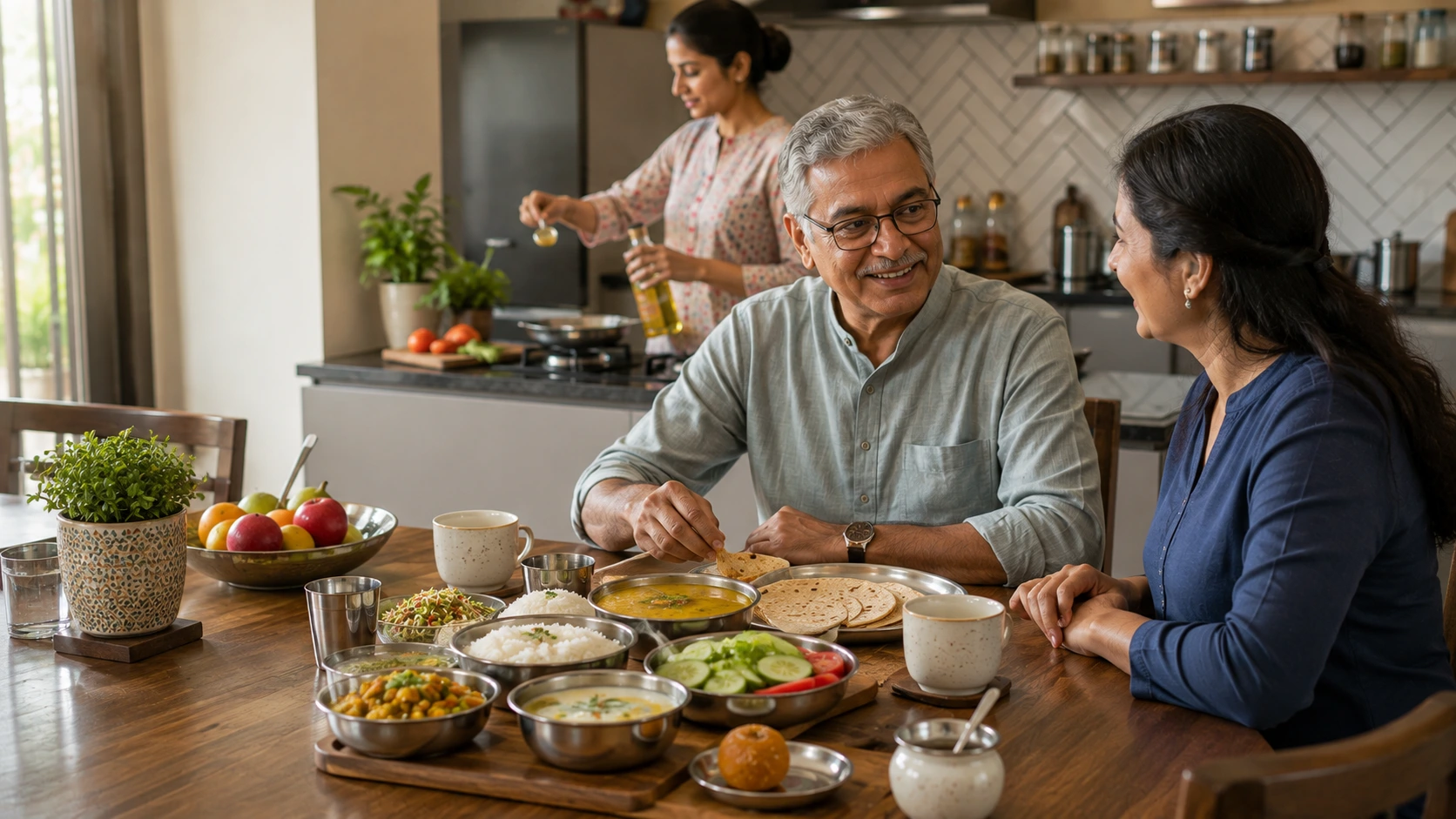
“Eat less oil and sugar.”
It sounds simple, but for many Indian families, it is not actionable advice. What does “less” actually mean when cooking dal, sabzi or poha? Should parents stop having chai with sugar? What should replace sweets at family gatherings?
Building healthy Indian eating habits is rarely about completely changing traditional food. It is more often about understanding where small, practical adjustments can fit into an existing household routine.
For families managing concerns around family health, especially when ageing parents are involved, vague advice can quickly become frustrating. A better approach is to turn broad recommendations into specific habits that people can actually repeat.
Why Generic Advice Fails in Real Indian Kitchens
Indian households do not operate like controlled nutrition environments.
Meals are prepared for the entire family. Recipes differ between homes. Oil may be poured directly into the pan rather than measured. Breakfast can be skipped because someone is rushing to work. Snacks appear with evening tea, and weekend meals may be completely different from weekday meals.
That is why generic diet advice often fails at the execution stage.
Telling someone to “eat healthier” does not answer practical questions such as:
- How much oil should be used while cooking?
- What can replace a daily fried snack?
- Does the family need to prepare a completely separate meal?
- How can parents maintain familiar foods while improving portions?
- What should happen during festivals or family celebrations?
The problem is not necessarily a lack of information. It is a lack of translation from information into everyday behaviour.
A healthy eating pattern should also reflect cultural preferences and locally available foods. WHO notes that the exact composition of a healthy diet can vary according to individual needs, lifestyle, cultural context and locally available foods.
For Indian families, that means traditional foods do not automatically need to disappear. The focus should be on balance, variety, moderation and consistency.
The Problem With ‘Just Eat Healthier’
“Eat healthier” is an outcome, not a strategy.
Consider a parent who regularly eats:
- Poha for breakfast
- Dal, rice and sabzi for lunch
- Tea and biscuits in the evening
- Roti, sabzi and curd for dinner
Telling them to “eat healthier” does not identify what needs to change.
The better question is:
Which part of the current routine is creating the biggest opportunity for improvement?
It could be frequent biscuits with tea. It could be large portions. It could be repeated fried snacks. It could be excessive oil used during cooking.
This is where nutrition awareness becomes more useful than blanket restriction.
WHO’s current healthy-diet guidance emphasises four broad principles: adequacy, balance, moderation and diversity. It also recommends limiting free sugars and unhealthy fats rather than treating all foods as equally problematic.
That distinction matters.
Oil itself is not something that needs to be eliminated. Sugar is not automatically present only in desserts. The bigger issue is how frequently, how much and in what overall dietary pattern they are consumed.
What Practical Advice Actually Looks Like for Indian Households
Practical advice should tell families what to do differently, not simply what to avoid.
Instead of “use less oil”
Try measuring cooking oil with a spoon instead of pouring directly from the bottle.
This makes the amount visible and repeatable. It also helps the household understand how much oil is actually being used across multiple dishes.
Instead of “avoid sugar”
Start by identifying where added sugar appears most frequently.
For example:
- Multiple cups of sweetened tea
- Sugary beverages
- Desserts after meals
- Packaged snacks
- Sweet breakfast foods
The first step can be reducing frequency or quantity rather than attempting an unrealistic overnight elimination.
Instead of “stop eating sweets”
Create a clearer distinction between occasional foods and everyday foods.
A sweet at a festival or family celebration does not have to become a daily habit.
Instead of “eat more healthy food”
Make nutritious additions easier.
Adding vegetables to lunch, including dal or another pulse regularly, keeping curd available, or choosing fruit as a convenient snack can improve the overall pattern without requiring separate meals.
Instead of “follow a diet”
Build a repeatable household routine.
A family that can follow a simple routine for months is in a better position than one that follows an extremely restrictive plan for two weeks.
Small, Realistic Changes Parents Are More Likely to Follow
Behaviour change works better when the change fits the person’s existing life.
For parents, especially older adults, sudden dietary restrictions can feel unnecessary or even frustrating. Familiar foods often have cultural, emotional and social importance.
The goal should therefore be adjustment rather than punishment.
Here are some practical examples.
Cooking:
Measure oil rather than estimating it by pouring.
Snacking:
Reduce dependence on packaged snacks during daily tea time and keep simpler alternatives available.
Meals:
Maintain familiar combinations such as dal, roti, rice, vegetables and curd while paying attention to portions and overall balance.
Drinks:
Gradually reduce added sugar in tea or other regularly consumed beverages.
Fried foods:
Keep them occasional rather than allowing them to become an everyday default.
Eating routine:
Avoid allowing long gaps between meals to routinely lead to excessive hunger and overeating later.
The important principle is consistency.
One healthier lunch does not transform a diet. But a small improvement repeated several times a week can become part of the household’s normal routine.
For families supporting parents with conditions that require professional dietary management, such as diabetes, general healthy habits should complement rather than replace personalised medical or nutrition advice. diabetes diet tracking india should be approached with appropriate professional guidance when clinical dietary management is required.
Involving the Whole Family Instead of Isolating One Person
One of the biggest mistakes families make is putting the entire burden on one person.
For example, if a parent is asked to reduce sugar while everyone else continues drinking heavily sweetened tea, eating sweets and ordering desserts, following the change becomes much harder.
Family health works better when the environment supports the behaviour.
Instead of saying:
“Mom, you need to stop eating sweets.”
Try changing the household routine:
- Keep sweets for specific occasions.
- Reduce routine sugary drinks.
- Make healthier snacks easier to access.
- Cook with a more consistent amount of oil.
- Eat meals together when possible.
- Encourage regular movement as a family habit.
This approach removes some of the feeling that one person is being singled out.
It is especially useful for adult children supporting ageing parents. A family health tracking app or simple shared tracking system can help family members notice everyday patterns without turning caregiving into constant supervision.
The objective is awareness, not surveillance.
For example, recording a few meals together over a week can help a family notice whether excess oil, frequent sugary snacks or inconsistent meal patterns are actually occurring. That information can lead to a more useful conversation than relying entirely on memory.
A platform such as Nutrimate fits into this broader shift toward everyday health awareness by making food and routine patterns easier to observe. Its India-first approach is particularly relevant where meals are often home-cooked, mixed and difficult to describe using generic food categories.
The same principle can support health tracking for parents: visibility should make family conversations easier, not make parents feel monitored.
A Practical Kitchen Checklist for Families
Use this checklist once a week rather than trying to make every meal perfect.
Cooking
- Is oil being measured rather than poured freely?
- Are fried foods occasional rather than routine?
- Is the household using a variety of cooking methods?
Meals
- Do regular meals include vegetables?
- Are pulses, legumes or other protein-rich foods included regularly?
- Are portions appropriate for the individual’s needs?
Snacks
- Are biscuits, namkeen and sweets becoming automatic daily habits?
- Are simpler alternatives available when hunger appears between meals?
Drinks
- How much added sugar is being consumed through tea, coffee or beverages?
- Can sweetness be gradually reduced?
Family routine
- Are parents eating regular meals?
- Is the whole family following broadly similar healthy habits?
- Are changes realistic enough to continue for months?
Awareness
- Which meal is consistently less balanced?
- Where does excess oil or sugar appear most often?
- What one change would be easiest to maintain this week?
The point is not to create a perfect household diet. It is to make the existing routine slightly better, then repeat that improvement.
That is ultimately what healthy Indian eating habits should look like: familiar food, practical adjustments, better awareness and habits that can survive real family life.
FAQs
“Eat healthy” describes the desired outcome but does not explain what someone should change in their daily routine. Indian households have different recipes, schedules, food preferences and family responsibilities, so useful advice needs to translate broad principles into practical actions.
Start by making consumption visible. Measure cooking oil instead of pouring it freely, identify frequent sources of added sugar, reduce routine sugary drinks and keep fried or highly sweet foods for occasional consumption. Small changes that the household can repeat are generally more practical than sudden restrictive rules.
The most useful changes depend on the family’s existing habits. Measuring cooking oil, reducing frequent sugary drinks, improving everyday snack choices, including vegetables and pulses regularly, and creating consistent meal routines are practical starting points. Families should seek personalised medical or nutrition advice when a parent has a condition requiring specific dietary management.
Read Nutrimate Wellness first on Google