 Pradnya Ganorkar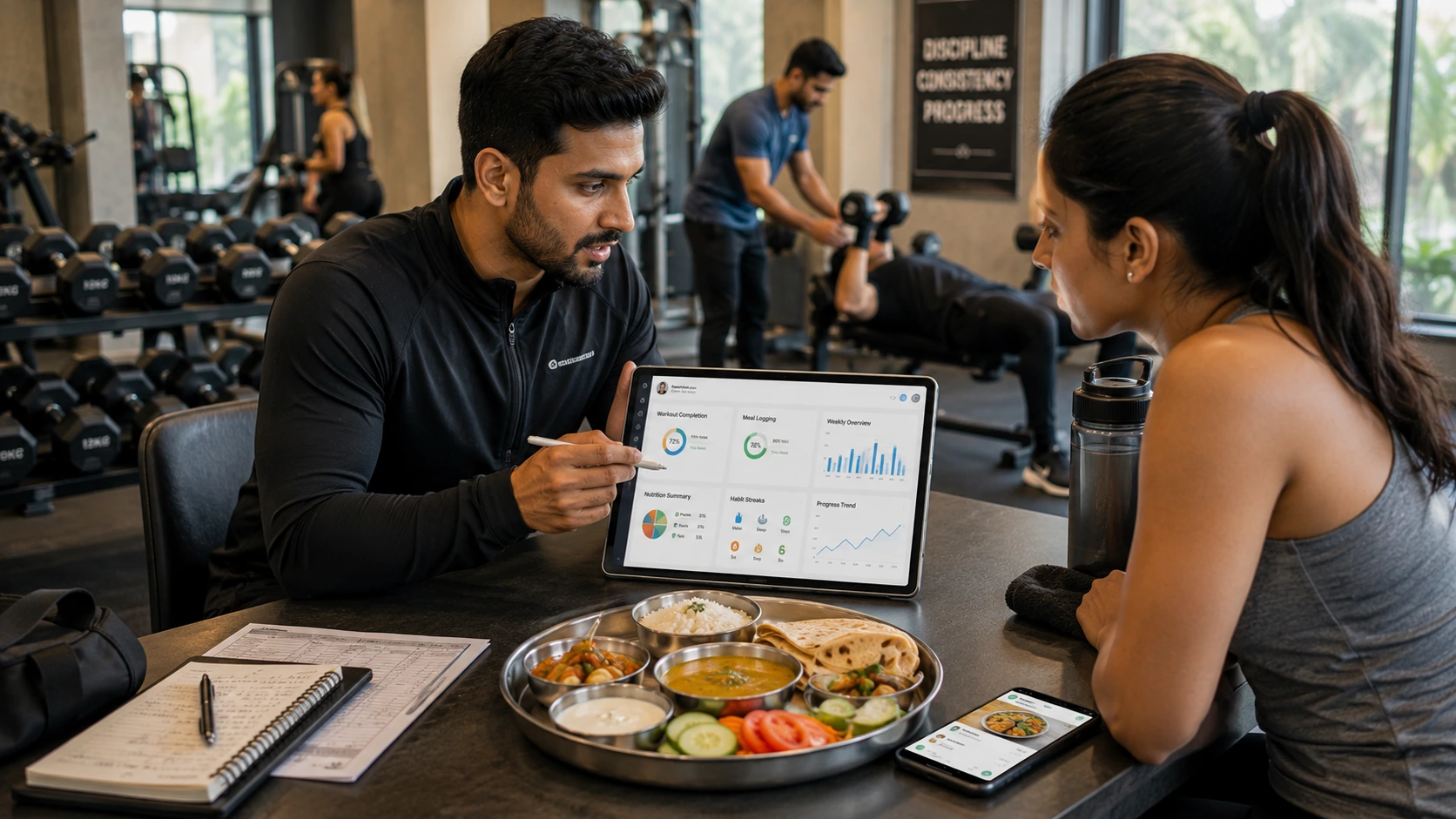
A client may complete every workout, but progress can still stall because what happens outside the gym matters. For fitness coaches, this creates a difficult gap: they can see exercises, sets and attendance, but often have limited visibility into what clients actually eat.
This is why a diet tracking tool for fitness coaches can become useful. The objective is not to turn a trainer into a dietitian. It is to make everyday food patterns more visible so coaches can connect training behaviour with broader lifestyle habits.
For many Indian clients, that visibility is especially relevant. Meals can include home-cooked dal, roti, rice, sabzi, curd, snacks and restaurant food, making manual reporting difficult. A simple client meal tracking for trainers workflow can help coaches identify patterns without asking clients to maintain complicated spreadsheets.
The opportunity is to add nutrition awareness to coaching while keeping professional boundaries clear.
Why Most Trainer Apps Are Built Around Workouts, Not Food
Most fitness platforms naturally begin with the easiest things to structure.
Workouts can be organised into exercises, sets, repetitions, weights and schedules. Attendance can be recorded. Progress photos and measurements can be stored.
Food is different.
A client might say:
“I had two rotis, some dal and sabzi.”
Another might send a photograph of their dinner.
Someone else might simply say:
“Same food as yesterday.”
There is no standard format.
This makes nutrition much harder to integrate into traditional workout apps.
Yet nutrition and physical activity are both important components of a healthy lifestyle. WHO recommends regular physical activity for adults and notes that it contributes to prevention and management of several noncommunicable diseases.
For coaches, the implication is straightforward: workouts should not be treated as the entire client journey.
A trainer does not necessarily need detailed clinical nutrition data. They may simply need to know whether a client is consistently skipping meals, relying heavily on snacks, struggling with protein intake or following the agreed lifestyle habits.
That is where a nutrition blind spot can become a coaching problem.
The Real Cost of Ignoring Nutrition as a Coach
Imagine a client who trains four times a week but sees little change in body composition.
The trainer increases training intensity.
The client works harder.
But the underlying issue may be inconsistent eating, frequent weekend overeating, insufficient protein or poor recovery habits.
Without any visibility into those behaviours, the trainer is effectively coaching with incomplete information.
This creates three problems.
1. Poor diagnosis of progress problems
If a client is not progressing, the coach needs enough context to understand what might be affecting consistency.
That does not mean diagnosing a medical condition or prescribing a therapeutic diet. It means identifying lifestyle patterns worth discussing.
2. More repetitive follow-ups
Trainers often spend time asking the same questions:
- What did you eat yesterday?
- Did you follow your meal plan?
- How much water did you drink?
- Did you have breakfast?
- Did you stick to your routine?
When this happens across 15 or 20 clients, administrative work starts taking time away from actual coaching.
3. Lower client accountability
Clients are more likely to stay engaged when progress is visible.
A simple record of meals, workouts and habits can create a clearer picture of consistency than memory alone.
This is why fitness coach client management software increasingly needs to consider more than workout programming.
The goal is not to collect endless data. It is to capture the few signals that help a coach make better decisions.
Why Clients Rarely Report Their Eating Honestly on Their Own
This is not always about dishonesty.
It is often about friction.
A client may know that they should report their meals but find manual logging tiring. They may forget ingredients, underestimate portions or avoid recording an indulgent meal because they feel they have “failed.”
Indian meals make this even more complicated.
Consider a home-cooked lunch:
- Dal
- Two rotis
- Sabzi
- Curd
- Rice
- Salad
The exact ingredients, oil quantity and serving sizes can vary between households.
A client who is expected to enter every ingredient manually may eventually stop tracking altogether.
This is where a client meal tracking for trainers system should prioritise convenience.
The aim is to make reporting easier, not create another assignment for the client.
A useful workflow might allow a client to record a meal quickly, while the coach sees broader patterns over several days.
That difference matters.
One isolated meal tells a coach very little. A recurring pattern can be much more useful.
What a Simple Nutrition Layer Should Add to a Coaching Practice
A nutrition layer does not need to become a complex diet-management system.
It should ideally add four things to the coaching workflow.
Visibility
The coach should be able to understand whether the client is consistently logging meals or whether gaps are appearing.
Pattern recognition
Instead of focusing on one meal, the coach can look for recurring behaviours.
For example:
Pattern: Breakfast is frequently skipped.
Coaching conversation: “What makes breakfast difficult on workdays?”
Or:
Pattern: Evening snacks are frequently high in energy but low in protein.
Coaching conversation: “Would it help to plan a more filling evening option?”
Accountability
A client who can see their own behaviour has a clearer reference point for making changes.
Simplicity
The system should reduce work rather than add to it.
This is where a trainer nutrition tracking dashboard can be more useful than a basic workout log. It brings relevant information into the same coaching environment.
The technology should remain in the background. The coach should remain responsible for the relationship and the interpretation.
Balancing Nutrition Guidance Without Overstepping Into Dietetics
This distinction is critical.
Personal trainers can support healthy lifestyle behaviours, encourage clients to follow appropriate general nutrition principles and help them maintain consistency.
However, trainers should not assume the role of a qualified dietitian or healthcare professional when a client requires clinical nutrition advice.
The boundary can be simple:
Trainer:
“Your meals seem inconsistent on training days. Let’s look at your routine and discuss some general habits that may make consistency easier.”
Qualified nutrition professional:
“Based on your medical condition and nutritional requirements, here is an appropriate therapeutic eating plan.”
Doctor or healthcare professional:
“Here is how your diagnosed condition should be medically managed.”
This distinction becomes particularly important when clients mention diabetes, kidney disease, eating disorders, medication-related dietary issues or other health conditions.
A diet tracking tool for fitness coaches should therefore support awareness rather than encourage trainers to make clinical decisions.
The broader goal is consistent behaviour.
WHO’s healthy-diet guidance emphasises that dietary needs vary according to factors such as age, lifestyle, physical activity and cultural context.
For an Indian fitness business, that means the system should also respect familiar food patterns rather than forcing every client into a generic diet template.
A Nutrition-Aware Coaching Checklist
Before adding nutrition tracking to a coaching practice, trainers can use a simple checklist.
1. Track patterns, not perfection
Do not expect clients to record every ingredient perfectly.
Look for recurring behaviours across several days.
2. Make logging easy
If recording a meal takes several minutes, compliance will likely decline.
A simple workflow should reduce friction.
3. Keep coaching conversations practical
Use the information to ask better questions.
For example:
- Why are meals inconsistent on workdays?
- What makes evening eating difficult?
- Are weekends disrupting the routine?
- Is the client eating differently on training and rest days?
4. Avoid unnecessary data collection
More information does not automatically mean better coaching.
Focus on information that can actually change a coaching decision.
5. Know when to refer
If a client has a medical condition or needs therapeutic nutrition advice, involve an appropriately qualified healthcare or nutrition professional.
6. Connect nutrition with the wider coaching journey
The most useful system connects food awareness with workouts, progress, engagement and habits rather than creating another isolated dashboard.
This is one reason platforms such as FitVia are designed around a broader fitness-business ecosystem. FitVia, a Nutrimate B2B platform for gym owners, fitness trainers, influencers and dietitians, combines trainer dashboards with meal tracking, whatsapp nutrition, member engagement, progress reporting and other coaching tools.
For trainers, the value is not simply having another software feature. It is reducing the gap between what happens during a workout and what happens between sessions.
A strong coaching system should ultimately make the trainer’s job more focused, not more complicated.
FAQs
Personal trainers can support general healthy eating behaviours and help clients stay accountable to agreed lifestyle goals. However, they should not provide medical nutrition therapy or advice outside their professional qualifications. Clients with medical conditions or specialised dietary needs should be referred to an appropriately qualified nutrition or healthcare professional.
Coaches can use simple meal logging to understand general patterns such as consistency, meal timing and adherence to agreed lifestyle habits. The information should support coaching conversations rather than be used to diagnose conditions or prescribe therapeutic diets.
Workouts are easier to standardise into exercises, sets, repetitions and schedules. Food is more variable, particularly with home-cooked and mixed Indian meals. As a result, many workout apps provide strong exercise tracking but limited nutrition visibility. A simple nutrition layer can help close that gap without making nutrition the entire coaching system.