 Pradnya Ganorkar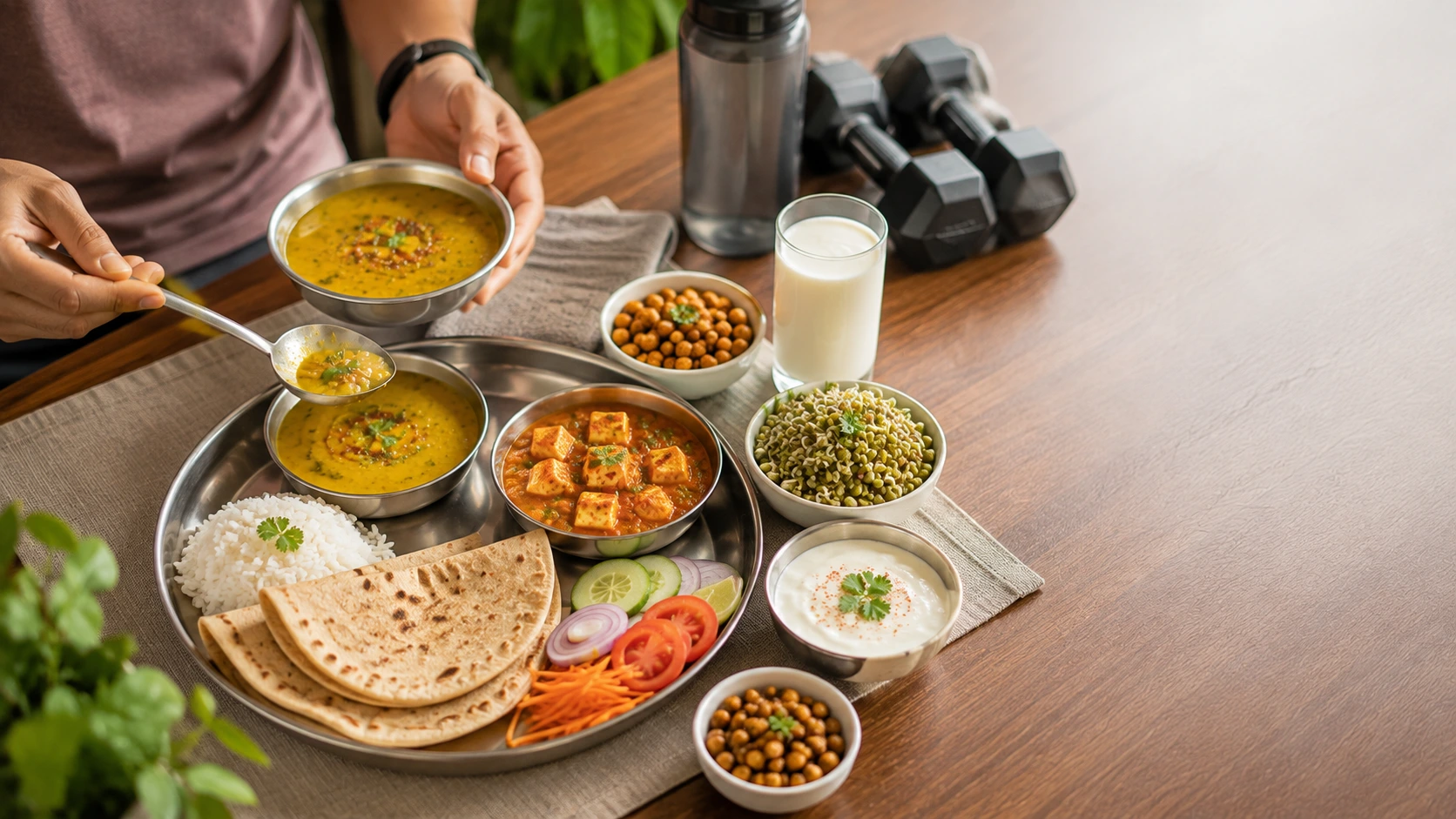
For many people, increasing protein sounds like a gym problem. But protein matters far beyond muscle gain. It supports muscle maintenance, recovery and several essential functions in the body.
For protein for indian vegetarians, the challenge is usually not a lack of food choices. Indian diets already contain dal, beans, curd, paneer, soya, sprouts and other useful sources. The bigger challenge is understanding how much protein a typical meal actually provides and whether the same pattern is repeated consistently.
A typical protein in average indian meal may be lower than expected when most of the plate is built around rice, roti and vegetables with only a small serving of dal or another protein-rich food.
The good news is that improving protein intake does not require abandoning familiar Indian meals or relying automatically on supplements.
Why Vegetarian Protein Gets a Reputation for Being ‘Not Enough’
Vegetarian diets often get criticised because cereals and many traditional staples contain less protein per serving than foods such as eggs, meat or fish.
But looking at individual foods can give the wrong impression.
Indian meals commonly combine grains with pulses. Dal with rice, khichdi, roti with dal, or rajma with rice are examples of combinations that improve the overall amino acid profile of the meal.
The ICMR-National Institute of Nutrition’s Dietary Guidelines for Indians explain that combining cereals with pulses can provide a better balance of essential amino acids.
This means the question should not simply be, “Is vegetarian food high in protein?”
A better question is:
Does my overall eating pattern provide enough protein across the day?
For someone going to the gym, another useful question is whether each major meal contains a meaningful protein source rather than concentrating most protein into one meal.
The ICMR-NIN guidelines give a general recommended dietary allowance of 0.83 g protein per kg of body weight per day for healthy adults. Individual needs can differ based on age, body composition, activity, health status and other factors.
Common Myths About Vegetarian Protein in India
Myth 1: You need protein powder to eat enough protein
Not necessarily.
For many people, everyday foods can contribute significantly to protein intake. Dal, paneer, milk, curd, soya, chickpeas, rajma and other legumes can all be part of a balanced diet.
Supplements can have a role in specific situations, but they should not automatically replace a nutritious food pattern.
Myth 2: Roti and rice have no protein
They do contain protein, although they may not be sufficient as the main protein source in a meal.
The more useful approach is to combine cereals with pulses, dairy, legumes or other protein-rich foods.
Myth 3: Vegetarian protein is always incomplete
This oversimplifies nutrition.
Different plant foods have different amino acid profiles. Combining complementary foods across the diet can improve protein quality.
Myth 4: More protein automatically means a healthier diet
Protein is important, but overall diet quality still matters.
A healthy eating pattern should also provide vegetables, fruits, whole grains where appropriate, fibre, healthy fats and adequate micronutrients.
Myth 5: You need exotic foods
You do not need imported protein products to improve your diet.
Indian kitchens already contain many practical options.
The Best Vegetarian Protein Sources and How Much They Provide
The exact protein content of a food depends on the variety, preparation and serving size. This is especially important with home-cooked food.
The Indian Food Composition Tables 2017 provide composition data for hundreds of Indian foods and are a useful reference for understanding the nutritional profile of familiar foods.
Here are practical examples:
| Food | Practical role |
| Dal | Easy everyday protein source for lunch or dinner |
| Rajma and chickpeas | Protein plus fibre and carbohydrates |
| Paneer | Convenient concentrated vegetarian protein |
| Soya | Useful high-protein option for meals |
| Curd | Adds protein alongside calcium |
| Sprouts | Useful addition to breakfast or snacks |
| Milk | Simple way to increase daily protein |
| Peanuts and seeds | Useful additions, although portion sizes matter |
For example, IFCT data lists paneer at approximately 18.9 g protein per 100 g edible portion. Actual portions can vary considerably depending on how much paneer is served and how it is prepared.
The lesson is not to memorise dozens of numbers.
It is to recognise the protein anchors in your regular meals.
If lunch is simply two rotis and sabzi, adding dal, curd or another protein-rich option can make the meal more nutritionally complete.
If breakfast is poha, adding curd, sprouts or another suitable protein source can improve the meal without completely changing it.
Building a Balanced Vegetarian Plate Without Supplements
A practical Indian vegetarian plate does not need to look like a bodybuilding meal.
Think in terms of protein anchors.
For example:
Breakfast
Poha + sprouts + curd
or
Idli + sambar + curd
Lunch
Roti + dal + sabzi + curd
or
Rice + rajma + vegetables
Evening
Roasted chana or sprouts-based snack
Dinner
Roti + paneer or soya preparation + vegetables
This approach works because protein is distributed throughout the day instead of being treated as something that only belongs in a post-workout shake.
For protein for indian vegetarians, distribution is particularly useful because traditional meals can otherwise become cereal-heavy.
A simple rule is:
Ask “Where is the protein?” before asking “How many calories are in this meal?”
This does not mean ignoring calorie awareness. It means putting nutritional quality into context.
For people interested in healthy Indian eating habits, this is often easier to sustain than completely redesigning the diet.
A Day of Eating: High-Protein Vegetarian Meals
Here is an example of how familiar Indian foods can create a more protein-conscious day.
Breakfast
Vegetable poha with sprouts and a serving of curd.
The sprouts and curd provide additional protein without requiring a completely different breakfast.
Lunch
Two rotis, dal, mixed vegetable sabzi and curd.
The combination of cereals and pulses is particularly useful from a protein-quality perspective.
Evening snack
Roasted chana, sprouts chaat or curd with a suitable accompaniment.
The goal is to avoid allowing snacks to become entirely dependent on biscuits, fried snacks or other low-protein options.
Dinner
Paneer or soya preparation with roti and vegetables.
Alternatively, rajma or chole can form the protein-rich component of the meal.
Before bed, if appropriate
Milk can be part of the overall diet for people who consume dairy and whose dietary requirements make it suitable.
The important point is that this is not a restrictive diet.
It is an ordinary Indian eating pattern with more deliberate protein choices.
For gym members, the same principle can be adapted around training schedules. Someone focused on muscle gain may have different requirements from someone focused on general healthy lifestyle habits or weight loss, so individual needs should be considered.
A Simple Vegetarian Protein Checklist
Instead of trying to calculate every gram of protein every day, start with a simple seven-day observation exercise.
Ask yourself:
- Does breakfast contain a clear protein source?
- Does lunch include dal, legumes, paneer, curd or another protein-rich food?
- Does dinner contain a meaningful protein source?
- Are snacks mostly refined or fried foods, or do they sometimes include protein-rich choices?
- Am I relying on one protein-heavy meal and neglecting the rest of the day?
- Do I regularly include different pulses, legumes and dairy or suitable alternatives?
- Am I eating enough overall, especially if I train regularly?
Tracking meals for several days can reveal patterns that are difficult to notice from memory.
This is where simple technology can help. Rather than manually calculating every ingredient, an Indian-focused meal-tracking system can make it easier to see recurring patterns in meals and nutrition.
Nutrimate takes an Indian-first approach to meal awareness, making it easier to understand everyday Indian dishes rather than forcing people to translate every meal into unfamiliar food entries.
The objective is not perfect tracking.
It is nutrition awareness.
If you discover that most breakfasts contain little protein, you can improve breakfast. If lunch is consistently strong but evening snacks are not, you know where to focus.
That is a much more practical approach than trying to completely change your diet overnight.
A Simple Vegetarian Protein Checklist
For the next week, keep your focus narrow:
1. Identify your protein anchors.
Choose the foods you already enjoy, such as dal, paneer, curd, soya, sprouts and legumes.
2. Add before you remove.
Instead of immediately eliminating rice, roti or familiar foods, add a protein-rich component to the meal.
3. Spread protein across the day.
Avoid treating protein as something reserved only for dinner or after exercise.
4. Look at patterns, not one meal.
One low-protein meal does not define your diet. Repeated patterns are more useful.
5. Track for awareness, not perfection.
A few days of meal tracking can reveal more than trying to remember what you ate throughout an entire month.
For Indian vegetarians, the goal is not to make traditional food fit a Western diet template. It is to understand the nutritional strengths of Indian food and build better combinations around them.
A sustainable approach starts with familiar foods, practical portions and consistent habits.
FAQs
Yes. Indian vegetarian diets can provide substantial protein through dal, legumes, beans, paneer, curd, milk, soya, sprouts, nuts and seeds. The key is variety, appropriate portions and a balanced eating pattern.
Useful options include dal, rajma, chickpeas, soya, paneer, curd, milk, sprouts and other legumes. The best choices are those that fit your dietary preferences, budget, routine and nutritional needs.
Not automatically. Many people can meet their protein needs through regular foods. Supplements may be useful in specific circumstances, particularly when dietary intake is difficult to achieve, but individual requirements should be assessed appropriately.