 Pradnya Ganorkar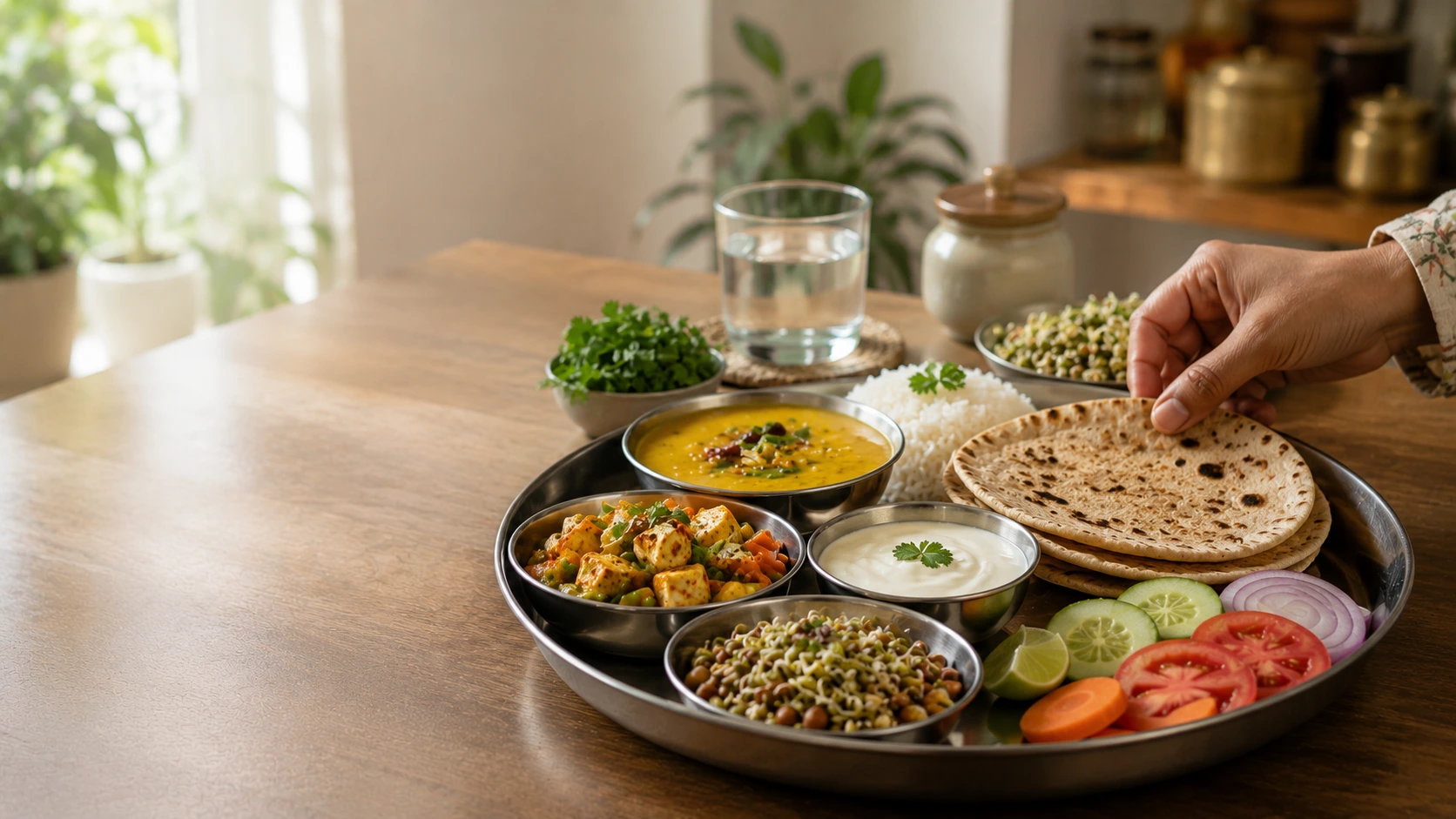
For many Indians, a typical meal can look nutritious without necessarily being high in protein. A plate of rice, dal, sabzi and curd may provide a useful combination of carbohydrates, fibre, micronutrients and some protein, but the actual amount depends heavily on portions.
Understanding the protein in average indian meal is therefore less about following a complicated diet and more about developing healthy Indian eating habits.
This matters for people trying to support muscle gain, fat loss, fitness performance or simply a more balanced diet. Protein does not have to mean expensive supplements or Western-style meals. Familiar Indian foods can contribute meaningfully when meals are structured thoughtfully.
The Indian Food Composition Tables 2017 provide nutrient composition data for hundreds of Indian foods and are an important reference for understanding the nutritional profile of familiar foods.
Why Protein Has Become a Trending Topic in Indian Nutrition
Protein has become increasingly visible in conversations about fitness, weight management and everyday nutrition. Yet the practical question for most Indian households is not whether protein matters. It is how to get enough of it using affordable, familiar foods.
For protein for indian vegetarians, the challenge can feel particularly confusing. A vegetarian meal may contain several protein sources, but portions can be relatively small.
A simple breakfast of poha, tea and a banana, for example, may provide energy but not a large amount of protein. Similarly, two rotis with a small serving of sabzi can be filling without providing much protein.
The solution is not to eliminate these foods. It is to strengthen the meal around them.
Think of protein as a meal-building priority:
Existing meal + stronger protein source = more balanced meal
That could mean adding dal to rice, curd alongside roti, paneer to a vegetable preparation, or sprouts to a breakfast.
What a Typical Indian Thali Actually Provides
There is no single “average Indian meal” because Indian cuisine varies enormously by region, household and preparation style.
Still, a common home meal might contain:
- 2 rotis
- 1 katori dal
- 1 serving sabzi
- A small serving of rice
- Curd
Approximate protein contributions can vary substantially depending on preparation and portion size. As a practical estimate, two medium rotis may provide around 6 to 7 grams of protein, a katori of cooked dal around 6 to 9 grams, a serving of curd around 3 to 5 grams, and a cup-sized serving of cooked rice around 4 grams.
That means the meal could provide roughly 20 to 25 grams of protein before considering the vegetables or any additional protein-rich ingredients.
These are estimates, not fixed values. The amount changes with the type of grain, pulse, recipe, serving size and cooking method.
This is precisely why Indian food and health discussions need to move beyond statements such as “roti is healthy” or “rice is unhealthy.” The complete meal matters more than one ingredient.
ICMR-NIN’s current dietary guidance also emphasises cereals or millets alongside pulses and other food groups as part of balanced Indian diets.
Where Most Indian Meals Fall Short on Protein
The biggest issue is often not the absence of protein-rich foods. It is portion balance.
A meal can contain dal but still be relatively low in protein if only two or three spoonfuls are served. Likewise, a small amount of paneer in a large vegetable curry contributes less protein than people may assume.
Three common patterns create this gap.
1. Protein is treated as a side ingredient
Rice or roti often occupies most of the plate, while dal, curd or paneer receives a much smaller portion.
2. Breakfast is often carbohydrate-heavy
Poha, upma, bread, idli or dosa can form perfectly reasonable breakfasts, but adding curd, milk, eggs, sprouts, paneer or another protein source can make the meal more balanced.
3. Snacks replace proper meals
Biscuits, namkeen and packaged snacks may become convenient between meetings or during travel. They can add calories without contributing much protein.
For example, searching for 100 gm namkeen calories or calories in namkeen may answer the calorie question, but a better nutrition question is: “What does this snack contribute to my overall meal pattern?”
That shift from calorie awareness to nutrient awareness can make food decisions more useful.
Everyday Foods That Quietly Boost Protein Intake
You do not need to redesign your entire Indian diet to increase protein.
Small additions can make familiar meals more protein-conscious.
Dal and pulses
Dal is one of the easiest ways to strengthen a traditional meal. Increasing the dal portion or combining different pulses can improve the overall protein contribution.
Paneer
Paneer can be useful for vegetarians looking for a concentrated protein source. It can be added to sabzi, wraps, sandwiches or eaten alongside a balanced meal.
Curd
Curd is convenient, familiar and easy to add to lunch or dinner. It can also make meals more satisfying.
Sprouts and legumes
Sprouts, chana, rajma and other legumes can contribute protein while also adding fibre and variety.
Milk
Milk can contribute protein through breakfast, snacks or alongside meals.
Eggs and fish
For people who consume animal foods, eggs and fish provide additional options for building a high protein Indian meal.
The objective is not to make every meal extremely high in protein. It is to avoid repeatedly building meals where protein is an afterthought.
A Sample High-Protein Indian Day of Eating
A practical day could look like this:
Breakfast:
Vegetable poha with sprouts and a bowl of curd.
Lunch:
Two rotis, dal, mixed vegetables, curd and salad.
Evening snack:
Roasted chana or milk instead of relying only on packaged snacks.
Dinner:
Rice or roti with paneer or a larger serving of dal, vegetables and curd.
For someone who eats eggs, an egg-based breakfast or snack can provide another convenient protein option.
The important point is flexibility. Healthy Indian eating habits should work around the person’s routine, budget, preferences and cultural food patterns.
For busy professionals, the best strategy may simply be to ask one question at each meal:
“Where is my main protein source?”
That question is often easier to sustain than calculating every gram of food.
Meal-logging tools that understand Indian dishes can also make this process easier. Instead of manually searching for every ingredient in a mixed dish, an Indian-first system such as Nutrimate can help users build greater awareness of their meals and nutritional patterns.
A Protein Awareness Checklist
Use this simple checklist when reviewing your meals:
- Does breakfast contain a meaningful protein source?
- Is dal, paneer, curd, eggs, fish, legumes or another protein source present at lunch?
- Am I relying heavily on rice, roti or other cereals without enough accompanying protein?
- Are my snacks mainly packaged foods?
- Can I add curd, sprouts, chana or another familiar protein source without significantly increasing complexity?
- Am I eating enough variety across the week?
- If I exercise regularly, does my overall eating pattern support my training needs?
Protein awareness should not become another source of food anxiety.
The bigger goal is consistency. A meal does not need to be perfect to be useful. Adding one practical protein source to an existing Indian meal can be more sustainable than completely changing the way you eat.
For people who struggle to understand what their meals actually provide, consistent meal tracking can reveal patterns that memory often misses. Over time, that visibility can help turn nutrition from guesswork into a more informed everyday habit.
FAQs
A typical Indian meal can provide roughly 15 to 25 grams of protein, but there is no fixed number. The amount depends on portions and ingredients. A meal containing dal, roti, rice and curd will generally provide more protein than a meal dominated by rice, roti and vegetables with very little pulse or dairy.
Protein intake varies significantly between individuals and households. Some people consume adequate amounts through pulses, dairy, eggs, fish and other foods, while others may have meals where protein is consistently a small component. Looking at the complete day’s diet is more useful than judging a single meal.
Useful Indian protein sources include dal, rajma, chana, other pulses and legumes, paneer, curd, milk, eggs, fish and meat. For vegetarians, combining pulses, dairy, soy-based foods and other legumes can provide practical ways to increase protein intake.