 Pradnya Ganorkar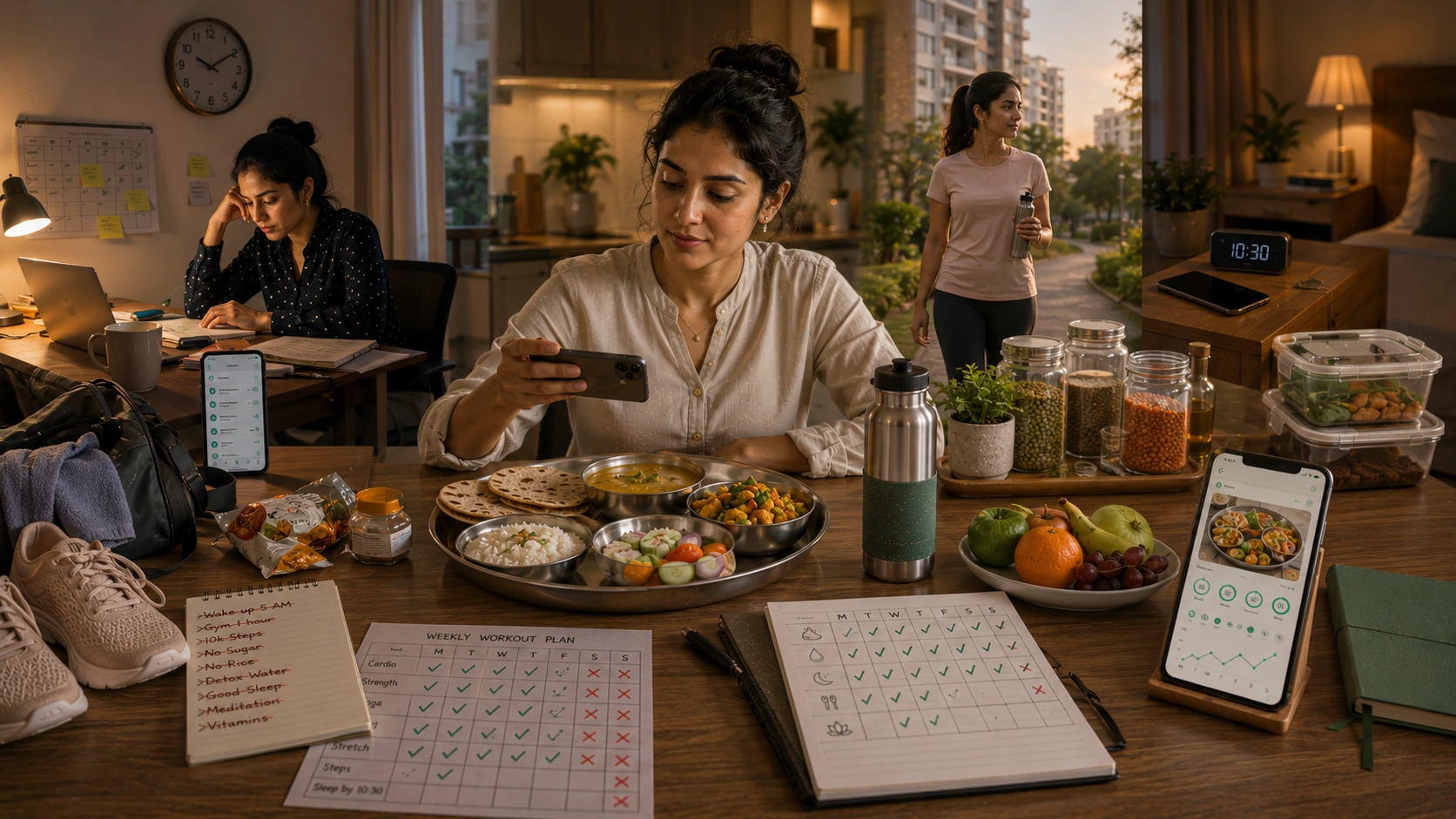
Most people know the basics of a healthy lifestyle. Eat balanced meals, move regularly, sleep well, drink enough water, and manage stress. The real challenge is maintaining these behaviours when work gets busy, family responsibilities increase, travel disrupts routines, or motivation disappears.
That is why sustainable health habits are different from short-term health challenges. They are practical behaviours that can continue through normal Indian life, including office schedules, home-cooked meals, festivals, weekends, travel, and occasional setbacks.
Building sustainable health habits for Indians does not require following a perfect diet or exercising every day. It requires creating a flexible healthy daily routine that makes better choices easier to repeat.
Why Perfect Routines Rarely Last
A perfect morning routine may include waking at 5 am, exercising for an hour, preparing every meal at home, drinking three litres of water, avoiding sweets, sleeping eight hours, and never missing a workout.
It sounds disciplined. It is also difficult for many people to maintain.
An IT employee may have late meetings with international teams. A working parent may spend mornings preparing children for school. An entrepreneur may travel frequently. Shift workers may not even have consistent meal or sleep timings.
When a routine only works under ideal conditions, one disruption can make people feel they have failed.
This all-or-nothing thinking is one reason people struggle with how to stay consistent with health.
A better approach is to create minimum behaviours that remain possible during busy periods.
For example:
A 45-minute workout becomes a 20-minute walk when time is limited.
A carefully planned lunch becomes dal, sabzi, roti, curd, and salad from the office canteen.
A detailed nutrition journal becomes simple meal tracking.
Seven perfect days become five reasonably consistent days.
A sustainable healthy routine should survive real life, not depend on perfect circumstances.
The Difference Between Healthy Habits and Strict Rules
Strict rules depend on restriction.
Healthy habits depend on repetition.
| Strict Rules | Healthy Habits |
| Never eat rice | Manage portions and build balanced meals |
| Exercise every day | Move regularly across the week |
| Avoid all sweets | Enjoy occasional foods mindfully |
| Follow the plan perfectly | Return to the routine after disruptions |
| Track every calorie | Build meal awareness around everyday eating |
| Change everything immediately | Improve one behaviour at a time |
This distinction matters because a lifestyle change should reduce decision fatigue, not create more of it.
Someone following an Indian diet without dieting can still eat roti, rice, dal, idli, poha, dosa, sabzi, curd, eggs, fish, chicken, and regional foods. The goal is to improve meal quality, portions, frequency, and overall patterns.
Similarly, healthy eating does not mean avoiding restaurants, festivals, or family meals.
It means developing enough nutrition awareness to make reasonable choices consistently.
The question is not, “Did I follow my routine perfectly?”
The better question is, “Can I repeat these behaviours for the next six months?”
Seven Sustainable Habits That Actually Work
The most effective health habits are simple enough to repeat and flexible enough to survive changing schedules.
1. Eating regular meals
Long gaps between meals can make it harder for some people to manage hunger and food choices later in the day.
Regular meals do not require eating at exactly the same time every day. They require creating a predictable eating pattern that fits your schedule.
A practical day might include poha with curd for breakfast, dal, rice, sabzi, and salad for lunch, fruit or roasted chana as a snack, and roti with paneer, egg curry, chicken, or dal for dinner.
These healthy Indian eating habits are often easier to sustain than restrictive meal plans built around unfamiliar foods.
2. Walking daily
Exercise does not have to begin with a gym membership.
Walking after dinner, taking stairs, getting off public transport slightly earlier, scheduling walking meetings, or completing short movement breaks during office hours can increase daily activity.
For people trying to build a healthy lifestyle for busy Indians, a realistic daily walking target is often more sustainable than an ambitious workout schedule that disappears after two weeks.
3. Drinking enough water
Hydration is simple, but busy schedules make it easy to forget.
Instead of relying on motivation, connect water intake with existing behaviours.
Drink water after waking up.
Keep a bottle visible at your desk.
Drink water with meals.
Refill the bottle during lunch.
This is habit stacking: attaching a new behaviour to an established routine.
4. Sleeping consistently
A sustainable wellness routine includes sleep.
Late-night scrolling, unpredictable work hours, long commutes, and weekend sleep disruption can make consistent rest difficult.
Start with one practical behaviour, such as maintaining a regular wake-up time, reducing screen use before bed, or creating a short bedtime routine.
Improving sleep gradually is more realistic than trying to redesign the entire day overnight.
5. Managing stress
Stress management does not require complicated routines.
Short walks, breathing exercises, talking with supportive people, setting work boundaries, spending time outdoors, or taking regular breaks can contribute to a more balanced lifestyle.
The objective is not to eliminate stress.
It is to build recovery into everyday life.
6. Eating more protein
Many Indian meals contain nutritious carbohydrates, vegetables, and fats but may need more attention to protein quantity and variety.
Simple options include dal, curd, paneer, milk, soy, tofu, eggs, fish, chicken, sprouts, and legumes.
For protein for Indian vegetarians, combining practical sources across meals is usually more realistic than depending on one food.
Adding curd to lunch, paneer or soy to dinner, dal to regular meals, or roasted chana as a snack can gradually improve the overall eating pattern.
7. Tracking progress
You cannot improve what you never notice.
However, food tracking does not always require weighing every ingredient or recording every calorie.
You can track:
- How many days you walked.
- Whether you included protein in major meals.
- How consistently you slept.
- How often you ate home-cooked meals.
- Whether you recorded your meals.
- Which habits disappeared during stressful weeks.
Simple tracking helps answer the practical question of how to stay consistent with health because it makes patterns visible.
Nutrimate supports this awareness-first approach through simple Indian meal intelligence and WhatsApp-first logging. Its India’s #1 whatsapp meal logging feature and Unique Caregiver feature are designed around reducing friction in everyday health tracking, helping individuals and families pay attention to routines without turning health into another complicated daily task.
What a Healthy Week Looks Like
A sustainable week should include structure without demanding perfection.
| Day | Practical Focus |
| Monday | Start with regular meals and a short evening walk |
| Tuesday | Include protein in major meals and maintain hydration |
| Wednesday | Review sleep, movement, and eating patterns |
| Thursday | Prepare or plan one convenient healthy meal for a busy day |
| Friday | Stay active even if work or social plans disrupt the routine |
| Saturday | Enjoy flexible eating while maintaining mindful eating and portion awareness |
| Sunday | Review the week and complete basic meal planning India for the days ahead |
The purpose of a weekly routine is not to complete every action perfectly.
It is to create enough structure that returning to healthy behaviour becomes easier.
For example, a working professional might cook dal and sabzi in larger quantities on Sunday, keep curd, fruit, eggs, paneer, or roasted chana available for quick meals, walk for 20 minutes after dinner on most days, and review the week’s habits every Sunday evening.
This is what sustainable health habits for Indians look like in practice.
Ordinary actions repeated often.
Common Mistakes That Make Habits Unsustainable
One major mistake is changing too many behaviours simultaneously.
Starting a strict diet, joining a gym, waking at 5 am, stopping sugar completely, tracking every calorie, and attempting daily meditation creates too much friction.
Another mistake is building routines around motivation.
Motivation changes. Systems reduce the need to make the same decision repeatedly.
People also abandon healthy routines because they:
- Choose habits that do not fit their work or family schedule.
- Follow unrealistic social media routines.
- Treat one unhealthy meal as complete failure.
- Depend on willpower instead of planning their environment.
- Make healthy eating habits unnecessarily expensive or complicated.
- Focus only on sustainable weight loss instead of energy, strength, sleep, mobility, and overall wellbeing.
- Expect immediate results from behaviours that need months of repetition.
The most important skill is learning to restart quickly.
Missing one walk is normal.
Eating more than planned at a wedding is normal.
Having a stressful workweek is normal.
The problem begins when a temporary disruption becomes a reason to abandon the entire healthy lifestyle change.
Consistency is not never missing.
Consistency is returning.
The Sustainable Living Checklist
☐ Choose health habits that fit your actual work and family schedule.
☐ Start with one or two behaviours instead of changing everything simultaneously.
☐ Build regular meals around familiar Indian food.
☐ Include practical protein sources throughout the week.
☐ Keep movement possible even when you cannot complete a full workout.
☐ Create simple hydration cues.
☐ Protect a reasonably consistent sleep routine.
☐ Use meal awareness instead of treating every food decision as a calorie calculation.
☐ Practise mindful eating during social events and weekends.
☐ Use simple meal tracking or habit tracking to understand patterns.
☐ Review your routine weekly instead of judging individual days.
☐ Adjust habits when your work, family responsibilities, or schedule changes.
☐ Focus on long-term weight management and overall wellbeing rather than rapid short-term results.
☐ Expect setbacks and create a plan for returning to your routine.
☐ Measure progress by repetition, energy, strength, sleep, and consistency, not only by body weight.
FAQs
Sustainable health habits are practical behaviours that improve health and can be maintained over the long term. Examples include regular meals, daily movement, adequate hydration, consistent sleep, balanced nutrition, stress management, and simple progress tracking.
Start with one behaviour that fits naturally into your current routine. Make the action easy to complete, connect it with an existing habit, track whether you repeat it, and gradually increase the difficulty only after the behaviour becomes consistent.
The easiest habit is usually one that requires minimal preparation and can connect with an existing routine. A 10-minute walk after dinner, drinking water after waking up, adding a protein source to breakfast, or recording one meal each day can be practical starting points.
Build routines that work during busy periods, track simple behaviours, review progress regularly, adjust your environment, and return quickly after setbacks. Long-term consistency comes from flexible systems rather than depending entirely on motivation.
Reference:
- The World Health Organization provides evidence-based recommendations on physical activity and sedentary behaviour, including guidance for adults on regular movement and reducing sedentary time.
WHO Guidelines on Physical Activity and Sedentary Behaviour - A peer-reviewed systematic review and meta-analysis published in the British Journal of General Practice examined how long it takes for health-related behaviours to become habitual and found substantial variation depending on the behaviour and individual.
Time to Form a Habit: Systematic Review and Meta-Analysis
Read Nutrimate Wellness first on Google