 Pradnya Ganorkar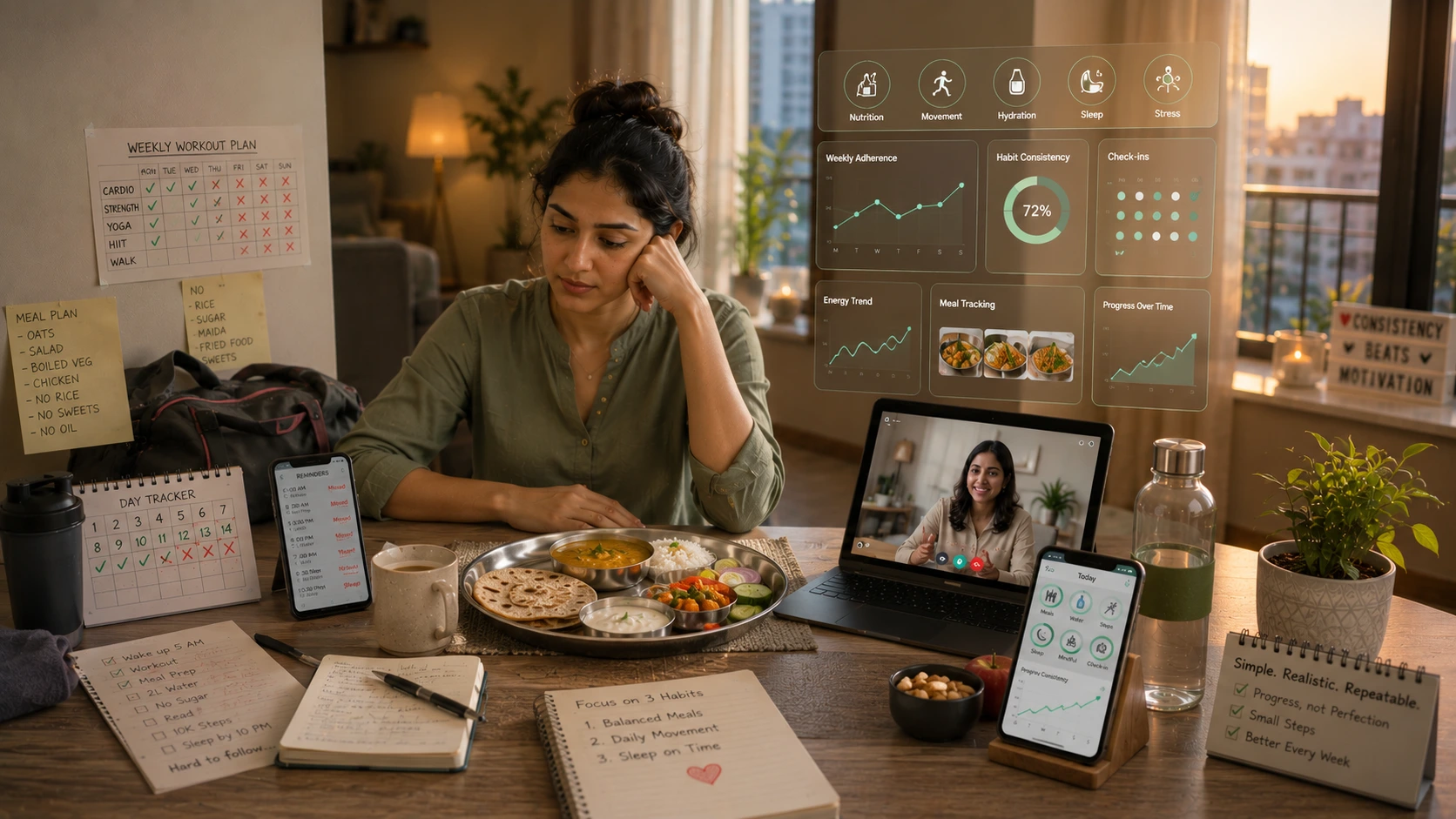
Every Monday feels like a fresh start, until Wednesday.
You plan your meals, promise to exercise, sleep earlier, drink more water, and finally build a healthy lifestyle. Then work becomes demanding, college assignments pile up, children need attention, or one unplanned meal makes the entire routine feel broken.
If you are wondering how to stay consistent with health, the solution is not to remain motivated every day. Motivation naturally changes. Long-term health consistency comes from creating simple health habits that still work when life becomes busy.
For many Indians, the challenge is not knowing what to do. The challenge is turning good intentions into a realistic healthy lifestyle routine that can survive office schedules, family responsibilities, social occasions, travel, and low-energy days.
Why Motivation Always Fades
Motivation is useful for starting, but unreliable for continuing.
A person may join a gym after seeing an inspiring transformation story. A student may decide to stop ordering late-night food. A working parent may begin preparing healthier meals after a medical checkup.
The initial excitement creates action, but everyday responsibilities eventually return.
Research on habit formation suggests that behaviours become more automatic through repetition in consistent contexts, and the time required varies considerably between individuals. Missing one opportunity does not necessarily prevent a habit from forming, but inconsistency over longer periods can make automaticity harder to develop.
This means staying motivated should not be the primary strategy for maintaining health.
Instead, reduce the number of decisions required to follow your routine.
Keep walking shoes visible. Decide breakfast options in advance. Keep a water bottle near your workspace. Create a fixed bedtime reminder. Make healthy actions easier to repeat.
The goal is to build an environment where the healthier choice requires less effort.
The Biggest Mistake People Make When Starting a Health Journey
The biggest mistake is trying to change everything at once.
Someone who has been inactive for months may suddenly plan to exercise six days a week, stop eating outside food, eliminate sugar, track every calorie, wake up at 5 AM, and sleep before 10 PM.
This approach feels productive because the change is dramatic.
But dramatic change creates a high daily burden.
When one action fails, people often assume the entire routine has failed. Missing the gym leads to ordering unhealthy food. Eating at a wedding leads to abandoning the plan for the weekend. A stressful week becomes a reason to restart next Monday.
This all-or-nothing mindset is one reason why diets fail long term.
A better approach is to establish a small number of sustainable health habits.
For example:
Choose a ten-minute walk after dinner before committing to a complex workout schedule.
Improve one regular meal before redesigning your entire Indian diet.
Track meals for awareness before trying to control every calorie.
Move bedtime earlier gradually instead of expecting an immediate two-hour change.
A sustainable lifestyle change should reduce friction, not make everyday life harder.
Discipline vs Systems: Which One Actually Works?
Discipline matters, but systems make discipline easier to maintain.
Consider two office employees trying to improve their healthy eating.
The first employee decides to use willpower. Every afternoon, they choose between ordering fast food, skipping lunch, or finding something nutritious.
The second employee creates a system. They identify three convenient lunch options, keep fruit or roasted chana available for busy days, schedule lunch time when possible, and review their eating patterns every weekend.
The second person still needs discipline, but fewer decisions depend on willpower.
This distinction matters for healthy habits for working professionals.
| Motivation-Based Approach | System-Based Approach |
| Exercise when you feel energetic | Schedule realistic movement into your day |
| Decide every meal at the last minute | Keep repeatable meal options available |
| Depend on memory to drink water | Connect hydration to existing routines |
| Give up after missing a day | Return to the routine at the next opportunity |
| Judge progress by perfection | Review patterns and improve gradually |
Systems create consistency by making desired behaviours easier to repeat.
For someone managing long commutes, office deadlines, shift work, studies, or parenting responsibilities, the best healthy routine is not the most ambitious routine. It is the one that continues functioning during difficult weeks.
Five Habits That Help You Stay Consistent
Fixed Meal Timings
You do not need to eat at exactly the same minute every day.
However, having reasonably predictable meal windows can reduce skipped meals, impulsive snacking, and late-night overeating.
For someone following an Indian diet for busy professionals, this might mean identifying a realistic breakfast window, protecting lunch time on most working days, and avoiding unnecessarily delayed dinners when possible.
Consistency matters more than creating a perfect schedule.
Daily Walking
Walking is one of the simplest ways to introduce regular movement.
An office worker can walk during a phone call. A student can take a short walk after dinner. Parents can walk together in the evening.
Start with a duration that feels manageable and increase gradually.
The objective is to make movement part of normal life rather than depending entirely on formal workouts.
Better Sleep
A sustainable healthy lifestyle is difficult to maintain when sleep is consistently inadequate.
Poor sleep can affect attention, mood, appetite regulation, and willingness to exercise. Adults should generally aim for sufficient sleep based on individual needs and professional guidance where necessary.
Create a repeatable wind-down routine.
Reduce unnecessary screen use before bed, keep wake-up times reasonably consistent, and avoid treating sleep as the first habit to sacrifice during busy periods.
Meal Awareness
You do not need to become obsessed with calories to understand your eating patterns.
Simple meal tracking can help you notice:
Are you skipping breakfast regularly?
Are vegetables missing from most meals?
Are weekends significantly different from weekdays?
Are you relying on packaged snacks during stressful afternoons?
Does late-night eating happen after insufficient meals earlier in the day?
This type of nutrition awareness turns vague assumptions into visible patterns.
Nutrimate supports this approach by making everyday meal logging and Indian food awareness simpler through WhatsApp-first tracking. Rather than expecting perfection, the focus is on making routines visible so users can identify patterns and improve gradually.
India’s #1 whatsapp meal logging feature and Unique Caregiver feature can also support individuals and families who want a simpler way to maintain awareness of everyday health routines without adding another complicated process to their day.
Weekly Reviews
Most people review their health only after something goes wrong.
A weekly review creates an opportunity to adjust earlier.
Ask yourself:
What worked well this week?
Which habit was difficult to maintain?
What repeatedly disrupted my routine?
Which healthy action felt easiest?
What is one adjustment I should make next week?
A ten-minute review can strengthen consistency because it turns setbacks into useful information.
How to Build a Routine That Fits Your Lifestyle
The best routine is designed around your real life.
An IT employee working long hours should not copy the routine of a fitness influencer.
A college student with changing class schedules may need flexible exercise windows.
A parent managing work and family responsibilities may need shared meal planning and short home-based activity routines.
Start by identifying the biggest source of friction.
Is it a lack of time?
Unplanned meals?
Poor sleep?
Frequent travel?
Stress?
Family responsibilities?
Then use a simple framework:
Choose → Reduce → Attach → Track → Review
Choose one priority. Select the health behaviour that would make the biggest realistic difference.
Reduce the difficulty. Make the action easier to begin. A fifteen-minute walk completed regularly is more useful than an ambitious workout repeatedly skipped.
Attach it to an existing routine. Walk after dinner. Drink water after every meeting. Prepare tomorrow’s breakfast while cleaning the kitchen.
Track the behaviour. Use a notebook, calendar, checklist, or simple digital system. Food tracking and habit monitoring should increase awareness, not create stress.
Review weekly. Identify what worked and adjust the routine.
This process helps answer how to stay consistent with health because consistency becomes something you design rather than something you wait to feel.
Consistency Checklist for Busy Indians
Use this checklist to evaluate whether your routine is realistic:
☐ I have selected two or three priority health habits instead of trying to change everything.
☐ My routine works on normal working days, not only ideal days.
☐ I have simple meal options available when schedules become busy.
☐ I include regular movement even when I cannot complete a full workout.
☐ I treat sleep as part of my health routine.
☐ I use meal awareness to understand patterns without judging every meal.
☐ I have made healthier actions easier to begin.
☐ I know which situations usually disrupt my routine.
☐ I review my progress once a week.
☐ I return to my routine after setbacks instead of waiting until Monday.
☐ I measure progress by consistency and improvement, not perfection.
☐ My healthy lifestyle change can continue during stressful or busy weeks.
Reference:
- Making Health Habitual: The Psychology of Habit Formation
- World Health Organization Guidelines on Physical Activity and Sedentary Behaviour
FAQs
Motivation often declines after the initial excitement of starting a new routine disappears. Work pressure, stress, decision fatigue, slow results, and unrealistic expectations can make staying motivated difficult. Instead of depending entirely on motivation, create simple routines and environments that make healthy behaviours easier to repeat.
Start with one or two manageable actions, connect them to existing routines, reduce unnecessary decisions, track your behaviour, and review progress weekly. Learning how to stay consistent with health is largely about creating systems that can survive busy schedules, low-energy days, and occasional setbacks.
Discipline is more reliable than motivation, but good systems reduce how much discipline you need. Preparing meals in advance, scheduling movement, creating sleep routines, and tracking simple behaviours can make healthy habits easier to maintain without depending on willpower every day.
There is no universal timeline. Research indicates that the time required for behaviours to become automatic varies substantially depending on the person, behaviour, and circumstances. Focus on repeating realistic actions over time rather than expecting a habit to become automatic within a fixed number of days.
Read Nutrimate Wellness first on Google