 Pradnya Ganorkar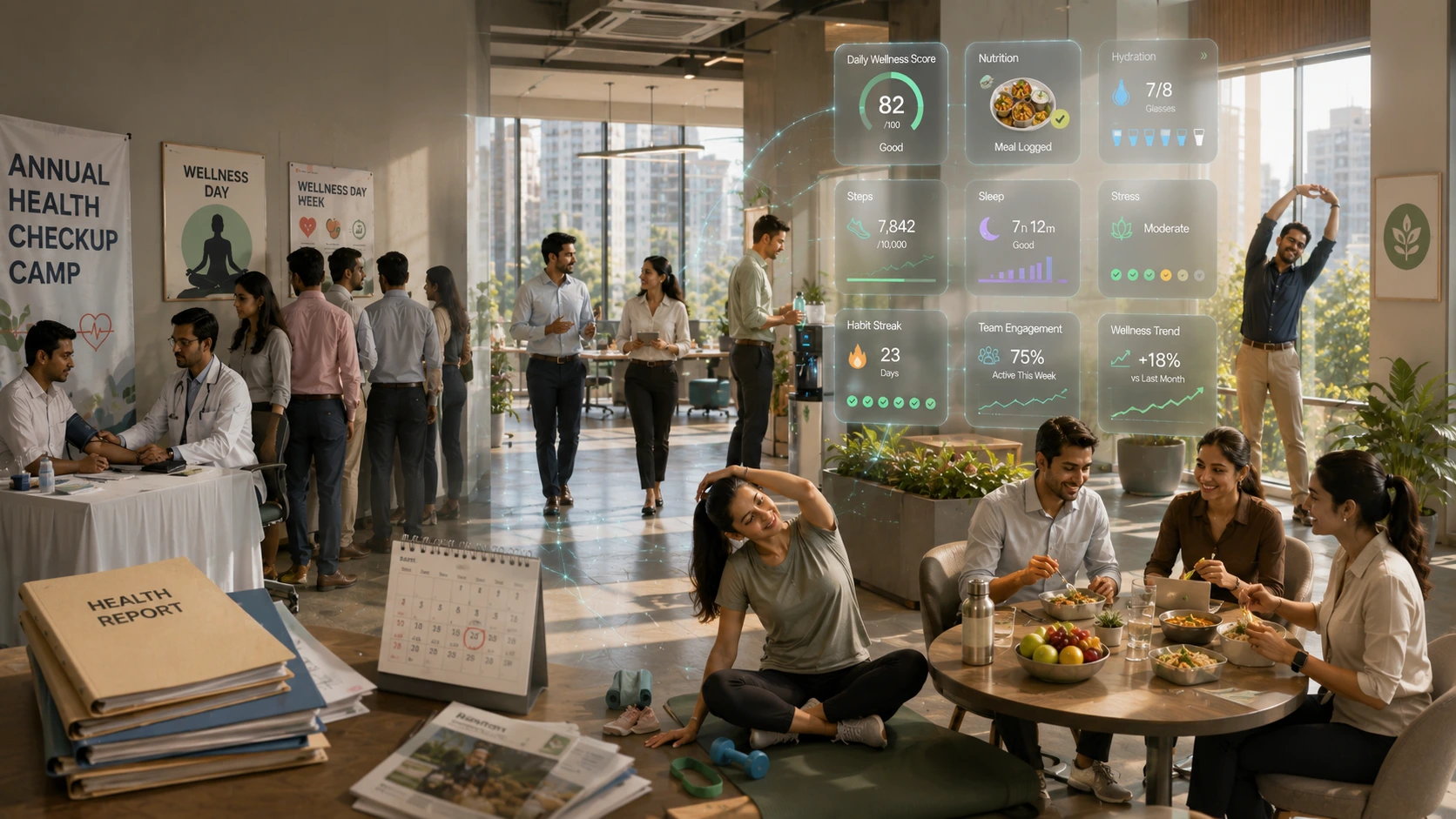
For many organisations, employee wellness revolves around annual health checkups, wellness weeks, or occasional fitness challenges. While these initiatives can create awareness, they rarely change everyday behaviour.
True workplace health is built between those events, through the small decisions employees make every day. Choosing a balanced lunch instead of skipping meals, staying hydrated during long meetings, taking short movement breaks, or getting enough sleep all have a greater long-term impact than a single health screening.
This shift is why many organisations are investing in employee health tracking solutions alongside corporate wellness initiatives. The focus is moving from reactive healthcare to preventive healthcare, where consistent healthy habits help reduce long-term health risks before they become costly medical issues.
For Indian businesses facing rising rates of diabetes, obesity, hypertension, stress-related illnesses, and burnout, continuous wellness is becoming a business necessity rather than an employee perk.
Why Annual Health Checkups Aren’t Enough
Annual health checkups remain valuable.
They can identify high blood pressure, elevated blood sugar, abnormal cholesterol levels, or other early warning signs that require medical attention.
However, they provide only a snapshot of someone’s health on a particular day.
Health does not change once a year.
It changes every day through eating habits, sleep quality, stress levels, physical activity, hydration, and daily routines.
For example, an employee may receive normal blood test results during an annual screening but gradually develop unhealthy habits over the following months because of:
- Long working hours
- Frequent business travel
- Irregular meal timings
- High stress
- Reduced physical activity
By the time the next annual checkup arrives, these habits may already have contributed to weight gain, poor metabolic health, or increased disease risk.
This reactive approach often misses opportunities for early intervention.
Continuous workplace health monitoring helps organisations understand health trends before they become serious concerns.
Instead of asking,
“What happened during the past year?”
companies can begin asking,
“What healthy behaviours are employees practising every week?”
That simple shift changes the entire philosophy of workplace wellbeing.
The Hidden Cost of Reactive Wellness
Poor employee health affects far more than medical insurance claims.
It also contributes to:
- Lower productivity
- Increased absenteeism
- Presenteeism, where employees work despite poor health
- Reduced engagement
- Higher stress levels
- Increased turnover
For industries such as IT services, manufacturing, healthcare, financial services, and BPOs, these hidden costs can significantly influence organisational performance.
Investing in preventive health monitoring tools allows organisations to encourage healthier habits before medical issues escalate.
Rather than reacting to illness, employers can support healthier daily behaviours.
The Difference Between Health Events and Health Habits
Many workplace wellness programmes focus heavily on events.
Examples include:
- Health camps
- Marathon participation
- Yoga Day celebrations
- Nutrition seminars
- Annual health assessments
These activities certainly create awareness.
However, awareness alone rarely changes behaviour.
Health improves when awareness is followed by consistent action.
The difference can be understood clearly.
| Health Events | Health Habits |
| Annual health check | Daily balanced meals |
| Wellness Week | Regular walking breaks |
| One-time nutrition webinar | Consistent nutrition awareness |
| Fitness challenge | Sustainable daily movement |
| Medical screening | Ongoing sleep and stress management |
Events create motivation.
Habits create results.
The organisations seeing stronger employee wellbeing outcomes are the ones that encourage healthy behaviour throughout the year rather than concentrating all efforts into a few campaigns.
Everyday Behaviours Shape Long-Term Health
Consider a software engineer working in Bengaluru.
Their annual medical report may look perfectly healthy.
Yet throughout the year they may:
- Skip breakfast before commuting.
- Sit continuously for eight to ten hours.
- Consume multiple cups of sugary tea or coffee.
- Order takeaway meals several times a week.
- Sleep only five to six hours.
None of these habits immediately appear during a health checkup.
Together, however, they gradually influence energy, productivity, metabolic health, and disease risk.
Continuous employee health monitoring focuses on these everyday behaviours rather than waiting for illness to develop.
For organisations, this approach creates opportunities to encourage practical improvements such as:
- Better hydration habits
- Healthier cafeteria choices
- Walking meetings
- Flexible movement breaks
- Nutrition awareness initiatives
- Stress management support
These interventions are simple, scalable, and more likely to create lasting behaviour change than isolated wellness events.
In the long run, successful corporate health programs are built not around occasional campaigns but around helping employees make healthier decisions every day.
What Continuous Wellness Looks Like
Continuous wellness is not about asking employees to follow strict diet plans or participate in daily fitness challenges. It is about creating an environment where healthier choices become easier and more sustainable.
Instead of measuring success by the number of people who attend a wellness event, organisations should focus on whether employees are gradually building healthier routines.
This is where continuous employee wellness differs from traditional wellness initiatives.
Nutrition Awareness
Poor nutrition is one of the most overlooked workplace challenges.
Busy professionals often:
- Skip breakfast before commuting.
- Depend on cafeteria snacks.
- Order high-calorie takeaway meals.
- Eat lunch while working.
- Consume excessive tea, coffee, or sugary beverages.
Improving employee nutrition does not require complicated meal plans.
Small behavioural changes often produce meaningful results, including:
- Choosing balanced home-cooked lunches more often.
- Including protein with every meal.
- Drinking enough water throughout the day.
- Understanding food labels.
- Making healthier snack choices during long workdays.
Encouraging nutrition awareness rather than restrictive dieting helps employees make informed decisions without feeling judged.
Daily Movement
Many Indian professionals spend eight to ten hours sitting.
Even employees who exercise regularly may experience the effects of prolonged inactivity.
Simple movement habits can significantly improve physical wellbeing.
Examples include:
- Walking during phone calls.
- Using stairs whenever possible.
- Stretch breaks every hour.
- Short walking meetings.
- Standing after prolonged periods of sitting.
These habits require very little time but support better posture, circulation, and energy levels.
Hydration
Hydration is frequently ignored despite its effect on concentration, mood, and productivity.
Employers can encourage healthier hydration habits by:
- Providing easily accessible drinking water.
- Placing refill stations throughout the workplace.
- Promoting reusable bottles.
- Including hydration reminders within workplace wellness engagement tools.
These simple interventions improve wellbeing without disrupting work.
Sleep
Poor sleep directly affects:
- Decision making
- Stress tolerance
- Mood
- Productivity
- Appetite regulation
Long work hours, shift work, late-night meetings with global teams, and excessive screen time have made sleep a growing workplace health issue.
Organisations that educate employees about sleep hygiene often see improvements in both wellbeing and workplace performance.
Stress Management
Stress cannot always be eliminated.
However, employees can learn healthier ways to manage it.
Examples include:
- Mindfulness sessions.
- Flexible work arrangements.
- Mental health support.
- Encouraging regular breaks.
- Manager training on workload management.
Reducing chronic stress contributes to healthier behaviours across nutrition, physical activity, and sleep.
Together, these everyday actions create a culture of workplace wellbeing instead of occasional wellness campaigns.
How Technology Supports Continuous Wellness
Technology should never replace healthy habits.
Its role is to make those habits easier to understand, measure, and maintain.
Modern digital wellness platform India solutions help organisations shift from one-time interventions to continuous support without increasing administrative burden.
For example, instead of manually tracking participation in wellness activities, organisations can use employee health tracking solutions to identify broader behavioural trends while respecting employee privacy.
Technology can support organisations by helping them understand:
- Participation in wellness initiatives.
- General nutrition awareness.
- Physical activity patterns.
- Habit consistency.
- Overall engagement with wellness programmes.
This information enables HR teams to make better decisions about future corporate wellness initiatives instead of relying on assumptions.
Supporting Employees Without Feeling Monitored
One concern many organisations have is whether employees will feel that their health is being monitored too closely.
Successful programmes avoid this by focusing on encouragement rather than surveillance.
Employees are more likely to participate when health tracking is:
- Voluntary.
- Simple to use.
- Designed around personal wellbeing.
- Focused on awareness instead of judgment.
- Used to encourage healthier habits rather than evaluate performance.
This creates trust while improving participation.
Making Health Tracking Simpler
The most effective wellness tools reduce friction.
Employees are unlikely to maintain complicated spreadsheets or manually enter every calorie they consume.
Simple nutrition tracking app experiences that fit naturally into everyday routines are more sustainable.
For example, Nutrimate focuses on practical health awareness rather than perfection. Its AI-powered, Indian-first platform supports simple health tracking designed around Indian food habits and daily consistency. With India’s #1 whatsapp meal logging feature and Unique Caregiver feature, employees can build awareness of their routines without turning health into another complicated task.
As organisations expand their wellness initiatives, complementary ecosystems can also support specialised use cases. For instance, FitVia helps gym owners, trainers, and dietitians improve member engagement, nutrition coaching, and client retention, while Nutrimate focuses on everyday health awareness for individuals, families, and workplace wellness programmes.
The future of employee wellbeing is not built on collecting more data.
It is built on helping people make better everyday decisions with less effort.
Benefits for Employees and Employers
Continuous wellness creates value for both employees and organisations because it focuses on preventing health problems instead of reacting to them.
When people build healthier routines over time, they generally experience more consistent energy, better productivity, and improved wellbeing. At the same time, employers gain better visibility into participation trends and the effectiveness of their wellness initiatives.
Benefits for Employees
Employees benefit from continuous wellness through:
- Better awareness of eating habits and nutrition.
- Increased daily movement.
- Improved hydration.
- Better stress management.
- Healthier sleep routines.
- Greater motivation to maintain healthy behaviours.
- Reduced risk of lifestyle-related diseases over time.
Rather than feeling pressured to achieve unrealistic fitness goals, employees can focus on gradual progress that fits into their daily lives.
This approach encourages long-term employee wellbeing instead of short-term enthusiasm.
Benefits for Employers
For organisations, continuous wellness contributes to stronger business outcomes.
Potential benefits include:
- Higher participation in corporate wellness initiatives.
- Improved employee engagement.
- Better wellness ROI through sustained behaviour change.
- Reduced absenteeism.
- Better workplace morale.
- Stronger wellbeing culture.
- Data-driven decision making using health analytics.
Instead of measuring success by attendance at a single event, employers can evaluate how consistently employees engage with healthier routines throughout the year.
This creates a stronger foundation for long-term corporate health strategy.
Continuous Wellness Framework
Successful workplace wellness programmes are built around continuous improvement rather than one-time campaigns.
A simple framework looks like this:
Measure
Start by understanding current behaviours.
Examples include:
- Physical activity.
- Nutrition awareness.
- Hydration habits.
- Sleep routines.
- Participation in wellness activities.
The goal is not to judge employees but to establish a starting point.
↓
Understand
Identify patterns rather than isolated events.
Questions organisations can explore include:
- Which departments participate most?
- Which wellness initiatives receive the highest engagement?
- Are employees struggling with nutrition, movement, or stress?
- Which interventions create lasting participation?
This helps organisations make informed decisions instead of relying on assumptions.
↓
Support
Provide practical resources that make healthy choices easier.
Examples include:
- Healthy cafeteria options.
- Walking challenges.
- Nutrition education.
- Flexible movement breaks.
- Mental wellbeing resources.
- Wellness communication throughout the year.
Support should be simple, accessible, and relevant to employees’ everyday lives.
↓
Improve
Wellness programmes should evolve based on participation and feedback.
Continuous improvement may include:
- Refining wellness campaigns.
- Introducing new initiatives.
- Improving employee communication.
- Simplifying participation.
The objective is sustained behaviour change rather than short-term excitement.
↓
Repeat
Healthy workplaces are created through repetition.
Small improvements repeated consistently lead to healthier employees and stronger organisations.
Continuous wellness is an ongoing process, not a one-time project.
Near the conclusion of this journey, organisations increasingly recognise that simple health awareness drives better engagement than complex wellness programmes. Platforms such as Nutrimate support this approach through AI-powered, Indian-first health tracking built around everyday routines. With India’s #1 whatsapp meal logging feature and Unique Caregiver feature, organisations can encourage healthier habits while giving employees a simple, practical way to stay consistent without feeling monitored.
FAQs
Continuous employee wellness is an ongoing approach to workplace health that encourages daily healthy habits such as better nutrition, regular movement, hydration, sleep, and stress management instead of relying only on annual health campaigns or medical checkups.
Annual health checkups provide valuable medical information but only represent one point in time. Daily habits influence health throughout the year, making continuous wellness and employee health tracking solutions more effective for long-term prevention.
Employers can encourage healthy habits by making wellness simple and accessible through nutrition education, movement breaks, flexible wellness initiatives, mental health support, and practical workplace wellness engagement tools that promote consistency instead of perfection.
Rather than monitoring individual employees, organisations should focus on broader wellness trends such as participation rates, nutrition awareness, physical activity, hydration habits, engagement levels, and overall workplace health monitoring to improve future wellness programmes.
References
- World Health Organization. Healthy Workplaces: A Model for Action
https://www.who.int/publications/i/item/healthy-workplaces-a-model-for-action - International Labour Organization. Safety and Health at the Heart of the Future of Work
https://www.ilo.org/global/topics/safety-and-health-at-work
Read Nutrimate Wellness first on Google