 Pradnya Ganorkar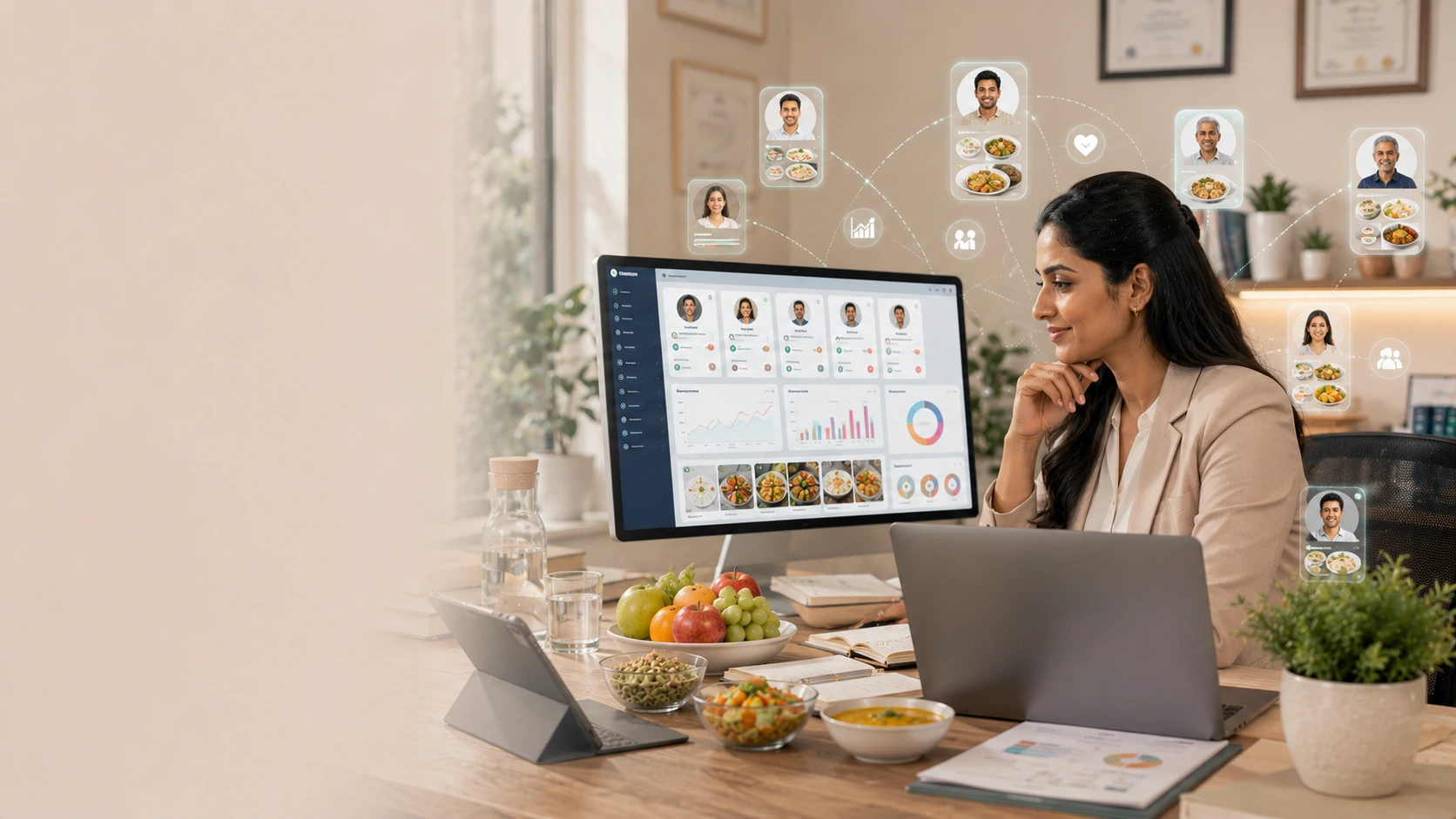
For many nutritionists, dietitians, and wellness coaches, growth creates an unexpected challenge.
Getting more clients is often the goal. Managing those clients effectively becomes the problem.
As nutrition practices expand, personalized support can quickly become difficult to maintain. Meal plan updates take longer, client follow-ups become inconsistent, progress tracking gets fragmented, and important behavioral patterns can be missed.
This is where modern nutritionist client management software is becoming increasingly important.
Instead of replacing the human element of nutrition coaching, the right technology helps practitioners preserve personalization while serving more people efficiently. With growing demand for patient nutrition tracking, remote consultations, preventive healthcare, and wellness coaching across India, scalable systems are no longer optional.
Today’s leading nutrition professionals are combining clinical expertise with structured workflows, automation, and data visibility to deliver better outcomes without sacrificing quality.
Why Scaling Nutrition Practices Is Difficult
Most nutrition professionals begin their practice with a relatively small client base.
At this stage, personalization is manageable.
The challenge appears when client numbers grow.
A nutritionist managing 10 clients may remember individual food preferences, compliance patterns, and health concerns. A nutritionist managing 50, 100, or 200 clients faces a completely different operational reality.
Common growth challenges include:
- Delayed follow-ups
- Missed client check-ins
- Manual meal tracking
- Inconsistent accountability
- Difficulty monitoring progress
- Fragmented client records
- Increased administrative workload
Many practitioners spend more time organizing information than delivering nutritional guidance.
This problem becomes even more significant in India because nutrition recommendations must account for regional diets, family eating habits, religious food preferences, budget constraints, and diverse health goals.
Managing a client from Mumbai, Nagpur, Chennai, and Delhi often requires entirely different meal planning considerations.
Without structured systems, growth frequently results in lower service quality.
This is why many practices are investing in nutrition coaching software, dietitian practice management tools, and integrated wellness practice software solutions that centralize operations while preserving client experience.
The Personalization Challenge
Personalization is one of the primary reasons clients choose a nutritionist over generic diet apps.
People want guidance that reflects:
- Their food habits
- Their medical history
- Their lifestyle
- Their fitness goals
- Their family environment
- Their motivation levels
However, personalization becomes difficult when data is scattered across WhatsApp chats, spreadsheets, PDFs, notes, and multiple communication platforms.
A common mistake is assuming personalization requires more manual work.
In reality, personalization requires better visibility.
When practitioners can instantly access food logs, compliance trends, health indicators, and behavioral patterns, they can provide highly relevant recommendations without increasing administrative effort.
This is where effective patient nutrition tracking and preventive health tracking systems become valuable.
For example:
A nutritionist managing weight-loss clients may notice that several clients consistently under-consume protein during weekdays.
Instead of discovering this issue after a monthly consultation, real-time tracking allows early intervention.
Similarly, a parent-focused nutrition practice may identify recurring nutrient gaps among children before they become significant concerns.
The objective is not to collect more data.
The objective is to surface the right data at the right time.
Modern best wellness software for nutritionists increasingly focuses on visibility, actionable insights, and simplified workflows rather than overwhelming practitioners with information.
Building Repeatable Systems
The most scalable nutrition practices do not depend entirely on memory.
They depend on systems.
A repeatable system allows practitioners to deliver consistent quality regardless of client volume.
Some of the most effective systems include:
Standardized Onboarding
Every client should complete a structured intake process covering:
- Medical history
- Lifestyle assessment
- Food preferences
- Activity levels
- Sleep patterns
- Goal setting
Standardized onboarding improves consistency and reduces information gaps.
Structured Follow-Up Frameworks
Instead of reacting to client messages individually, successful practices often create scheduled review systems.
Examples include:
- Weekly check-ins
- Bi-weekly progress reviews
- Monthly assessments
- Goal milestone evaluations
This improves both accountability and client retention.
Centralized Client Records
A growing practice needs a single source of truth.
The best dietitian practice management systems consolidate:
- Consultation history
- Nutrition plans
- Progress metrics
- Communication logs
- Compliance reports
This reduces time spent searching for information and increases service quality.
Automated Reporting
Manual reporting becomes unsustainable at scale.
Automated progress summaries help practitioners focus on coaching rather than administration.
The combination of systems and expertise creates a more predictable client experience while enabling growth.
Client Monitoring Between Sessions
One of the biggest limitations of traditional nutrition coaching is the lack of visibility between consultations.
A client may have a consultation today and another two weeks later.
What happens during those fourteen days often determines outcomes.
Many practitioners rely on self-reported updates, which are often incomplete or inaccurate.
Continuous patient nutrition tracking provides a more realistic picture of daily behavior.
Monitoring between sessions helps identify:
- Meal adherence patterns
- Nutrient deficiencies
- Missed meals
- Overeating episodes
- Weekend deviations
- Hydration habits
- Supplement compliance
This level of visibility supports more proactive coaching.
For Indian users, meal logging can often become a major barrier.
Traditional calorie tracking apps frequently struggle with regional foods and complex homemade meals.
Platforms such as Nutrimate simplify this process through WhatsApp-based logging, helping users maintain consistency without adding another app to their daily routine.
The platform’s India’s #1 whatsapp meal logging feature and Unique Caregiver feature help improve engagement while reducing tracking friction for individuals and families.
For nutritionists, easier logging generally leads to better compliance and more reliable data.
The result is improved clinic patient engagement and stronger long-term outcomes.
Automation vs Human Support
Automation is often misunderstood.
Many practitioners worry that automation will reduce personal connection.
In reality, automation should handle repetitive tasks so practitioners can spend more time on meaningful interactions.
Tasks suitable for automation include:
- Appointment reminders
- Progress summaries
- Food log collection
- Habit tracking
- Follow-up notifications
- Educational content delivery
Tasks that should remain human-led include:
- Behavior coaching
- Motivation support
- Clinical decision-making
- Emotional guidance
- Goal adjustment
- Relationship building
The best practices use technology to remove operational friction while preserving human expertise.
This balance is becoming increasingly important as wellness services expand beyond traditional clinics into online coaching, corporate wellness programs, gyms, and preventive healthcare initiatives.
Many advanced wellness practice software platforms now include health analytics dashboard capabilities that highlight client risks, adherence patterns, and intervention opportunities without requiring manual analysis.
The technology handles monitoring.
The practitioner provides interpretation and support.
That combination creates scalable personalization.
Growth Framework
Scaling a nutrition practice successfully requires more than acquiring new clients.
Growth must be supported by systems, visibility, and operational efficiency.
A practical framework consists of five stages.
Stage 1: Standardize
Document:
- Onboarding workflows
- Consultation structures
- Goal-setting processes
- Review schedules
Consistency creates operational stability.
Stage 2: Centralize
Implement a single platform for:
- Client records
- Communication
- Progress tracking
- Reporting
This improves efficiency and reduces errors.
Stage 3: Monitor
Use patient nutrition tracking, health analytics dashboard tools, and preventive health tracking systems to identify trends before problems escalate.
Stage 4: Automate
Automate repetitive administrative tasks while preserving human coaching interactions.
Stage 5: Scale
Once systems are functioning effectively, practitioners can confidently increase client volume without reducing service quality.
For nutrition businesses serving gyms, wellness centers, and coaching programs, integrated platforms become particularly valuable.
FitVia, a specialized solution from Nutrimate Wellness, is designed for dietitians, fitness trainers, influencers, and gym operators looking to scale client management efficiently.
The platform combines:
- Multi-client dashboards
- WhatsApp-based food logging
- Meal planning using more than 1 lakh Indian foods
- Supplement compliance tracking
- Client progress reporting
- Trainer dashboards
- Member engagement tools
For practitioners seeking a comprehensive nutrition coaching software solution, this type of ecosystem reduces fragmentation and improves operational visibility.
The broader wellness industry is also moving toward integrated reporting environments similar to employee health dashboard, corporate health dashboard, employee health monitoring, and workplace health tracking systems that allow stakeholders to monitor health trends at scale.
As preventive healthcare continues to grow in India, nutrition professionals who adopt scalable systems will be better positioned to serve both individual clients and organizational wellness programs.
Interestingly, many of the operational principles used in CRM software for weight loss clinics, best software for psychotherapists India, and other healthcare management systems are now being adapted to nutrition coaching.
The objective remains the same.
Deliver personalized outcomes without creating operational complexity.
The future of successful nutrition practices will not belong to those who work harder.
It will belong to those who build smarter systems that enable deeper personalization, stronger accountability, and better client outcomes.
Reference
- National Institute of Nutrition (Indian Food Composition Tables 2017)
- World Health Organization – Healthy Diet Factsheet
https://www.who.int/news-room/fact-sheets/detail/healthy-diet
FAQs
Nutritionists scale their practice by standardizing workflows, centralizing client information, implementing patient nutrition tracking, automating administrative tasks, and using nutritionist client management software that helps maintain personalization while managing larger client volumes.
The number varies based on service model, automation, and support systems. A nutritionist using structured dietitian practice management and nutrition coaching software tools can often manage significantly more clients than someone relying on manual processes while still maintaining quality and personalization.