 Pradnya Ganorkar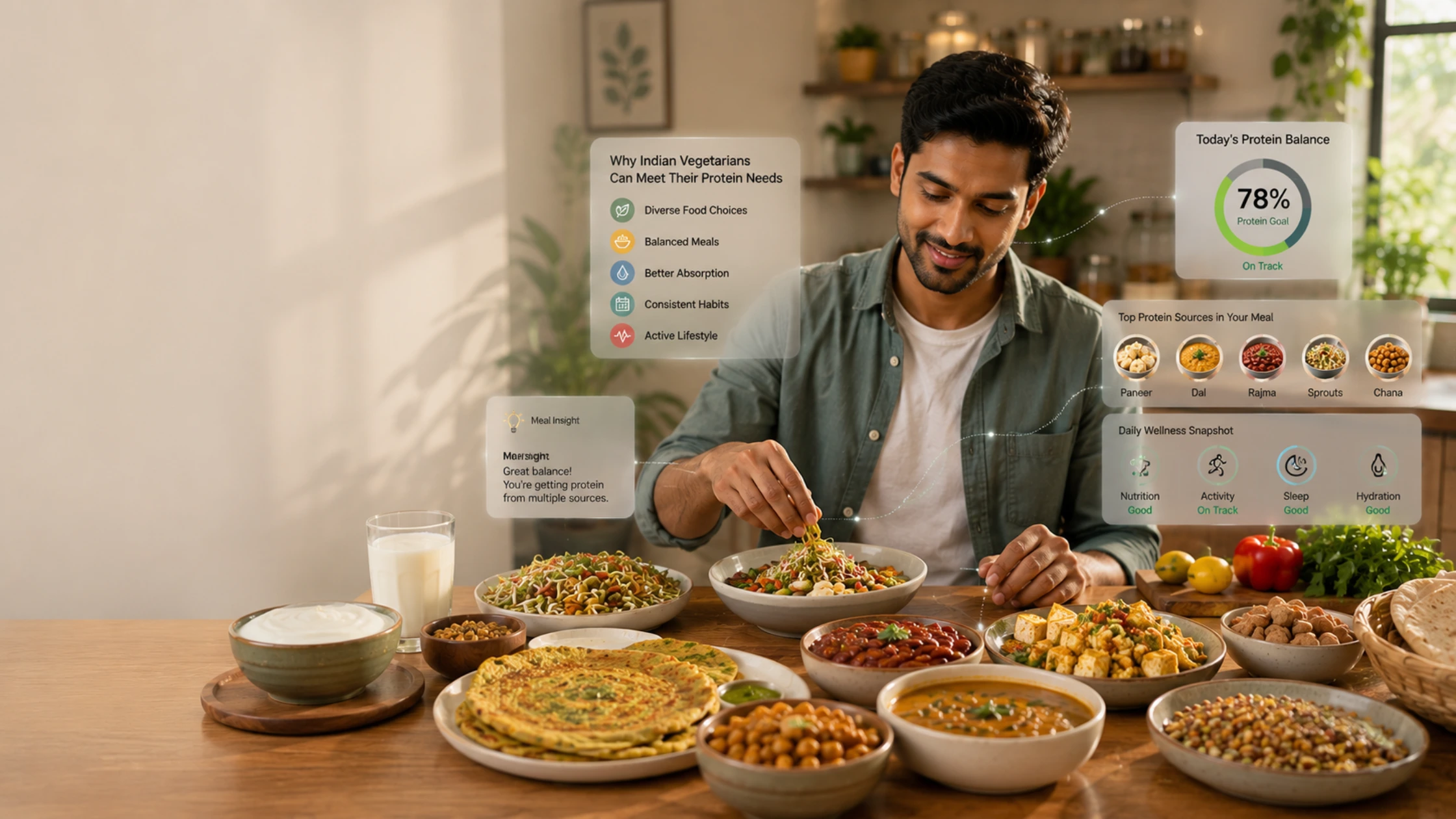
Protein is one of the most discussed nutrients in modern nutrition, yet it is also one of the most misunderstood.
Many Indians believe that being vegetarian automatically means struggling to meet protein requirements. Others assume that eating dal once or twice a day is enough. Some turn immediately to supplements because they think natural food sources cannot provide sufficient protein.
The reality lies somewhere in the middle.
For many Indians, the challenge is not vegetarianism itself. The challenge is understanding where protein comes from, how much is actually needed, and whether the protein in average indian meal is enough to support health, fitness, recovery, and long-term wellness.
For anyone trying to build a stronger body, maintain muscle, improve energy levels, or support a healthy lifestyle, understanding protein for indian vegetarians is one of the most important nutrition skills to develop.
The good news is that India already has many excellent vegetarian protein sources. The problem is that most people either underconsume them or do not distribute them properly throughout the day.
Why Protein Is a Challenge for Many Vegetarians
The biggest issue is not the lack of protein-rich foods.
The issue is awareness.
Many traditional Indian meals are built around:
- Rice
- Roti
- Poha
- Upma
- Paratha
- Snacks
While these foods can absolutely be part of a healthy Indian diet, they are often lower in protein than people assume.
For example:
| Food | Approximate Protein |
| 2 Rotis | 6 g |
| 1 Bowl Rice | 4 g |
| 1 Plate Poha | 5-6 g |
| 1 Plate Upma | 5-7 g |
| 1 Bowl Dal | 7-9 g |
A person consuming mostly carbohydrates with small amounts of protein may believe they are eating well while still falling short of daily needs.
This becomes even more important for:
- Gym members
- Working professionals
- Older adults
- Women during pregnancy
- Growing teenagers
In many cases, people only discover these gaps after using a meal tracker app, nutrition app india, or indian calorie counter app that reveals actual intake patterns.
One reason why diets fail is that people focus only on calories and ignore protein quality.
This contributes to fatigue, low satiety, slower recovery, and difficulty maintaining lean muscle mass.
Common Protein Myths in India
Understanding the myths is often the first step toward improving nutrition.
Myth 1: Vegetarians Cannot Get Enough Protein
Reality:
Many vegetarians meet their needs successfully through:
- Paneer
- Curd
- Milk
- Soy products
- Lentils
- Beans
- Sprouts
- Nuts
- Seeds
The challenge is quantity and consistency, not availability.
Myth 2: Dal Alone Solves Protein Needs
Dal is valuable but often insufficient as the sole protein source.
A single bowl of dal typically provides 7-9 grams of protein.
Someone requiring 60-80 grams daily will need multiple additional sources.
Myth 3: Protein Means Supplements
Supplements are optional.
Most healthy adults can significantly improve intake using everyday Indian foods.
Protein powder can be convenient but should not be viewed as mandatory.
Myth 4: Only Gym-Goers Need Protein
Protein supports:
- Muscle maintenance
- Immunity
- Recovery
- Hormone production
- Healthy aging
It matters for everyone, not just bodybuilders.
Myth 5: Vegetarian Protein Is Inferior
Combining different plant protein sources throughout the day can provide excellent nutritional value.
Traditional combinations such as:
- Dal + rice
- Chana + roti
- Rajma + rice
remain highly effective examples of healthy Indian eating habits.
Best Vegetarian Protein Sources
The most effective strategy is building every meal around a protein source.
Paneer
Protein: ~18-20g per 100g
Benefits:
- Convenient
- Filling
- Versatile
- High-quality protein
Curd
Protein: ~8-10g per cup
Benefits:
- Supports gut health
- Easy to include with meals
- Affordable
Soy Chunks
Protein: ~50g per 100g dry weight
Benefits:
- One of the richest vegetarian protein sources
- Budget-friendly
- Suitable for most meal plans
Chana
Protein: ~15-18g per cooked cup
Benefits:
- Fiber-rich
- Highly satisfying
- Useful for snacks and meals
Rajma
Protein: ~13-15g per cooked cup
Benefits:
- Traditional Indian option
- Supports fullness
- Works well in lunch meals
Sprouts
Protein: Variable depending on source
Benefits:
- Nutrient-dense
- Easy breakfast addition
- Useful for snacks
Milk
Protein: ~8g per glass
Benefits:
- Easily available
- Supports daily intake
These foods form the foundation of a sustainable vegetarian protein strategy.
Sample High-Protein Vegetarian Day
Many people are surprised by how achievable protein goals become once meals are structured intentionally.
| Meal | Example |
| Breakfast | Moong chilla + curd |
| Mid-Morning | Sprout salad |
| Lunch | Rajma rice + salad |
| Evening | Roasted chana |
| Dinner | Paneer sabzi + roti |
| Before Bed | Glass of milk |
This pattern delivers substantially more protein than a typical convenience-based eating pattern while remaining aligned with Indian food and health principles.
Protein Pairing Myths Explained
One of the most common misconceptions is that every meal must contain perfectly paired proteins.
While food combinations can improve amino acid balance, modern nutrition science shows that daily intake matters more than achieving perfection at every meal.
The goal is consistency.
Focus on:
- Variety
- Total protein intake
- Regular distribution
Instead of obsessing over perfect combinations.
This approach supports sustainable health habits for Indians and is much easier to maintain long term.
Easy Protein Upgrades for Everyday Meals
Small upgrades often create the biggest results.
Breakfast Upgrades
Instead of:
- Plain poha
Try:
- Poha + sprouts
- Poha + curd
Instead of:
- Toast only
Try:
- Toast + paneer
Lunch Upgrades
Add:
- Extra dal
- Chana salad
- Curd
Dinner Upgrades
Add:
- Paneer
- Soy chunks
- Mixed lentils
Snack Upgrades
Replace excessive namkeen consumption.
Many people focus on calories in namkeen, 100 gm namkeen calories, or 1 katori namkeen calories only after beginning food awareness practices.
While occasional namkeen is fine, relying on it as a daily snack can displace higher-quality protein options.
Better alternatives include:
- Roasted chana
- Sprouts
- Greek yogurt
- Paneer cubes
The biggest challenge for vegetarians is not access to protein.
It is visibility.
Most people think they are eating enough until they track meals.
This is why simple awareness tools matter.
Many individuals using Nutrimate discover protein gaps they never noticed before. Through AI-powered Indian food recognition, simple logging, and India’s #1 whatsapp meal logging feature and Unique Caregiver feature, users gain visibility into daily nutrition without becoming obsessed with calorie counting.
The goal is not perfection.
The goal is awareness.
Because awareness leads to better decisions.
And better decisions repeated consistently create better health outcomes.
Reference
- Harvard T.H. Chan School of Public Health – Protein
https://nutritionsource.hsph.harvard.edu/protein/
FAQs
Yes. With proper meal planning, vegetarians can meet protein requirements through paneer, curd, soy, lentils, beans, sprouts, milk, nuts, and seeds.
Among commonly consumed Indian vegetarian foods, soy chunks provide one of the highest protein concentrations. Paneer, chana, rajma, lentils, and dairy products are also excellent sources.
Paneer is an excellent protein source, but relying on only one food is not ideal. Combining paneer with other protein-rich foods throughout the day provides better overall nutrition and supports long-term dietary balance.