 Pradnya Ganorkar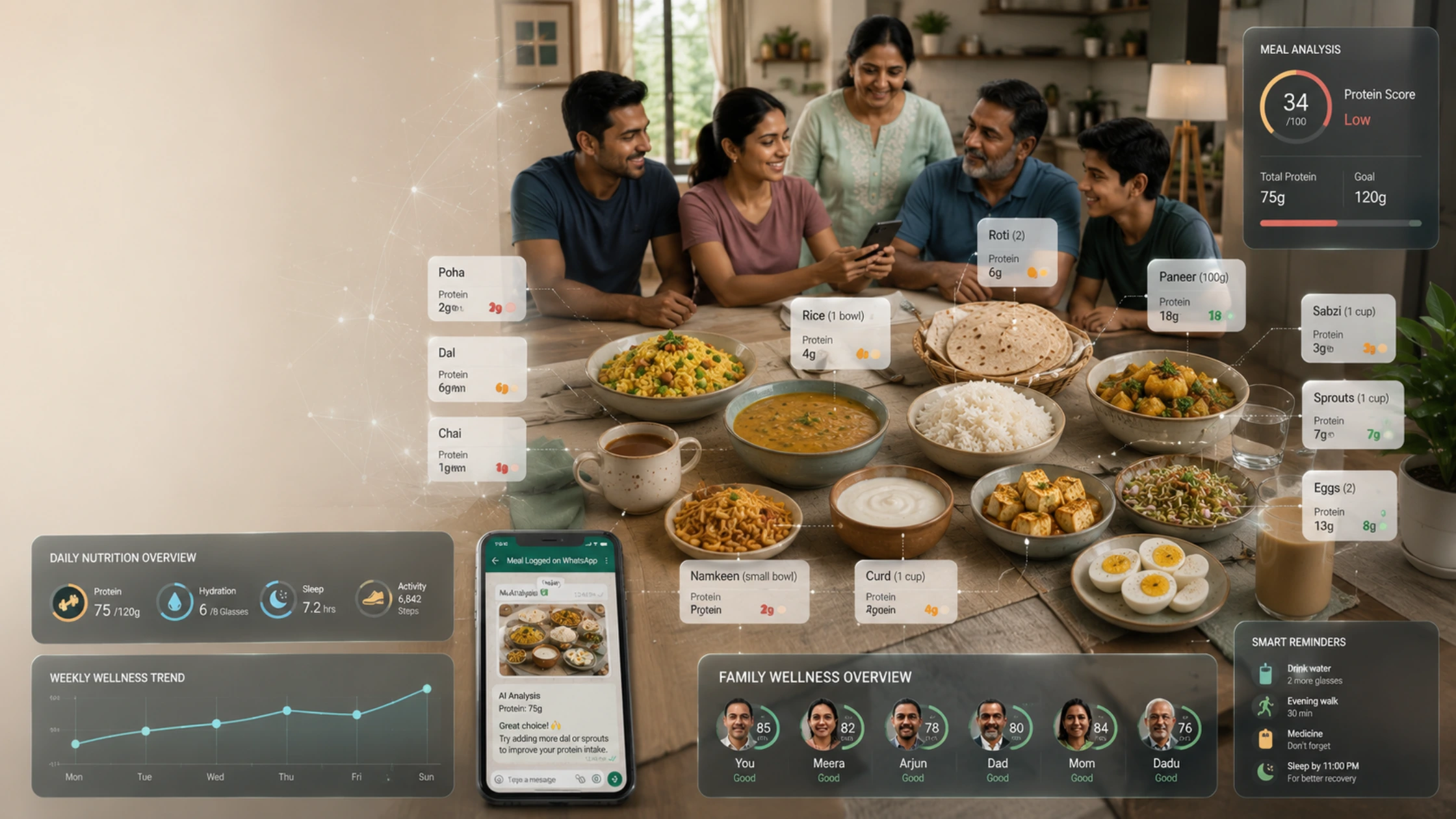
Many Indians believe they eat enough protein simply because they consume dal regularly.
Unfortunately, that assumption is often incorrect.
One of the biggest nutrition misconceptions in India is that a traditional meal automatically provides adequate protein. While many Indian meals contain some protein, the quantity is frequently much lower than people expect.
This becomes especially important for people trying to lose weight, gain muscle, improve energy levels, manage blood sugar, support healthy aging, or maintain overall wellness.
The reality is that understanding protein in average indian meal patterns can completely change how people think about nutrition.
Most individuals only discover their actual intake when they begin using a meal tracker app, nutrition app india, or best food tracking app. Until then, they often overestimate how much protein they consume each day.
For people navigating busy lifestyles in india, understanding protein intake does not require complicated dieting. It simply requires awareness.
Why Most Indians Think They Eat Enough Protein
Protein deficiency does not always look like severe malnutrition.
Often it appears as:
- Constant hunger
- Low energy
- Poor recovery after exercise
- Difficulty building muscle
- Frequent snacking
- Increased cravings
- Slow progress despite following a fitness diet
Most Indians associate protein primarily with:
- Dal
- Milk
- Curd
- Paneer
While these foods contribute protein, the quantities consumed are often insufficient to meet daily requirements.
For example:
A typical bowl of dal may contain approximately 6-8 grams of protein.
Many people assume that one serving of dal satisfies their protein needs for an entire meal.
In reality, most adults need significantly more.
This misunderstanding contributes to poor dietary balance and explains why many people struggle with healthy Indian eating habits despite eating home-cooked food.
How Much Protein Do Adults Actually Need?
Protein requirements vary based on age, body weight, activity level, and health goals.
According to current nutrition recommendations:
| Person Type | Approximate Daily Protein Need |
| Sedentary Adult | 0.8 to 1.0 g per kg body weight |
| Active Adult | 1.2 to 1.6 g per kg body weight |
| Strength Training Individual | 1.6 to 2.2 g per kg body weight |
| Older Adults | 1.0 to 1.2 g per kg body weight |
A 70 kg adult may require:
- 56-70 grams minimum
- 84-112 grams if physically active
Many people consuming a standard Indian diet unknowingly fall short.
The challenge is not necessarily eating unhealthy food.
The challenge is understanding actual protein intake India realities.
Protein in Common Indian Breakfasts
Breakfast is often where major protein gaps begin.
Many traditional breakfasts are rich in carbohydrates but relatively low in protein.
Protein Comparison Table
| Breakfast | Approximate Protein |
| Poha (1 plate) | 4-6g |
| Upma (1 plate) | 4-5g |
| 2 Idlis + Sambar | 6-8g |
| Paratha with pickle | 5-7g |
| Bread Butter | 4-5g |
| 2 Eggs + Toast | 12-14g |
| Paneer Bhurji + Roti | 18-22g |
Poha
Poha remains one of India’s most popular breakfasts.
However, standard poha primarily provides carbohydrates.
Without peanuts, sprouts, paneer, or eggs, protein content remains relatively low.
Upma
Upma offers similar challenges.
Although filling, it may not provide sufficient protein to support satiety throughout the morning.
Idli and Sambar
Many people assume idli is protein-rich.
The fermentation process improves nutrient availability, but the overall protein contribution remains moderate.
Adding extra sambar or a protein source can improve meal quality.
This highlights an important principle of Indian food and health.
Healthy food is not automatically high in protein.
Protein in Typical Lunch and Dinner Meals
This is where most people believe their protein needs are covered.
Unfortunately, this is often where the biggest misconceptions occur regarding Indian meal protein content.
Dal Rice Meal
| Food | Approximate Protein |
| 1 Bowl Dal | 6-8g |
| 1 Bowl Rice | 3-4g |
| Total | 9-12g |
While nutritious, dal rice alone often falls short of optimal protein intake.
Roti Sabzi Meal
| Food | Approximate Protein |
| 2 Rotis | 6-7g |
| Vegetable Sabzi | 2-4g |
| Total | 8-11g |
Many people eating roti sabzi believe they consume enough protein.
However, vegetables generally contribute limited amounts.
Dal + Roti + Curd
| Food | Approximate Protein |
| Dal | 6-8g |
| 2 Rotis | 6-7g |
| Curd | 4-5g |
| Total | 16-20g |
This meal provides a more balanced profile.
Paneer-Based Meal
| Food | Approximate Protein |
| Paneer Sabzi | 15-20g |
| 2 Rotis | 6-7g |
| Total | 21-27g |
For many vegetarians, paneer becomes an important source of protein for indian vegetarians.
Where Protein Gaps Usually Happen
Protein gaps rarely occur because people eat too little food.
They occur because food choices are heavily carbohydrate-focused.
Common Pattern
Breakfast:
Poha
Lunch:
Roti sabzi
Evening:
Tea and snacks
Dinner:
Dal rice
Although this may seem healthy, protein intake often remains below optimal levels.
The Namkeen Problem
Evening snacking contributes significantly.
Many people consume:
- Mixtures
- Sev
- Bhujia
- Fried snacks
But few understand calories in namkeen.
Approximate values:
| Namkeen Quantity | Calories |
| 100 gm namkeen calories | 500-600 kcal |
| 100 gram namkeen calories | 500-600 kcal |
| calories in 100 gm namkeen | 500-600 kcal |
| 1 katori namkeen calories | 150-250 kcal |
These snacks often add calories without meaningfully increasing protein intake.
Understanding namkeen calories can be eye-opening for individuals trying to improve body composition.
Simple Ways to Increase Protein Intake
Improving protein intake does not require extreme dieting.
This is especially important for people searching for how to stay healthy without dieting.
Add Protein to Breakfast
Instead of plain poha:
- Add sprouts
- Add peanuts
- Add paneer
- Add eggs
Improve Lunch Structure
Pair:
- Dal with curd
- Rajma with paneer
- Chole with Greek yogurt
Upgrade Snacks
Replace some namkeen portions with:
- Roasted chana
- Greek yogurt
- Paneer cubes
- Boiled eggs
- Sattu drinks
Increase Protein Distribution
One common mistake is consuming most protein at dinner.
A better strategy spreads protein across all meals.
Use Awareness Instead of Restriction
This is where food tracking without calorie counting becomes valuable.
Many people discover hidden protein gaps simply by observing patterns.
Instead of obsessing over numbers, they learn:
- What they actually eat
- Which meals lack protein
- Which foods keep them full longer
This creates more sustainable health habits.
Protein Awareness Checklist
Use this quick checklist:
- Does every meal contain a meaningful protein source?
- Are you relying solely on dal?
- Do your snacks provide protein?
- Do you know your approximate daily intake?
- Are you consuming enough protein after workouts?
- Are you balancing carbohydrates and protein?
- Are you following healthy Indian eating habits rather than extreme restrictions?
- Do you understand that the roti rice weight gain myth oversimplifies nutrition?
Many people blame rice or roti for weight gain.
In reality, inadequate protein, excessive snacking, poor portion awareness, and inconsistent habits are often bigger factors.
This is one reason why why diets fail long term. They focus on restriction instead of awareness.
Many Nutrimate users discover their true intake only after beginning simple meal visibility through WhatsApp-based tracking. Instead of complicated calorie counting, they gain clarity around patterns, protein intake, and consistency.
Nutrimate’s approach aligns with practical Indian lifestyles through AI-powered meal understanding, support for Indian foods, and India’s #1 whatsapp meal logging feature and Unique Caregiver feature. The goal is not perfection. The goal is sustainable awareness.
Most people are surprised to learn that what they thought was a high-protein diet often falls short once meals are tracked consistently.
Most people underestimate protein until they start tracking meals.
Simple awareness often reveals:
- Low-protein breakfasts
- Protein-poor snacks
- Inconsistent meal patterns
- Hidden calorie sources
Tools such as a meal tracker app, nutrition app india, or simple meal logging systems help people understand reality before making dietary changes.
FAQs
A typical Indian meal often provides between 8 and 20 grams of protein depending on the ingredients. Meals based only on roti, rice, vegetables, or small portions of dal may provide less protein than most adults need.
Many Indians consume less protein than recommended, especially those relying heavily on cereals and carbohydrate-rich foods. Protein intake often improves when meals include dairy, legumes, paneer, eggs, fish, or other protein-rich foods consistently throughout the day.
Dal is nutritious and contributes valuable protein, but it is usually not enough by itself to meet protein requirements for an entire meal. Combining dal with curd, paneer, dairy products, eggs, or other protein sources creates a more balanced meal.