 Pradnya Ganorkar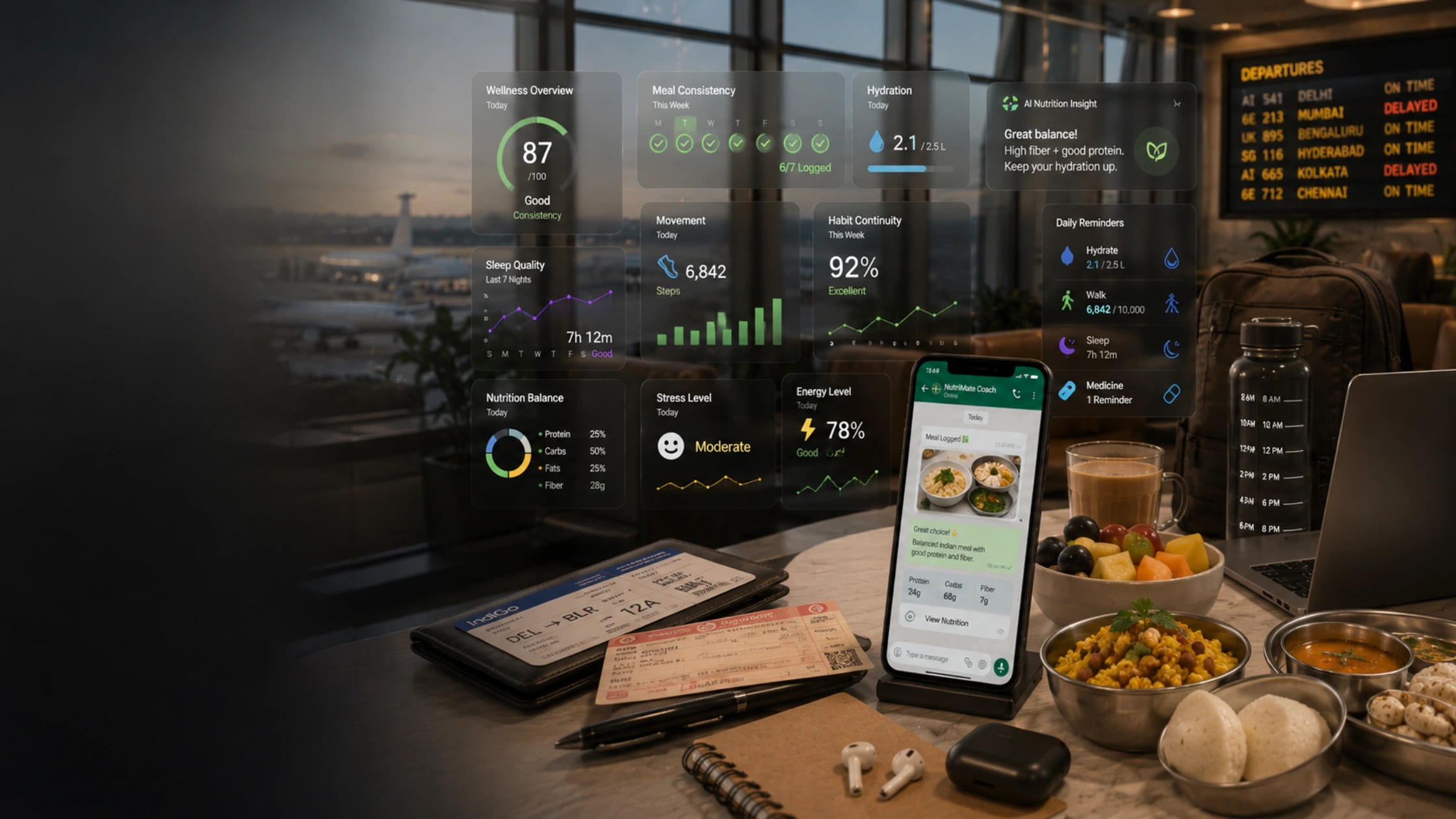
Frequent travel sounds exciting until your body starts paying the price.
For many Indians, travel quickly becomes associated with:
- Irregular eating
- Poor sleep
- Missed workouts
- Bloating
- Excess chai and snacks
- Restaurant overload
- Stress eating
- Low energy
Whether it is business travel, family visits, client meetings, train journeys, or airport hopping, maintaining a healthy lifestyle on the move feels difficult.
This is especially true for professionals trying to follow an Indian diet for busy professionals while balancing meetings, deadlines, and unpredictable schedules.
The biggest issue is not travel itself.
The real problem is routine disruption.
People often assume:
“Travel week is already ruined.”
That mindset leads to:
- Overeating
- Skipping healthy meals
- Alcohol excess
- Zero movement
- Poor hydration
- Complete routine collapse
Over time, these small disruptions accumulate into:
- Weight gain
- Digestive issues
- Energy crashes
- Poor sleep
- Stress eating
- Reduced fitness consistency
This is why healthy travel eating India has become an increasingly important topic, especially for working professionals, gym members, founders, sales teams, consultants, and frequent flyers.
The good news is this:
You do not need perfection to stay healthy while traveling.
You need continuity.
Modern wellness approaches now focus more on:
- Sustainable routines
- Flexible consistency
- Smart food decisions
- Low-friction tracking
- Simple recovery habits
That is where AI-powered, Indian-first wellness systems are becoming useful.
Instead of aggressive dieting, platforms like Nutrimate focus on:
- Simple awareness
- WhatsApp-first convenience
- Indian meal intelligence
- Practical consistency
- Real-life Indian eating behavior
Its India’s #1 whatsapp meal logging feature and Unique Caregiver feature help users maintain visibility into eating habits even during chaotic travel schedules.
According to the World Health Organization, irregular routines, poor nutrition, stress, and inactivity are major contributors to noncommunicable diseases globally.
For Indian professionals constantly on the move, sustainable habits matter far more than temporary “perfect” diet plans.
Why Travel Breaks Health Routines
Travel disrupts almost every health anchor people rely on.
At home, routines happen automatically:
- Fixed breakfast timing
- Familiar kitchen access
- Predictable meal portions
- Regular sleep
- Gym schedule
- Water intake habits
Travel removes all of that.
Suddenly:
- Breakfast gets skipped
- Meals shift late into the night
- Restaurant portions increase
- Hydration drops
- Stress rises
- Sleep becomes inconsistent
This explains why so many people struggle with healthy lifestyle consistency during travel.
The body thrives on predictability.
But Indian travel often involves:
- Long commutes
- Delayed flights
- Highway food
- Wedding functions
- Client dinners
- Buffet breakfasts
- Excess tea and snacks
Even professionals trying to maintain a fitness diet often abandon structure within 48 hours of travel.
The problem is psychological as much as nutritional.
Once people believe their routine is “broken,” they stop trying completely.
That creates a domino effect.
One unhealthy meal becomes:
- Entire unhealthy day
- Entire unhealthy trip
- Weeks of inconsistency
This is one major reason why staying healthy is hard for modern Indian professionals.
Airports, Trains, Hotels, Client Meals
Indian travel environments are designed for convenience, not necessarily wellness.
Airports
Airport eating commonly includes:
- Fried snacks
- Sugary coffee drinks
- Bakery items
- Large restaurant meals
- Long sitting periods
Many travelers also mistake boredom for hunger.
A delayed flight often becomes:
- Chips
- Sandwiches
- Desserts
- Multiple coffees
Trains
Train journeys introduce another challenge:
- Random eating timing
- Limited protein options
- Excess packaged snacks
- High-carb meals
- Low movement
Travelers frequently rely on:
- Biscuits
- Samosas
- Namkeen
- Sweet chai
Not because they are hungry.
Because food becomes entertainment during long travel hours.
Hotels
Hotels create the “vacation eating effect.”
Examples:
- Heavy buffet breakfasts
- Late-night room service
- Desserts after meetings
- Alcohol during networking
- Oversized portions
Professionals following a business travel diet India routine often struggle most with hotel buffets because abundance reduces portion awareness.
Client Meetings
Many Indian business interactions revolve around food.
Refusing meals can feel socially awkward.
That pressure creates:
- Overeating
- Alcohol overconsumption
- Multiple restaurant meals daily
- Stress-related snacking
This is why healthy eating outside home India requires flexibility, not rigid dieting.
The All-or-Nothing Trap
One of the biggest mistakes travelers make is chasing perfection.
Common mindset:
“If I cannot eat perfectly, I may as well eat anything.”
This destroys long-term consistency.
The healthier approach is:
Maintain minimum standards.
This idea matters deeply for:
- healthy lifestyle for busy Indians
- simple health habits for working professionals
- Frequent travelers
- Sales professionals
- Consultants
- Founders
A sustainable system focuses on:
- Damage reduction
- Better decisions
- Recovery speed
- Continuity
Not perfection.
For example:
Bad travel mindset:
- Miss workout
- Eat junk entire day
- Sleep late
- Drink excessively
- Restart Monday
Better mindset:
- 20-minute walk
- Protein-focused breakfast
- Controlled portions
- Hydration
- Better next meal
This creates a more sustainable Indian diet approach.
Travel health is not about extreme discipline.
It is about avoiding total collapse.
That is also why most strict diets fail.
Rigid systems break under real life.
Flexible systems survive.
This directly connects to why diets fail long term for many Indians.
Smart Health Minimums While Traveling
Instead of trying to maintain your full home routine, focus on travel minimums.
These are non-negotiable baseline habits.
1. Protein at Every Major Meal
Indian travel diets are often:
- Carb-heavy
- Low-protein
- Snack-driven
Simple improvement:
Add protein wherever possible.
Examples:
- Eggs
- Paneer
- Dal
- Chicken
- Curd
- Sattu drinks
- Sprouts
This improves:
- Satiety
- Energy
- Muscle retention
- Craving control
2. Hydration Before Caffeine
Travelers often consume:
- Tea
- Coffee
- Soft drinks
Before drinking enough water.
Dehydration worsens:
- Fatigue
- Hunger
- Bloating
- Headaches
A practical rule:
Drink water immediately after waking and before airport or train snacks.
3. Movement Snacks
You do not need full workouts during travel.
Instead:
- Walk airport terminals
- Use hotel stairs
- Stretch every few hours
- Take short walks after meals
Small movement helps maintain:
- Energy
- Digestion
- Metabolism
- Stress regulation
4. Portion Awareness
Indian restaurant portions are often excessive.
Especially:
- Butter-heavy curries
- Fried starters
- Desserts
- Buffet spreads
You do not need to avoid them entirely.
You need portion awareness.
5. Sleep Protection
Poor sleep increases:
- Hunger hormones
- Cravings
- Emotional eating
- Stress eating
Even modest sleep improvements support better health habits during travel.
Packing + Ordering Framework
One reason people fail during travel is lack of preparation.
Travel environments reward convenience.
So healthy decisions must also become convenient.
Smart Packing Basics
Keep:
- Protein bars
- Roasted chana
- Nuts
- Makhana
- Fruit
- Electrolyte sachets
- Protein powder
- Sattu mix
This reduces impulsive junk eating.
Ordering Smarter at Restaurants
Instead of extreme restrictions:
Use substitution.
Examples:
- Tandoori instead of fried
- Dal + roti instead of creamy curries
- Idli over fried breakfast
- Grilled snacks over bakery items
- Smaller dessert portions
This supports healthy Indian eating habits without forcing unrealistic restrictions.
Hotel Buffet Strategy
Simple framework:
- Protein first
- Fruits second
- Carbs intentionally
- Dessert optional
Not forbidden.
Optional.
This mindset reduces binge behavior.
Tracking Without Obsession
Many people abandon meal tracking India systems during travel because manual calorie counting feels exhausting.
This is why simplified approaches work better.
Modern systems increasingly focus on:
- Awareness
- Simpler logging
- Photo-based tracking
- Low-friction consistency
Nutrimate’s WhatsApp-first meal logging approach helps travelers maintain visibility without needing complicated calorie calculations.
That makes food tracking without calorie counting more realistic for Indian users.
Practical Indian Travel Scenarios
Scenario 1: Corporate Consultant Traveling Weekly
Problem:
- Airport meals
- Late-night dinners
- Poor sleep
- Stress eating
Better strategy:
- Protein-heavy breakfast
- Walk during calls
- Water before coffee
- One balanced restaurant meal daily
- Flexible tracking
Scenario 2: Sales Professional on Highway Travel
Problem:
- Dhaba overeating
- Sugary chai
- Fried snacks
Better strategy:
- Carry backup snacks
- Limit fried add-ons
- Use dal-based meals
- Prioritize hydration
Scenario 3: Family Travel
Problem:
- Constant eating
- Sweets
- Social pressure
- Irregular schedules
Better strategy:
- Avoid guilt mentality
- Focus on portion awareness
- Keep children active
- Balance heavier meals with lighter ones later
Scenario 4: Frequent Flyers
Problem:
- Lounge overeating
- Sitting all day
- Sleep disruption
Better strategy:
- Walk before boarding
- Avoid boredom eating
- Hydrate aggressively
- Maintain meal timing consistency
These approaches support a more realistic lifestyle change instead of temporary discipline.
Practical Travel Wellness Framework for Indians
A practical travel system should answer:
“What is the minimum I need to do to avoid health collapse?”
The answer usually includes:
- Better hydration
- Smarter portions
- Protein awareness
- Daily movement
- Reduced liquid calories
- Basic meal visibility
Not perfection.
This is also why how to stay healthy without dieting is becoming a more relevant question for Indian professionals.
Because extreme systems rarely survive real life.
Consistency survives.
Common Travel Mistakes Indians Make
Skipping Meals Then Overeating
Long gaps increase:
- Cravings
- Impulsive eating
- Dessert consumption
Treating Every Meal Like a Cheat Meal
One indulgent meal is manageable.
Entire trips of overeating create problems.
Drinking Calories Without Awareness
Examples:
- Sugary chai
- Cold coffee
- Soft drinks
- Alcohol
Liquid calories add up fast during travel.
Ignoring Sleep
People underestimate how strongly sleep affects hunger and cravings.
Waiting for “Perfect Routine” Again
The longer people delay restarting habits, the harder recovery becomes.
Content Direction
Pain:
“Travel = routine collapse”
The biggest mindset shift travelers need is this:
Health during travel is not about optimization.
It is about continuity.
Small consistent actions protect long-term progress far better than extreme restriction followed by complete collapse.
Product Integration
“Simple logging can maintain continuity even during travel…”
Modern wellness platforms increasingly focus on reducing friction rather than increasing complexity.
Nutrimate supports this through:
- AI-powered Indian meal understanding
- WhatsApp-first meal logging
- Simple daily visibility
- Consistency-focused tracking
- Indian lifestyle-aware wellness systems
Instead of forcing rigid calorie counting, the platform helps users maintain awareness during real-world situations like:
- Business trips
- Client dinners
- Family travel
- Hotel stays
- Irregular routines
This creates more sustainable long-term adherence for Indian users balancing health with busy travel-heavy lifestyles.
References
FAQs
Focus on simple consistency instead of perfection. Prioritize hydration, protein-rich meals, movement, portion awareness, and flexible meal tracking to maintain healthier habits during travel.
Yes. Business travelers can maintain fitness through sustainable routines like walking regularly, managing portions, improving sleep consistency, and using simple tracking systems that fit into busy schedules.