 Pradnya Ganorkar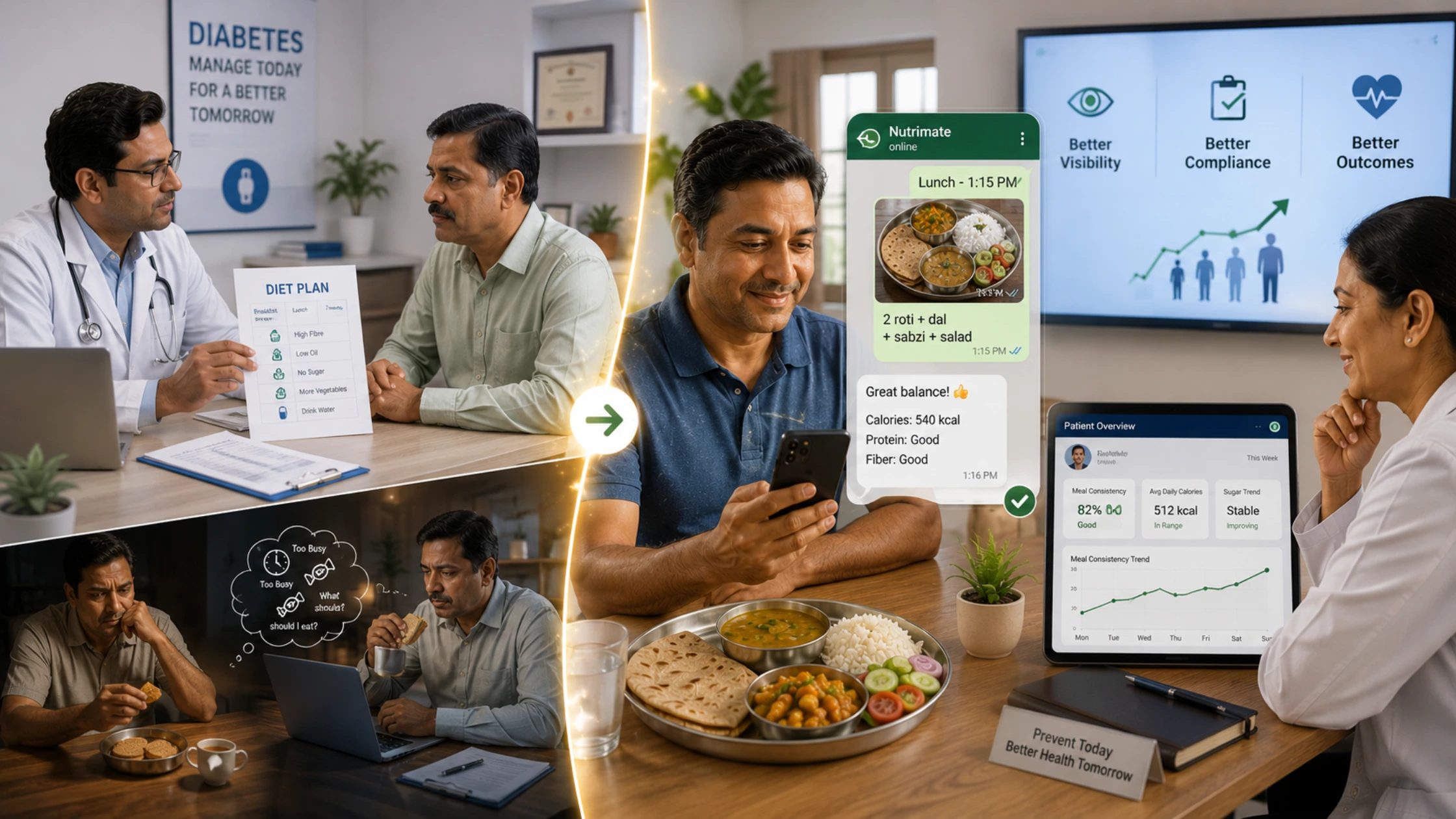
For many healthcare providers across India, one frustrating pattern repeats daily:
Doctor gives diet plan.
Patient nods.
Patient leaves.
Patient returns weeks later with minimal adherence.
This is one of the biggest hidden problems in preventive healthcare, diabetes care, and long-term nutrition management.
The issue is not always poor medical advice.
Often, the real problem is low compliance.
This is where a strong patient diet tracking tool becomes increasingly relevant for modern healthcare systems.
Across diabetes clinics, preventive care programs, and nutrition-led treatment models, many professionals are discovering that patient success often depends less on instruction quality and more on behavior visibility.
This matters because nutrition tracking for clinics is not just about giving recommendations.
It is about helping patients actually follow them.
For clinics trying to improve patient compliance healthcare, reduce repeated follow-up burden, and strengthen outcomes, the biggest challenge is often this:
How do you support consistency without constant chasing?
This is why many healthcare systems are now shifting toward simpler preventive health monitoring tools, daily nutrition tracking, and systems like India’s #1 whatsapp meal logging feature and Unique Caregiver feature, where behavior becomes easier to observe without adding operational overload.
Because in healthcare, advice alone does not always change behavior.
Visibility often does.
Why Patients Don’t Follow Diet Advice
One of the most common frustrations for doctors, dietitians, and wellness practitioners is simple:
Patients often understand what to do.
But struggle to do it consistently.
Common Clinical Reality:
A patient is told:
- Reduce sugar
- Avoid fried food
- Eat balanced meals
- Improve protein
- Follow diabetic guidelines
But real-life execution often breaks down.
Why?
Because information does not automatically become habit.
Major Indian-Specific Challenges:
1. Food Culture Complexity
Patients eat:
- Family meals
- Shared food
- Regional dishes
- Festival foods
2. Memory-Based Eating
Patients may not accurately recall:
- Portion sizes
- Snacking
- Sugar intake
3. Lifestyle Constraints
- Long work hours
- Travel
- Caregiving responsibilities
4. Overwhelm
Complex diet charts often feel unsustainable.
Myth vs Reality
Myth: Patients don’t care
Reality: Many patients struggle with execution, awareness, and consistency
Strategic Insight:
This is why patient diet tracking tool systems are often more effective when they simplify behavior rather than intensify pressure.
The Follow-Up Problem in Clinics
For most clinics, compliance often depends heavily on follow-up appointments.
Traditional Pattern:
- Consultation
- Diet prescribed
- Follow-up after weeks
- Minimal adherence review
Operational Issue:
Between visits, clinicians often lack visibility.
Result:
Doctors rely on:
- Patient memory
- Self-reports
- Approximate recall
Why This Creates Problems:
Patients may:
- Forget details
- Underreport
- Overestimate adherence
Clinics may:
- Miss patterns
- Lose intervention opportunities
- Spend more time correcting than guiding
Healthcare System Cost:
Poor compliance can increase:
- Chronic disease progression
- Diabetes instability
- Repeat counseling
- Frustration for providers
This is especially relevant in diabetes diet tracking India, where food pattern consistency often matters more than isolated clinic visits.
Core Problem:
Follow-up alone is reactive.
Modern health tracking tools can shift clinics toward more proactive systems.
Why Verbal Instructions Fail
Verbal advice is important.
But verbal advice alone often struggles because life is more complicated than consultation rooms.
Example:
A doctor says:
“Reduce carbs.”
But what does that mean practically for:
- Roti?
- Rice?
- Idli?
- Dosa?
- Poha?
Indian Nutrition Reality:
Patients need contextual clarity.
Common Breakdown:
Without daily structure:
Advice becomes vague.
Vague Advice Creates:
- Confusion
- Guilt
- Inconsistency
- Non-compliance
Better Clinical Framework:
Instead of:
“Eat healthier”
Patients need:
- Visibility
- Simplicity
- Realistic patterns
Key Insight:
The best nutrition tracking for clinics systems often reduce ambiguity.
Because patients usually fail less from ignorance and more from complexity.
What Improves Patient Compliance
Compliance improves when systems reduce friction.
Core Drivers:
1. Simplicity
Low-effort logging increases adherence.
2. Visibility
Patients become more aware of patterns.
3. Accountability
Gentle awareness improves consistency.
4. Familiarity
Patients use systems more when behavior fits existing routines.
Why This Matters:
The goal is not perfect tracking.
It is sustainable awareness.
Clinical Opportunity:
Instead of relying only on memory, some clinics use simple daily logging systems for patients.
Strategic Advantage:
This can support:
- Better nutrition tracking for clinics
- Stronger preventive health
- Improved patient compliance healthcare
- Lower follow-up fatigue
Nutrimate Context:
As an AI-powered, Indian-first platform, Nutrimate reflects this shift through India’s #1 whatsapp meal logging feature and Unique Caregiver feature, where daily health behavior becomes easier to understand within real Indian meal patterns.
Simple Tracking System for Clinics
A practical clinic-friendly compliance system should prioritize operational ease.
Step 1: Simplify Daily Input
Patients should not need advanced nutrition expertise.
Step 2: Focus on Key Variables
Track:
- Meal frequency
- Sugar-heavy intake
- Portion patterns
- Routine consistency
Step 3: Reduce Manual Complexity
Avoid systems that feel like homework.
Step 4: Use Trend-Based Monitoring
Focus on:
- Repeated late eating
- Missed meals
- Sugar spikes
- Habit drift
Step 5: Improve Follow-Up Quality
When clinicians have clearer data:
Follow-ups become more strategic.
Clinic-Level Benefits:
- Better patient engagement
- More accurate counseling
- Lower dependence on recall
- Stronger patient diet tracking tool outcomes
Broader Relevance:
This can support:
- digital wellness platform India
- preventive health monitoring tools
- nutrition tracking
- Chronic care systems
Example: Diabetes Patient
Scenario:
45-year-old patient with Type 2 diabetes in Pune
Traditional Model:
- Diet sheet provided
- Follow-up after 30 days
- Poor sugar control
- Inconsistent compliance
Problem:
Patient thought:
“I mostly followed.”
Reality:
- Tea sugar
- Evening snacks
- Portion inconsistency
- Weekend indulgence
Better Model:
Simple daily meal visibility
Outcome:
- Pattern recognition
- Better awareness
- More accurate doctor intervention
- Less guesswork
Key Lesson:
The issue was not motivation.
It was invisible behavior.
This is why diabetes diet tracking India increasingly benefits from systems that improve daily visibility.
Strategic Healthcare Shift
Healthcare is increasingly moving from:
Advice-only systems
To:
Behavior-supported systems
Why?
Because chronic disease is rarely shaped by one consultation.
It is shaped by daily patterns.
Clinics that improve compliance often:
- Simplify nutrition awareness
- Reduce patient friction
- Prioritize consistency
- Build systems around real Indian life
Important:
Technology should support care.
Not complicate it.
Bottom Line:
A smarter patient diet tracking tool is not about more control.
It is about better adherence.
Frequently Asked Questions
Patients often struggle with diet plans because real-life routines, food habits, complexity, and low visibility make execution harder than understanding. The challenge is usually consistency, not awareness alone.
Clinics can improve compliance by simplifying patient tracking, reducing friction, improving daily nutrition visibility, and using sustainable systems that help patients stay aware between consultations.
Read Nutrimate Wellness first on Google