 Pradnya Ganorkar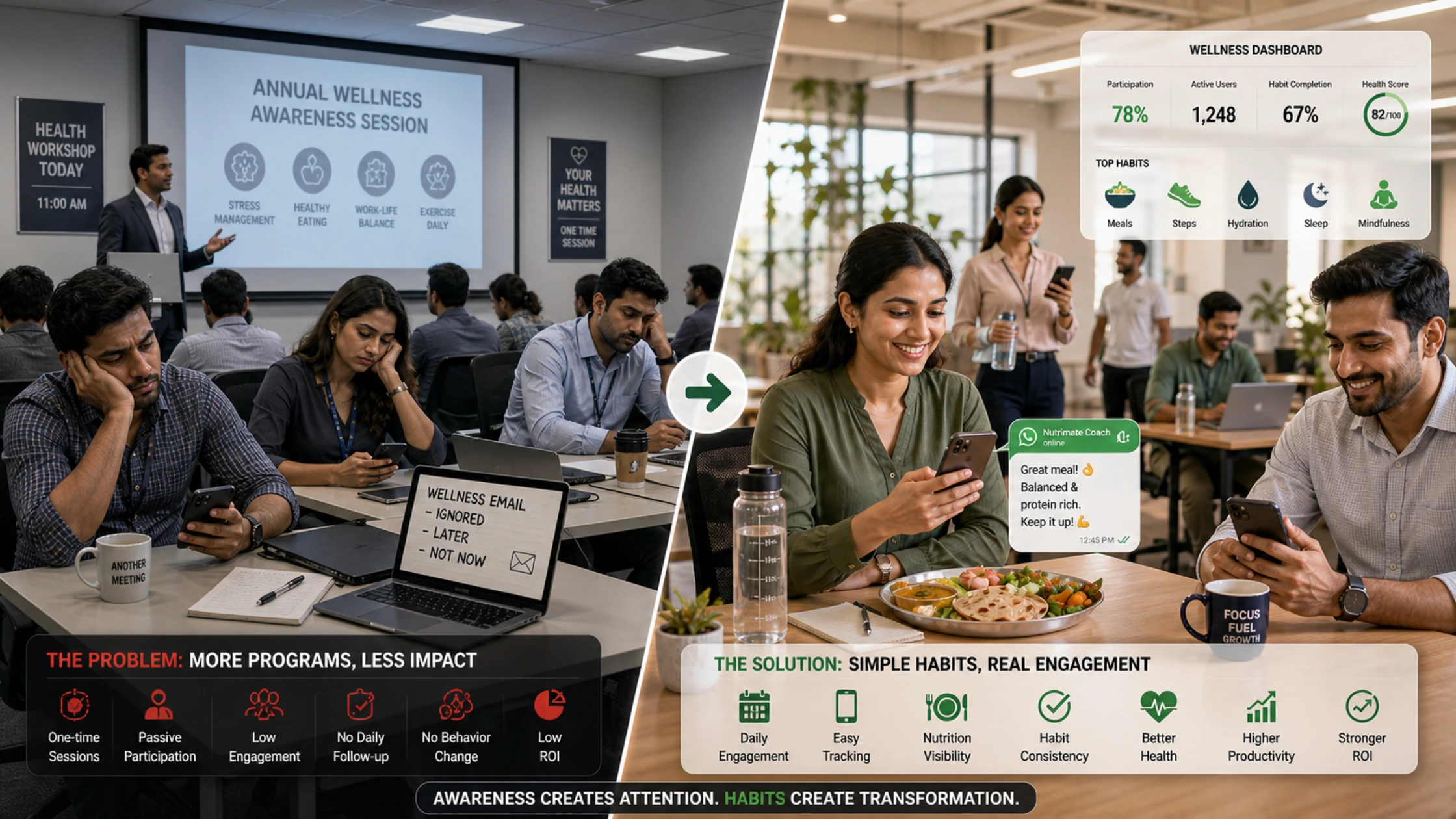
Across India, HR leaders are facing a frustrating reality:
Budgets are allocated.
Programs are launched.
Sessions are hosted.
Experts are invited.
Yet actual employee engagement often stays low.
This is why workplace wellness engagement tools are becoming a bigger priority than simply launching more wellness initiatives.
The challenge is rarely a lack of wellness programs.
It is a lack of sustained participation.
This is one of the core reasons employee health tracking solutions are evolving beyond webinars, yoga days, annual screenings, or one-time wellness events.
For many organizations, the problem sounds like this:
“Employees don’t participate.”
But the deeper truth is often:
“Employees don’t consistently engage because wellness feels passive, disconnected, or too effort-heavy.”
This distinction matters.
Modern corporate wellness tools India strategies are increasingly shifting from awareness campaigns to behavior systems because more programs do not automatically create more action.
If companies want real employee participation wellness improvement, the answer is usually not adding more wellness.
It is making wellness easier to live daily.
The Engagement Problem HR Teams Face
Most HR teams are not ignoring wellness.
In fact, many are doing more than ever:
- Mental health sessions
- Fitness webinars
- Diet talks
- Step challenges
- Annual health checks
On paper, this looks comprehensive.
But participation often remains shallow.
Common Reality:
- Employees attend once
- Initial curiosity exists
- Daily behavior stays unchanged
- Long-term adoption drops
Why?
Because wellness often becomes an event instead of a habit.
Indian Workplace Context
For many employees:
- Long commutes
- Hybrid work stress
- Family obligations
- Irregular meals
- Energy crashes
- Lifestyle disease risk
This means wellness must compete with real-life friction.
If a wellness initiative adds complexity, participation declines.
HR Frustration:
“Why are we investing if employees are not engaging?”
Core Issue:
Many companies optimize for offering wellness, not integrating wellness.
This is why health tracking tools and practical digital wellness platform India systems are increasingly relevant.
Why More Programs Don’t Increase Participation
A common corporate assumption is:
“Low engagement means we need more programs.”
Usually, this is false.
More Programs Often Create:
- More communication
- More calendar invites
- More information
- More fatigue
Not necessarily more action.
Participation Does Not Fail Because of Awareness
Most employees already know:
- Exercise matters
- Diet matters
- Sleep matters
The issue is not ignorance.
The issue is execution.
Practical Example:
An employee may attend:
- Stress workshop
- Diet session
- Health screening
Yet still:
- Skip breakfast
- Order late-night food
- Sit for 9 hours
- Ignore hydration
Why?
Because information without friction reduction changes little.
Myth vs Reality
Myth:
More wellness options = better engagement
Reality:
Simpler daily behavior systems = better engagement
This is why workplace wellness engagement tools should prioritize consistency over volume.
The Problem with Passive Wellness
Passive wellness is wellness people consume, but do not live.
Examples:
- One-time seminars
- Newsletter tips
- Annual awareness weeks
- Optional webinars
These may create short-term visibility.
But they often fail at:
- Daily accountability
- Habit formation
- Ongoing participation
Why Passive Wellness Underperforms:
It asks employees to self-initiate behavior change after inspiration fades.
The Behavioral Gap:
Motivation is temporary.
Systems create repeatability.
Indian Employee Reality
In India, daily wellness barriers often include:
- Office canteen food
- Social chai breaks
- Stress eating
- Family responsibilities
- Diabetes risk
- Sedentary work
Without practical systems, passive wellness becomes background noise.
Strategic Limitation
This is why preventive health monitoring tools, patient diet tracking tool models, and nutrition tracking ecosystems are increasingly outperforming passive education.
What Drives Daily Engagement
Daily engagement happens when wellness feels:
- Simple
- Relevant
- Low-effort
- Visible
Four Drivers of Better Participation:
1. Low Friction
If tracking health takes too long, people stop.
2. Personal Relevance
Generic advice fails.
Relevant advice wins.
For example:
- Desk worker nutrition
- Diabetes-focused food awareness
- Working parent wellness
3. Habit Visibility
People engage more when they can see:
- Meal consistency
- Energy patterns
- Small wins
4. Emotional Simplicity
Wellness should feel supportive, not burdensome.
Why This Matters
This is where employee health tracking solutions can outperform event-heavy wellness systems.
Example:
Simple daily logging creates consistent engagement without forcing participation.
This matters because participation improves when wellness fits existing life instead of demanding major behavior overhauls.
Nutrimate’s Indian-first, AI-powered, WhatsApp-first structure aligns with this shift by reducing friction around nutrition tracking and health awareness.
Example: Habit-Based Tracking
Let’s compare.
Traditional Wellness Program:
- Quarterly session
- Health PDF
- Webinar attendance
Result:
Low behavior continuity
Habit-Based Tracking:
- Daily meal awareness
- Hydration check-ins
- Habit visibility
- Simple nutrition tracking
- Pattern recognition
Result:
Higher practical engagement
Indian Workplace Example:
Priya, 36, Mumbai:
- Long commute
- Team lunches
- PCOS concerns
- Missed breakfasts
A wellness webinar may inform her.
But a habit-based system helps her actually notice:
- Meal gaps
- Sugar spikes
- Daily inconsistency
Why This Works:
Behavior change becomes visible.
This is the same strategic principle behind:
- gym member retention tools
- fitness client engagement platform
- trainer nutrition tracking dashboard
Daily awareness drives better adherence than occasional motivation.
Implementation Plan
For HR teams, improving employee participation wellness usually requires strategic redesign, not more activity.
Step 1: Audit Friction
Ask:
Is participation low because employees do not care?
Or because wellness feels too difficult?
Step 2: Shift From Event to System
Move from:
Sessions
To:
Daily habits
Step 3: Simplify Engagement
Prioritize:
- Easy meal check-ins
- Habit nudges
- Progress visibility
- Low-friction health tracking tools
Step 4: Segment Employees
Not all employees need the same wellness:
- Busy professionals
- Parents
- Diabetes-prone employees
- Sedentary teams
Step 5: Measure Behavior, Not Attendance
Track:
- Habit participation
- Daily engagement
- Nutritional consistency
Not just:
- Session signups
Step 6: Expand Into Preventive Ecosystems
This can connect broader opportunities like:
- diabetes diet tracking India
- nutrition tracking for clinics
- corporate wellness partnerships
- Insurance wellness
Strategic Shift for HR Leaders
The future of corporate wellness tools India is not:
“More programs”
It is:
“Better behavior systems”
This is a critical distinction.
Because wellness ROI improves when:
- Employees engage daily
- Habits become visible
- Participation becomes easier
- Health becomes integrated
Better Wellness = Better Business
This can influence:
- Productivity
- Burnout
- Absenteeism
- Retention
- Employer brand
The real competitive advantage is not wellness activity.
It is wellness consistency.
Frequently Asked Questions
Increase employee participation by simplifying wellness into daily, low-friction habits instead of relying only on programs or events. Easy tracking, practical relevance, and visible progress usually improve engagement more effectively than adding more sessions.
Employees often ignore wellness programs because they feel passive, generic, or disconnected from daily life. Awareness alone rarely changes behavior if wellness feels too time-consuming or difficult to sustain.
Read Nutrimate Wellness first on Google