 Pradnya Ganorkar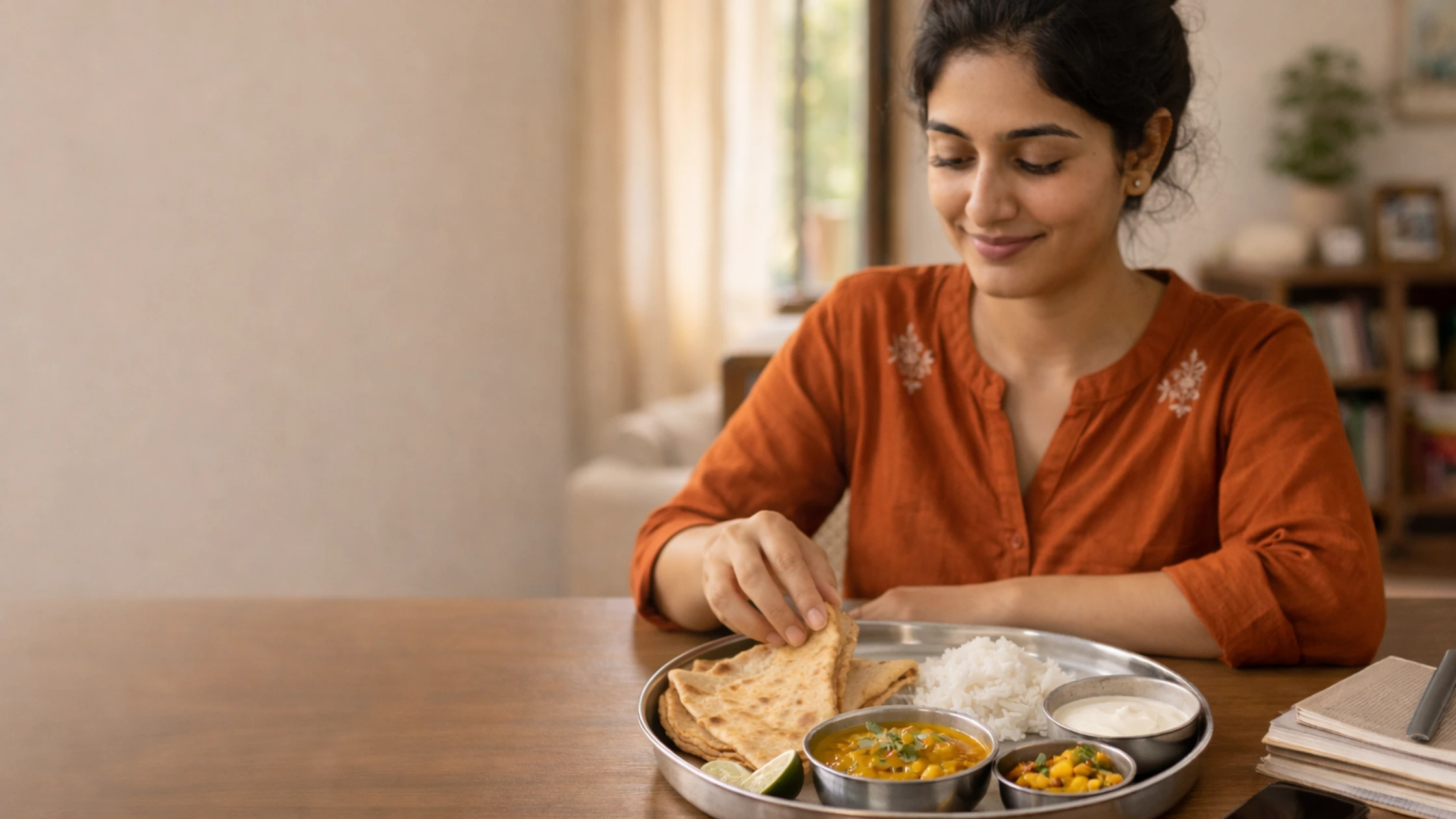
For many people in India, the word “diet” immediately creates pressure.
It feels restrictive. Temporary. Difficult to follow.
You start by cutting things out—rice, roti, sweets, snacks. For a few days, it works. You feel in control. But slowly, the effort builds up. Cravings increase. Social situations become harder. Eventually, the system breaks.
And when it breaks, it often comes with guilt.
This is why many people keep cycling between starting and stopping.
The issue is not Indian food.
The issue is dieting itself.
A more practical approach is building an Indian diet without dieting—one that works with your habits, your lifestyle, and your food culture instead of against them.
This approach is not about perfection.
It’s about sustainability.
And that’s where sustainable health habits for Indians become more effective than strict diet rules.
Why Dieting Fails With Indian Food
Most diet plans are not designed for Indian eating patterns.
They often assume:
- Complete control over meals
- Fixed eating schedules
- Individual meal preparation
- Minimal social eating
But Indian food culture works differently.
Meals are:
- Shared with family
- Influenced by household cooking
- Built around staples like roti and rice
- Shaped by regional and seasonal foods
This mismatch creates friction.
For example:
- Avoiding rice is difficult in rice-based households
- Skipping roti feels unnatural in many meals
- Saying no to family food repeatedly creates pressure
This is one of the key reasons explained in Cluster 1 → why diets fail long term.
The system doesn’t fit the environment.
Restriction Doesn’t Last
When diets remove familiar foods:
- Cravings increase
- Satisfaction decreases
- Consistency breaks
Eventually, people return to their normal eating patterns.
But now with:
- More guilt
- Less confidence
This cycle repeats.
Food Becomes Complicated
Dieting turns simple eating into a constant decision-making process:
- “Can I eat this?”
- “Is this allowed?”
- “Did I break my plan?”
Over time, this becomes mentally exhausting.
And when something feels exhausting, it doesn’t last.
Eating Patterns vs Rules
Instead of following strict rules, focusing on patterns works better.
Patterns are:
- Flexible
- Repeatable
- Easier to follow daily
Rules are:
- Rigid
- Hard to maintain
- Easy to break
What Patterns Look Like
A pattern-based approach to an Indian diet without dieting might include:
- Eating balanced meals most days
- Keeping meal timing somewhat consistent
- Avoiding long gaps between meals
- Adjusting portions gradually
These are not strict rules.
They are guidelines that adapt to your day.
Keep the Familiar Foods
Instead of removing:
- Roti
- Rice
- Dal
- Sabzi
Build around them.
For example:
- Roti + dal + sabzi → balanced
- Rice + sambar + vegetables → balanced
The focus shifts from elimination to structure.
Reduce Decision Fatigue
Patterns reduce the number of decisions you make daily.
You don’t need to constantly think:
“What should I eat?”
You already know your defaults.
This makes consistency easier.
As explored in Blog 3.3, simple patterns often outperform complex plans over time.
Flexibility With Festivals and Travel
One of the biggest challenges with dieting in India is social life.
Festivals, weddings, family gatherings, travel—all revolve around food.
Strict diets struggle here.
The Problem With Rigid Diets
Rigid systems expect:
- Perfect adherence
- No deviation
- Full control
But in real life:
- Meals are shared
- Food is offered as care
- Refusing repeatedly feels uncomfortable
This creates stress.
And stress leads to breaking the diet.
A Flexible Approach
Instead of trying to control everything:
- Eat lighter before or after heavy meals
- Enjoy festival food without guilt
- Return to normal patterns the next day
This reduces pressure.
It also prevents the “all-or-nothing” cycle.
Travel Without Disruption
During travel:
- Meal options are limited
- Timings are irregular
Instead of strict rules:
- Focus on balance when possible
- Avoid extremes
- Stay hydrated
These small adjustments are more realistic.
Flexibility makes the system sustainable.
Long-Term Thinking
The biggest difference between dieting and sustainability is time.
Dieting focuses on:
- Short-term results
- Quick changes
- Immediate control
Sustainability focuses on:
- Long-term patterns
- Gradual improvement
- Consistency over time
What Actually Matters Over Time
Health improves when:
- Meals are balanced most days
- Portions are reasonable
- Eating patterns are stable
Not when everything is perfect.
Avoid Extreme Swings
A common pattern:
- Very strict eating for a few days
- Followed by overeating
This creates instability.
A better approach:
- Moderate consistency
- Occasional flexibility
- No extreme restriction
Small Changes, Real Impact
Examples of sustainable changes:
- Reducing one extra roti
- Eating slightly earlier
- Adding more vegetables
These changes feel small.
But over time, they create meaningful results.
Awareness Over Control
Some people find it helpful to observe their eating patterns instead of controlling them.
Tools like Nutrimate can support this by showing trends over time—without making food feel restrictive.
But the principle is simple:
Understanding your habits is more useful than trying to control them perfectly.
Common Mistakes to Avoid
Even with good intentions, people often:
- Remove staple foods completely
- Follow overly strict diet plans
- Ignore social and cultural eating patterns
- Expect immediate results
- Restart repeatedly instead of adjusting
Avoiding these mistakes makes health easier.
A More Practical Way to Think About Eating
Instead of:
“I need to go on a diet”
Think:
“I need to improve my daily patterns”
Instead of:
“I need perfect control”
Think:
“I need consistency”
This shift removes pressure.
And when pressure reduces, consistency improves.
Frequently Asked Questions
Can I follow an Indian diet without dieting?
Yes. You can follow an Indian diet without dieting by focusing on balanced meals, portion awareness, and consistent eating patterns. You don’t need to eliminate staple foods like roti or rice—just structure your meals better.
How do I stay healthy during festivals?
Stay flexible. Enjoy festival food without guilt, avoid extreme overeating, and return to your regular eating pattern the next day. Balance matters more than perfection during occasional events.
Health doesn’t need restriction.
It needs alignment with your life.
When your food habits fit your routine, your culture, and your preferences, consistency becomes easier—and results become sustainable.
Read Nutrimate Wellness first on Google