 Pradnya Ganorkar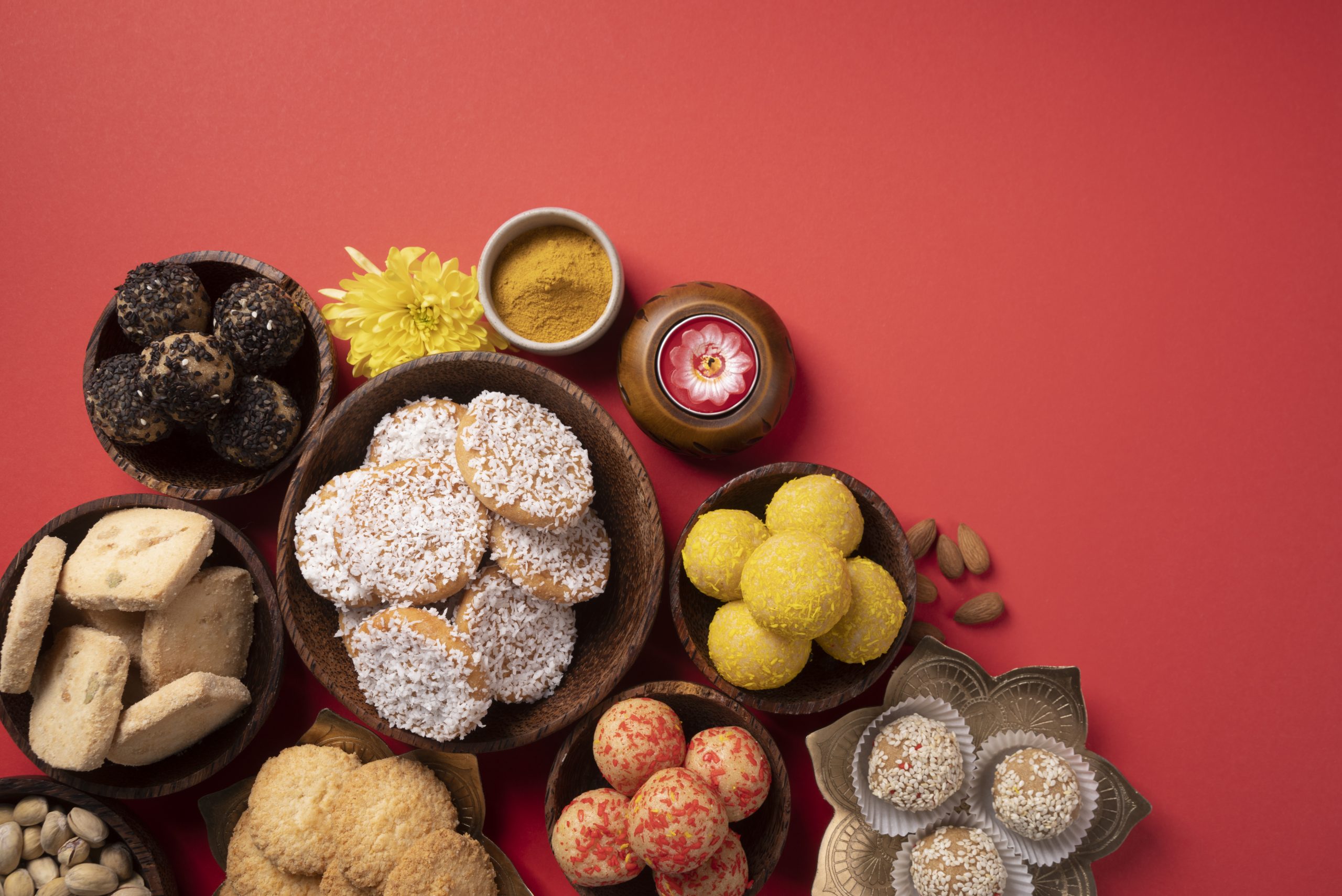
Indian festivals are among the most challenging periods for nutrition tracking — not because the food is unhealthy in isolation, but because the volume, frequency, and social nature of festival eating makes moderation and awareness difficult. Research on seasonal weight gain in India suggests that adults gain an average of 1.5 to 2.5 kilograms during the Diwali-to-New Year period — and that most of this weight is not lost in the months that follow. The solution is not to avoid festival food — that is neither realistic nor desirable. The solution is to track it accurately so that you can enjoy festivals fully while making informed choices about where in the day and week to compensate. Nutrimate’s Indian food database includes mithai, fried snacks, traditional festival dishes, and regional sweets — making it the most practical tool available for tracking Indian festival nutrition.
The Myth of the Festival Cheat Day
One of the most counterproductive concepts in Indian health culture is the cheat day — the idea that festivals are days where nutrition rules are suspended entirely. The problem with this framing is that Indian festivals rarely last one day. Diwali is a five-day celebration. Navratri is nine days. Eid celebrations extend across multiple meals and visits. A cheat day becomes a cheat week, and a cheat week generates a calorie surplus that requires significant time to reverse.
The more effective approach is to track through festivals rather than suspending tracking. You do not need to restrict your eating — you need to know what you ate so that you can make adjustments where they make sense.
Diwali: The Nutritional Reality of Indian Sweets
Diwali’s nutritional challenge is primarily mithai — Indian sweets that are calorie-dense, high in sugar and fat, and consumed in frequent small quantities across multiple days. A single piece of kaju katli contains approximately 65 to 80 calories. A gulab jamun contains 140 to 175 calories. A besan ladoo contains 150 to 180 calories.
The issue is not a single piece — it is the unconscious accumulation. Four pieces of mithai across a Diwali morning, received from three different relatives, total 300 to 400 calories of untracked food before lunch. Over five days of Diwali, this pattern adds up to a meaningful surplus that most people are unaware of.
Holi: The Hidden Calories in Thandai and Gujiya
Holi presents a different nutritional profile. Thandai — the traditional Holi drink — contains approximately 300 to 400 calories per large glass due to the combination of milk, nuts, sugar, and spices. Gujiya — the traditional sweet — contains approximately 200 to 250 calories per piece. Papdi and chaat consumed at Holi gatherings add further.
The social drinking aspect of Holi makes tracking more challenging because portions are rarely measured and refills happen organically during celebrations. The most effective approach is to log immediately after eating — not waiting until the end of the day when memory becomes unreliable.
Eid: Managing Biryani, Seviyan, and Sheer Khurma
Eid celebrations centre on biryani, korma, sheer khurma, and seviyan — foods that are calorie-dense but also highly variable in recipe. A katori of sheer khurma can range from 180 to 350 calories depending on the sugar, dry fruit, and milk ratio used.
Nutrimate’s Custom Dish feature is particularly valuable during Eid — users can create their specific family recipe for sheer khurma or korma once, and log it accurately across the celebration days rather than guessing with a generic database entry.
The Practical Festival Tracking Strategy
Log first, eat second — or at minimum, log immediately after eating, not hours later. Protein anchor your day — start Diwali morning with a high-protein breakfast so that mithai consumption later is supplementary rather than foundational to your day’s nutrition. Increase steps during festivals — the social walking involved in visiting relatives is a genuine calorie-burning opportunity.
Most importantly — do not stop tracking because the numbers look bad. A tracked difficult day is more useful than an untracked perfect day. The data from festival tracking builds awareness that changes how you approach the following year’s celebrations — gradually, over time, making festivals both more enjoyable and more nutritionally managed.
Read Nutrimate Wellness first on Google